According to customs data, in May 2026, China’s rare earth imports totaled 6,770.2 tons, decreased by 22.90% month-on-month, and increased by 42.14% year-on-year, with an import value of RMB 810 million, down 35.20% month-on-month and down 48.41% year-on-year; rare earth exports totaled 5,490.4 tons, increased by 3.42% month-on-month, and decreased by 6.38% year-on-year, with an export value of RMB 430 million, down 2.27% month-on-month and up 230.77% year-on-year.
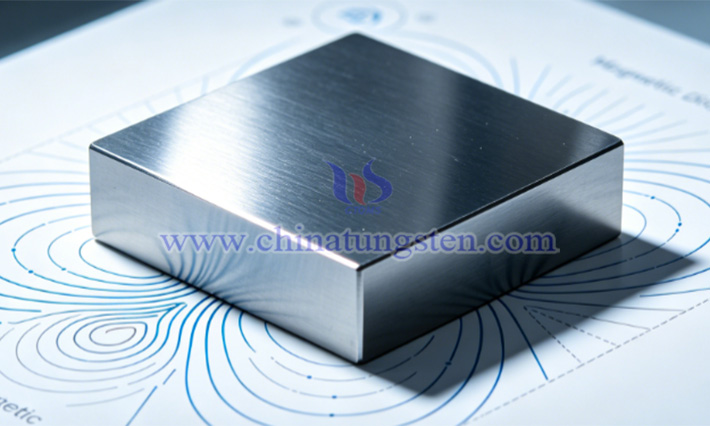
Images of rare earth permanent magnet materials
According to statistics from CTIA GROUP, in May 2026, the prices of most rare earth products in China decreased month-on-month. Specifically, the average price of praseodymium oxide was RMB 823,947/ton, down approximately 0.36% month-on-month and up approximately 85.16% year-on-year; neodymium oxide averaged RMB 819,211/ton, down approximately 0.15% month-on-month and up approximately 87.98% year-on-year; praseodymium-neodymium oxide averaged RMB 731,263/ton, down approximately 5.34% month-on-month and up approximately 70.58% year-on-year; praseodymium-neodymium metal averaged RMB 895,000/ton, down approximately 5.02% month-on-month and up approximately 69.81% year-on-year; terbium oxide averaged RMB 6,101/kg, down approximately 0.15% month-on-month and down approximately 14.01% year-on-year; dysprosium oxide averaged RMB 1,321,053/ton, down approximately 4.21% month-on-month and down approximately 19.42% year-on-year; dysprosium-iron alloy averaged RMB 1,291,053/ton, down approximately 4.70% month-on-month and down approximately 19.26% year-on-year.
Images of rare earth permanent magnet materials
From a resource distribution perspective, global rare earth resources are relatively abundant but unevenly distributed. Countries including China, Brazil, India, Australia, Russia, and the United States all possess significant rare earth resources. Among them, China occupies an important position in the global rare earth supply system due to its relatively complete industrial chain, advanced separation and purification technologies, and large production scale. After years of development, China has formed a complete industry system covering resource exploration, mining, smelting and separation, material preparation, and end-use applications, providing crucial raw material support for the development of global high-tech industries.
By application field, rare earth consumption is mainly concentrated in permanent magnet materials, catalytic materials, polishing materials, hydrogen storage materials, and luminescent materials. Among these, permanent magnet materials are one of the most important consumption directions, widely used in new energy vehicles, industrial robots, energy-efficient home appliances, rail transit, and wind power equipment. With the global energy structure transition and the rapid development of intelligent manufacturing industries, demand for high-performance rare earth permanent magnets continues to grow, further enhancing the importance of rare earth resources. At the same time, rare earths are also known as “industrial vitamins”: although their addition to products is usually small, they can significantly improve the magnetic, optical, electrical, and mechanical properties of materials, making them an essential basic raw material in modern industry.