According to CTIA GROUP, on May 14, 2026, the Ministry of Natural Resources released the results of the resource reserve verification project for the Yulong Copper Mine in Jiangda County, Tibet Autonomous Region: the newly added copper metal resource is 1.3142 million tons (including 1.6027 million tons of measured resources, a reduction of 149,900 tons in controlled resources, and a reduction of 138,600 tons in inferred resources), the molybdenum resource is 107,700 tons (including 140,200 tons of measured resources, a reduction of 61,800 tons in controlled resources, and an increase of 29,300 tons in inferred resources), and the silver metal resource is 793 tons, all of which are inferred resources.
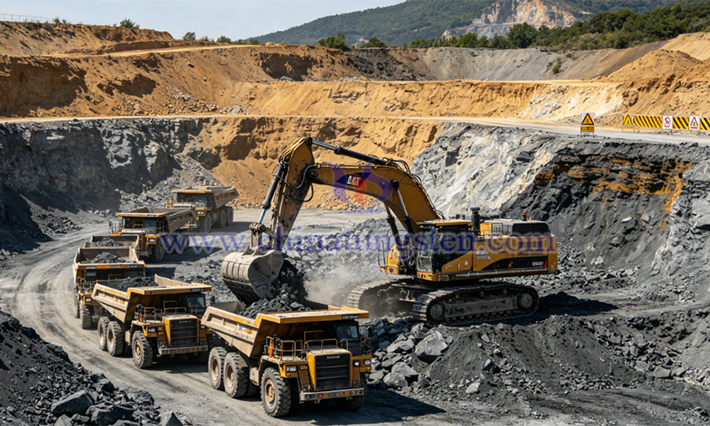
Molybdenum mine pictures
The Yulong Copper Mine is located in Jiangda County, Chamdo City, Tibet Autonomous Region. It is a world-class super-large porphyry copper deposit and one of the larger and typical porphyry copper mines in China and Asia. The deposit is situated on the western flank of the Qingnidong–Haitong recumbent fold in the Sanjiang Fold Belt, at an altitude of 4,560–5,120 meters, with a mining area of approximately 2.1 square kilometers.
The Yulong Copper Mine was discovered in the mid-1960s and is a porphyry–skarn composite type deposit. The ore bodies mainly occur within the Himalayan biotite monzonite complex and the surrounding contact zones, exhibiting cylindrical, stratiform, and lens-shaped distributions. The main ore minerals are chalcopyrite, pyrite, and molybdenite, with the ore primarily showing fine veinlet and disseminated textures and good beneficiation properties.
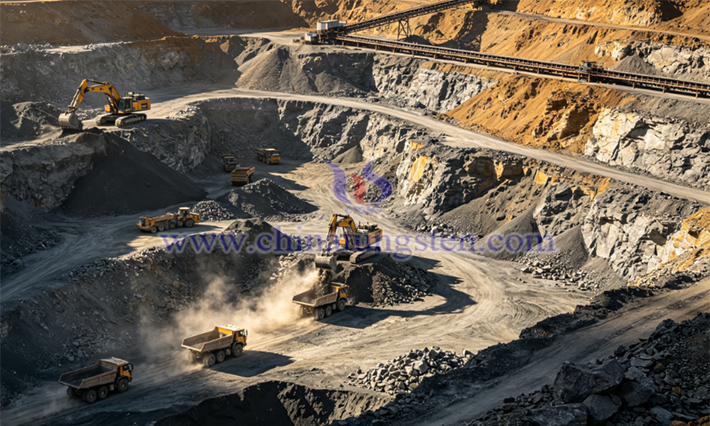
Molybdenum mine pictures
In addition to the primary copper product, the Yulong deposit also contains associated beneficial components such as molybdenum, iron, sulfur, silver, gold, and tungsten. The mining area and surrounding regions (Yulong–Hengxingcuo–Xiariduo belt) show good copper-molybdenum exploration potential, making it one of China’s important prospective zones for copper mineralization.
As a typical porphyry copper representative of the Qinghai–Tibet Plateau, the metallogenic material of the Yulong Copper Mine mainly originates from the lower crust or upper mantle, and the multi-stage evolution of magmatic-hydrothermal fluids provides an important example for porphyry copper metallogenic theory research. The development of this mine has significant strategic importance for ensuring national copper resource security and promoting the economic development of the mining sector in Tibet.