Based on the policy signals released at the recent State Taxation Administration's regular press conference, the crackdown on the "invoice economy" has moved from macro-level guidance to in-depth implementation in specific industries and key areas. Its core is to curb the "digital prosperity" characterized by false invoicing and fictitious transactions, and to reshape a genuine and compliant market trading system.
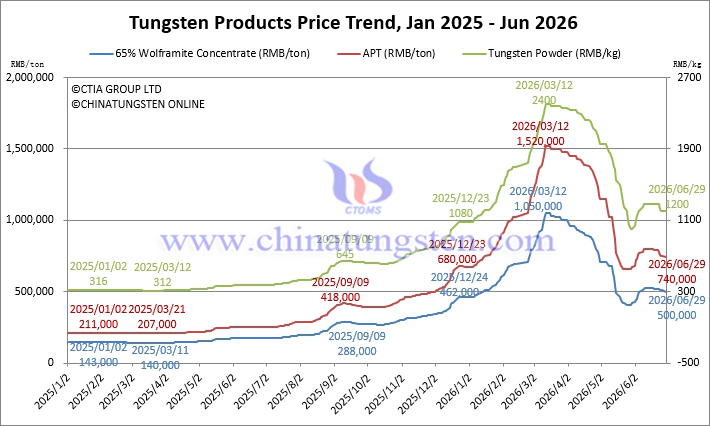
Considering the current state of the tungsten industry, China Tungsten Online believes that the recent significant price correction in tungsten waste and scrap is superficially due to market sentiment fluctuations, tungsten scrap quality, and a temporary imbalance between supply and demand. However, the deeper reason is closely related to insufficient compliance in some transactions within the distribution process. During the recycling and circulation of some scrap tungsten resources, there may be issues such as undocumented resale, non-standard invoices, and unclear responsible parties. Under the background of increasingly stringent tax regulations, the downstream transmission of these resources will face higher compliance costs and circulation obstacles, thus exerting temporary downward pressure on prices. Analyzing the spirit of the meeting, China Tungsten Online, from a policy perspective, points out that tax authorities have clearly identified the renewable resources and recycling sectors as key targets for rectification, and future investigations into high-risk enterprises and abnormal invoicing behavior will continue to be strengthened. This means that the waste tungsten market may face pressure in the short term, especially as resources from non-standard channels will be cleared out more quickly, increasing market volatility. However, in the medium to long term, this round of rectification will help purify the market environment and promote the standardization and transparency of the waste tungsten recycling system. Enterprises with legal qualifications, complete invoices, and compliant operations will gain more stable development space, and industry concentration and pricing mechanisms are expected to gradually optimize. For industry participants, strengthening compliance awareness and improving the invoicing system will become basic prerequisites for participating in market competition in the future.