As one of the world’s leading tungsten concentrate producers, Almonty Industries (Almonty) announced on March 16, 2026, that its Sangdong Tungsten Mine in Gangwon Province, South Korea, has completed Phase 1 commissioning, marking the return to production after more than 30 years of suspension.
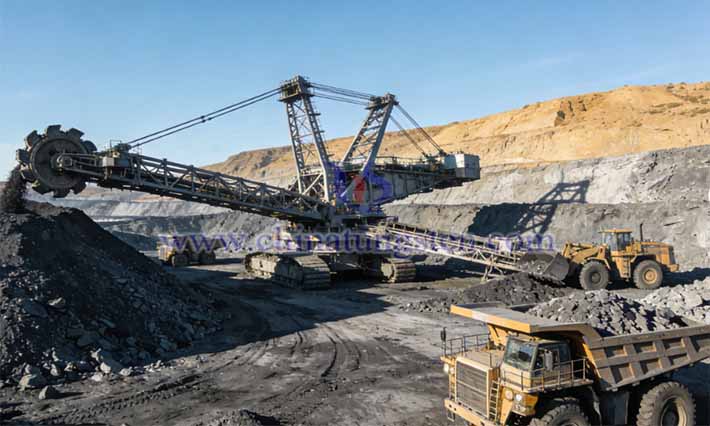
Phase 1 of the Sangdong Tungsten Mine is now in production, with the processing plant designed to handle approximately 640,000 tons of ore annually, yielding around 2,300 tons of tungsten concentrate per year. The planned Phase 2 expansion, expected to be operational in 2027, will increase the ore processing capacity to approximately 1.2 million tons annually, doubling the tungsten output to around 4,600 tons per year. When fully operational, the Sangdong Mine is expected to supply approximately 40% of the global tungsten demand outside of China.
The Sangdong Tungsten Mine is located in Yongwoo County, Gangwon Province, about 187 kilometers southeast of Seoul, South Korea. The mining area consists of 12 mining rights, covering a total area of 3,173 hectares and is classified as a skarn-type deposit. The mineralization is mainly found in the calcium-rich sedimentary rocks and limestone altered by hydrothermal processes. Historically, the Sangdong Tungsten Mine was one of the largest tungsten-producing mines in the world, but operations were suspended in the early 1990s due to low tungsten prices. Almonty stated that the total mineral resource at the Sangdong Mine is 52.765 million tons, with a tungsten trioxide (WO?) reserve of 230,000 tons; the measured mineral resources are 8.334 million tons, with a tungsten trioxide reserve of 40,800 tons. The expected mine life is over 45 years, with an average ore grade of approximately 0.51% tungsten trioxide (WO?), which is three times the global average grade.

Since acquiring the Sangdong Tungsten Mine in 2015, Almonty has invested over $100 million to redevelop it into a modern underground mining operation and has built a new processing plant. The redevelopment work includes approximately 4 kilometers of underground tunnel construction, a mineral processing plant equipped with SAG and ball mills supplied by Metso, as well as advanced operational monitoring systems.