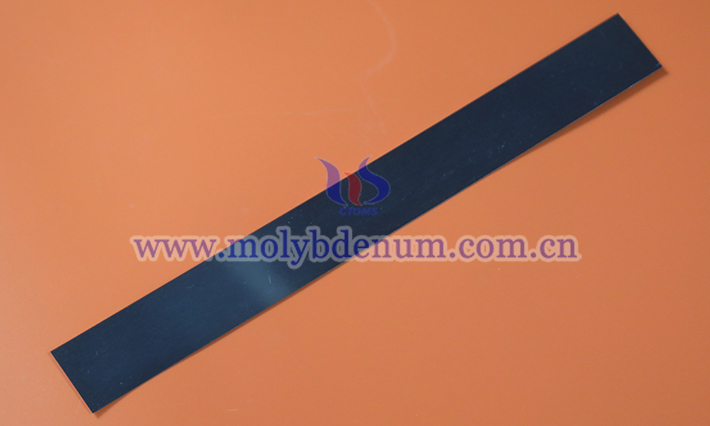
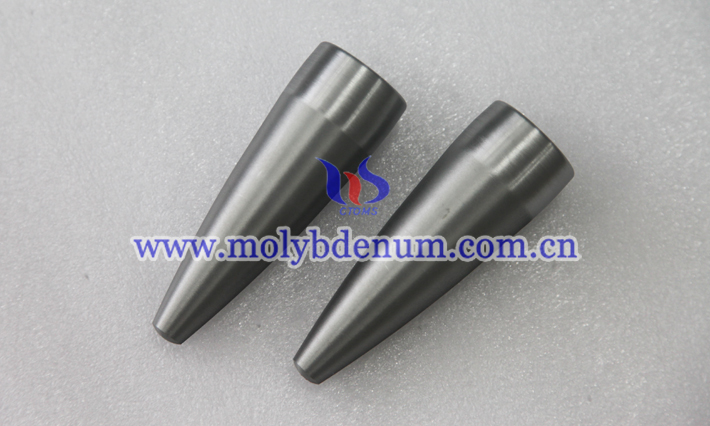
The earliest produced in the industry is titanium-zirconium-molybdenum (TZM) alloy, which is a molybdenum alloy containing 0.4%-0.55% titanium, 0.06%-0.12% zirconium and 0.01%-0.04% carbon. The total amount of alloying element does not exceed 1%.
There are two main sintering methods for titanium-zirconium-molybdenum alloy: hydrogen protection sintering and vacuum sintering as following:
1.Hydrogen protection sintering: the product is sintered under the protection of hydrogen.
During the process, due to the reduction effect of hydrogen, the oxides in the molybdenum powder will be replaced by hydrogen, reducing the oxygen content in the material to below tens of ug/g. For molybdenum alloys with active elements such as titanium and zirconium, due to the high activity of alloying elements, they will react with impurity gases in hydrogen to form oxides, nitrides, hydrides, etc., resulting in high impurity content in TZM alloy. It seriously affected its mechanical properties. Therefore, vacuum sintering is more popular with most factories.
 In the process, generally a slight excess of carbon element (relative to the predetermined composition) is added to deoxidize the metal oxide through the reduction of carbon element. Among them, there are two main types of deoxidation mechanisms: metal oxides in the carbon reduction system produce metal carbides and CO, and MoO2 undergo disproportionation reactions under vacuum and high temperature to produce metal Mo and MoO3 gases which are extracted.
In the disproportionation reaction of metal oxides and MoO2 in the carbon reduction system, the temperature at which the two reactions start is related to the partial pressure of the product gas in the furnace. As the partial pressure of the product in the furnace decreases, the reaction start temperature gradually decreases. Therefore, increasing the vacuum degree in the furnace and reducing the partial pressure of the product gas can lower the temperature at which the deoxygenation reaction proceeds, which is beneficial to the deoxygenation.
More details please visit website: http://molybdenum.com.cn/tzm.html