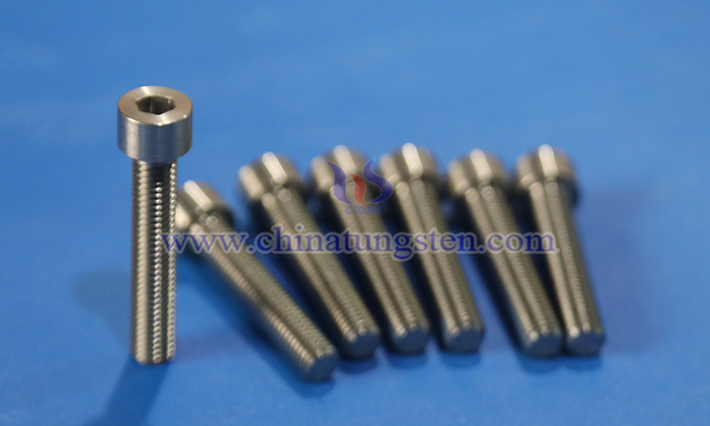
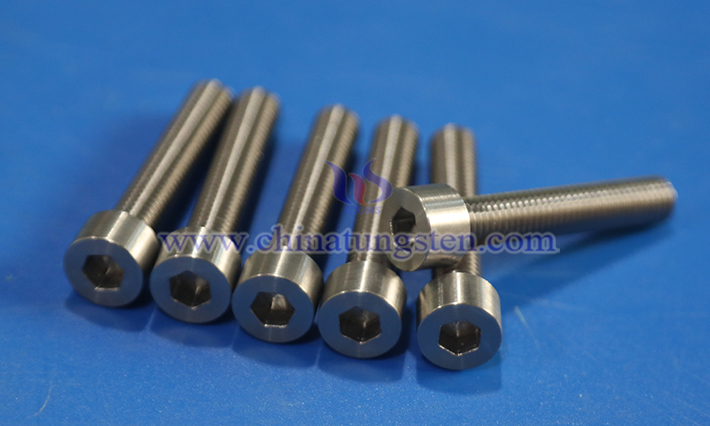
With the development of medical equipment toward higher precision, miniaturization, and greater reliability, the selection of materials for key structural components has received increasing attention. Tungsten alloy, as an engineering material that combines high density, high strength, and excellent shielding performance, has attracted extensive attention in recent years in the fields of medical imaging equipment, radiotherapy systems, and precision surgical instruments. Among them, tungsten alloy screws produced by CTIA GROUP, as important fastening components, not only perform structural connection functions but also meet requirements for radiation protection, weight balancing, and adaptability to special environments, providing new material solutions for modern medical device design.
CTIA GROUP and its parent company, CHINATUNGSTEN ONLINE, have been dedicated to the tungsten-molybdenum products industry for nearly 30 years. They specialize in providing flexible, customized global services for tungsten-molybdenum products, designing, manufacturing, and precisely processing various standard specifications, grades, and dimensional precision according to customer requirements, suitable for a wide range of applications. For more information on tungsten alloy, please visit the website: http://www.tungsten-alloy.com/index.htm. If you require tungsten alloy, please contact CTIA GROUP: sales@chinatungsten.com, 0592-5129595.
1.Characteristics of Tungsten Alloy Screws for Medical Equipment
The density of tungsten alloys can typically reach 16.5–18.8 g/cm3, which is much higher than that of ordinary stainless steel and most engineering alloys. The high-density characteristic enables tungsten alloys to achieve greater mass concentration within limited space, offering significant advantages in the design of internal counterweight systems in medical equipment. Meanwhile, high density gives tungsten alloys excellent X-ray and gamma-ray absorption capability, making them an important material for medical radiation shielding components.
Medical equipment operates in continuous working conditions for long periods, which imposes high requirements on the strength and stability of fasteners. Tungsten alloy has relatively high tensile strength and hardness, with tensile strength generally reaching above 700 MPa, and some high-performance materials can be further improved after heat treatment. This excellent mechanical performance enables tungsten alloy screws to withstand vibration loads, impact loads, and long-term fatigue stress under complex working conditions, thereby ensuring structural reliability during equipment operation.
Hospital environments commonly involve disinfectants such as alcohol, hydrogen peroxide, and hypochlorite. Tungsten alloy exhibits good chemical stability in conventional medical environments and can effectively resist the corrosive effects of various disinfectants and cleaning agents, maintaining dimensional accuracy and surface quality during long-term use.
In addition, tungsten alloy screws produced by CTIA GROUP are non-toxic and non-radioactive, and do not cause significant harm to humans or the environment. Some non-magnetic tungsten alloy screws (tungsten-nickel-copper alloy screws) can also be applied in components related to magnetic resonance imaging equipment, helping to reduce material interference with magnetic field environments.
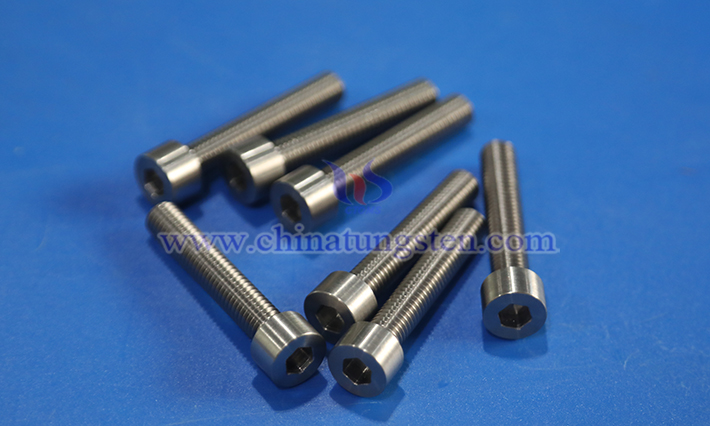
2.Main Application Areas in Medical Equipment
In medical linear accelerators, gamma knife systems, and radiotherapy auxiliary systems, tungsten alloys are widely used in the manufacture of collimators, shielding modules, and related fixed structures. Tungsten alloy screws can maintain stable mechanical performance in high-radiation environments, thereby further improving the positioning accuracy of key components. Due to their inherent radiation absorption capability, they can also contribute to enhancing overall shielding performance in certain structural designs.
CT scanning systems, PET (Positron Emission Tomography), and nuclear medicine equipment typically require high-precision beam control devices. Tungsten alloy screws can be used to secure collimation structures and shielding modules, helping to maintain the accuracy of beam paths, improve image quality, and reduce radiation exposure in non-target areas.
Large medical equipment often involves high-speed rotating mechanisms, such as CT gantries and radiotherapy rotational treatment systems. Due to the high density per unit volume of tungsten alloys, they can provide the required counterweight within limited installation space, enabling equipment center-of-gravity optimization and balance control, thereby reducing vibration and improving operational precision.
3.Standard Testing System for Medical Tungsten Alloy Screws
Before leaving the factory, medical tungsten alloy screws produced by CTIA GROUP are usually required to undergo multiple performance verification tests, including chemical composition analysis, tensile strength testing, hardness testing, dimensional accuracy inspection, metallographic structure analysis, corrosion resistance testing, and biocompatibility evaluation.