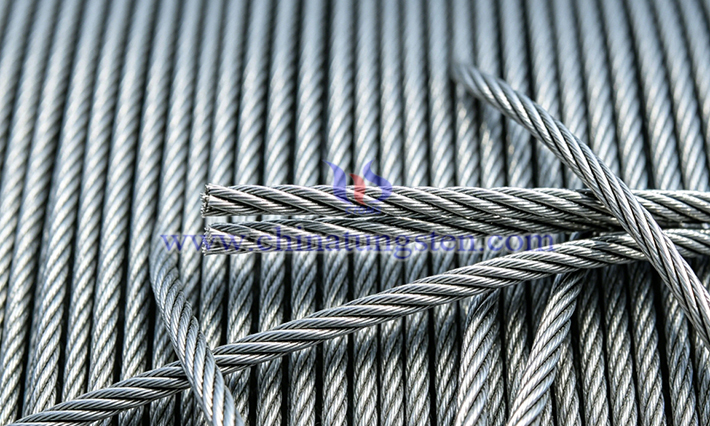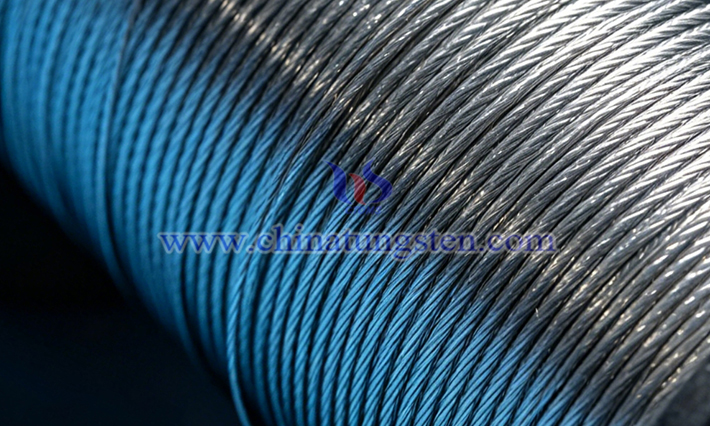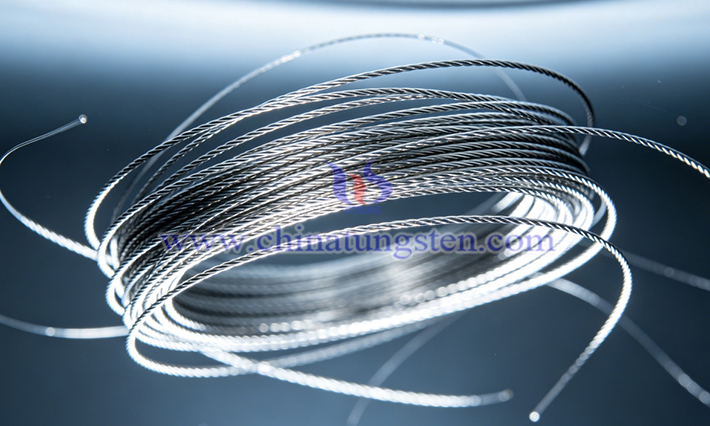
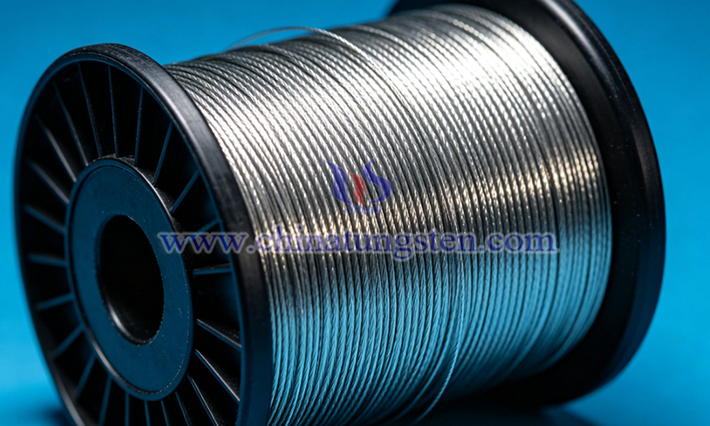
Tungsten wire tendon rope is primarily made from high-performance tungsten wire using a precision multi-strand stranding process. It possesses high strength, flexibility, and extremely strong radiation resistance, making it an important flexible transmission material in the nuclear industry, nuclear emergency response, radioactive waste management, and special robotics fields. Under high-radiation conditions such as strong gamma rays and neutrons, CTIA GROUP's tungsten wire tendon rope maintains stable mechanical properties and dimensional accuracy, providing reliable remote drive capabilities for robot joints, robotic arms, and end effectors.
1. Advantages of Tungsten Wire Tendon Ropes
Tungsten itself possesses extremely strong radiation shielding and resistance capabilities. It is not easily activated, degraded, or embrittled under high-dose gamma-ray and neutron radiation, maintaining its strength and flexibility over a long period. This avoids the strength attenuation, fracture, or creep caused by radiation in traditional materials, and reduces interference with surrounding electronic components.
Tungsten wire tendon ropes have high tensile strength, are resistant to high temperatures (melting point up to 3410℃), low temperatures, and corrosion. They can withstand large loads even with small diameter specifications and are suitable for the complex operating conditions of nuclear facilities, including high temperatures, high pressures, and corrosive media, significantly improving system reliability.
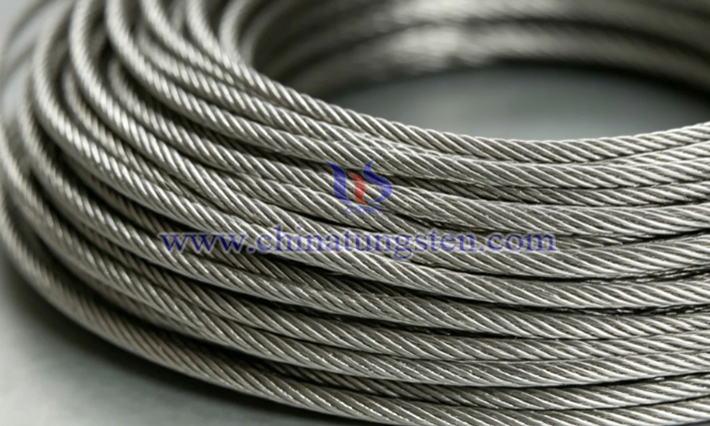
Tungsten wire tendon ropes can be selected with appropriate stranding structures according to performance and size requirements, such as 7×19, 7×37, and 7×7×7. They have a small bending radius and low coefficient of friction, making them suitable for confined spaces and complex wiring with multiple joints.
2. Applications of Tungsten Wire Ropes in High-Radiation Environments
Tungsten wire ropes are mainly used in nuclear-related robotic systems that require remote control and high reliability, including but not limited to (1) nuclear power plant inspection and maintenance robots: driving robotic arms to complete tasks such as reactor vessel inspection and pipeline testing, reducing human radiation exposure; (2) nuclear emergency and decommissioning robots: used for on-site handling of nuclear accidents, sorting and dismantling of radioactive waste, supporting high-degree-of-freedom precision operations such as grasping and cutting; (3) nuclear fuel processing and special platforms: achieving precise positioning and transmission in high-radiation hot chambers or spent fuel pools, ensuring operational safety and accuracy. Furthermore, it can be extended to embodied intelligent robots involved in radiation or extreme environments, such as aerospace and polar exploration.