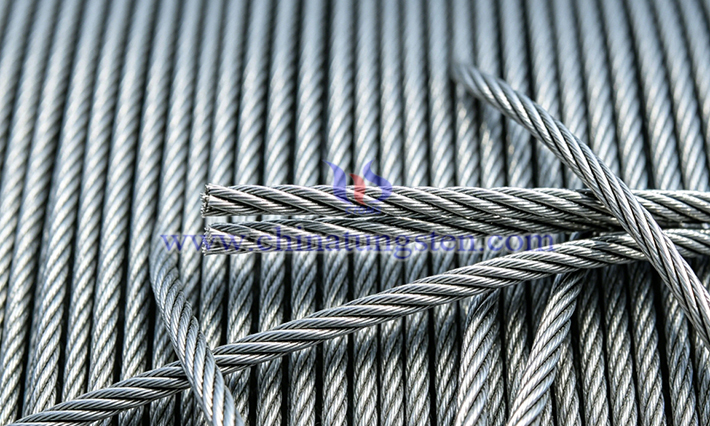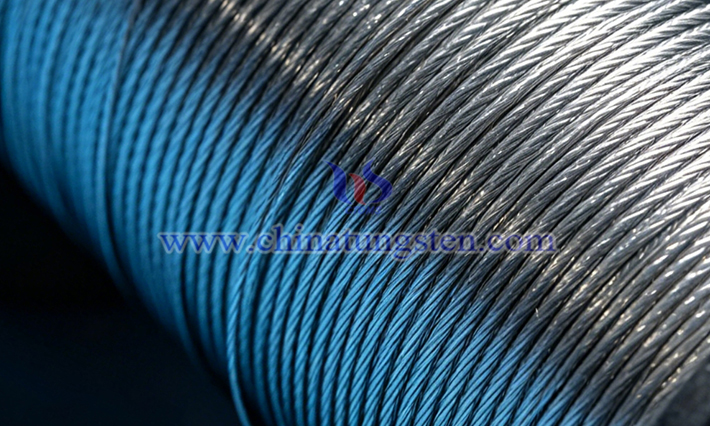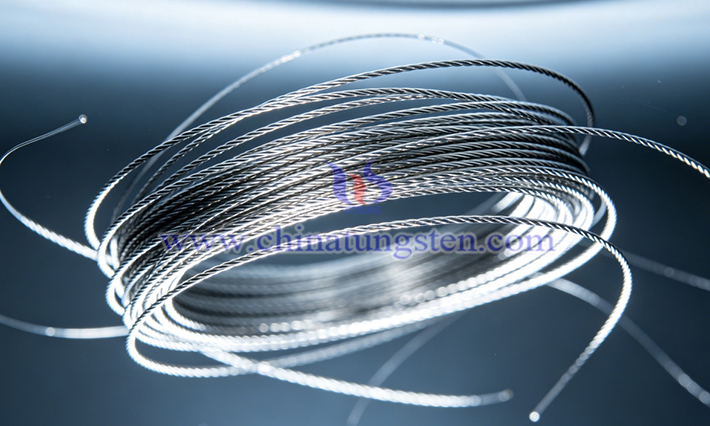
Tungsten wire tendon ropes for surgical robots are key flexible transmission components in minimally invasive surgical systems. Made from high-performance tungsten alloy wire through a precision multi-strand twisting process, they mimic the pulling motion of human tendons, enabling precise multi-degree-of-freedom control of end-effectors. Medical-grade tungsten wire tendon ropes provided by CTIA GROUP significantly improve the reliability and operational accuracy of surgical robots while meeting stringent sterilization requirements, and have become an important support material for high-end laparoscopic, orthopedic, and neurosurgical robots.
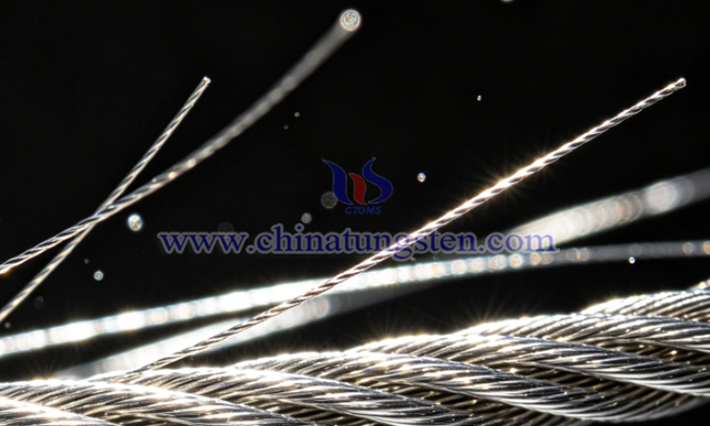
1. Advantages of Tungsten Wire Tendon Ropes for Surgical Robots
High Density and High Strength: Tungsten wire tendon ropes have a tensile strength far exceeding that of stainless steel wire, and can be used in ultra-fine diameters of 0.2-0.8mm to provide sufficient load-bearing capacity, adapting to the narrow channels and compact structural designs of minimally invasive instruments.
Fatigue Resistance and Creep Resistance: Capable of withstanding millions of repeated bending cycles under small-radius pulleys (approximately 2mm), with extremely low residual elongation and no significant risk of wire breakage. High strength retention after multiple high-temperature, high-pressure sterilization processes, far superior to the easy creep of polymer fibers and the fatigue problems of stainless steel, ensuring stable motion precision throughout the surgical procedure.
Biocompatibility: Employing complex twisted structures such as 7×19, 7×37, and 19×19, it features a low coefficient of friction and excellent bending performance, suitable for complex joint routing. Simultaneously, its high density ensures clear intraoperative imaging, and its wear resistance and high-temperature sterilization resistance meet medical standards such as ISO 10993, reducing the risk of infection and instrument malfunction.

2. Applications of Tungsten Wire Tendon Cables in Surgical Robots
Laparoscopic/Laparoscopic Surgical Robots: Drives the wrist and end effectors (such as graspers, scissors, and suture devices), achieving highly flexible operation, reducing surgeon fatigue, and improving surgical precision.
Orthopedic and Neurosurgical Robots: Supports precise bone positioning and neural tissue manipulation under minimally invasive pathways, requiring extremely high stability and safety.
Interventional and transluminal surgical robots: Utilizing ultra-narrow diameter characteristics to achieve precise navigation and treatment within complex blood vessels or cavities.