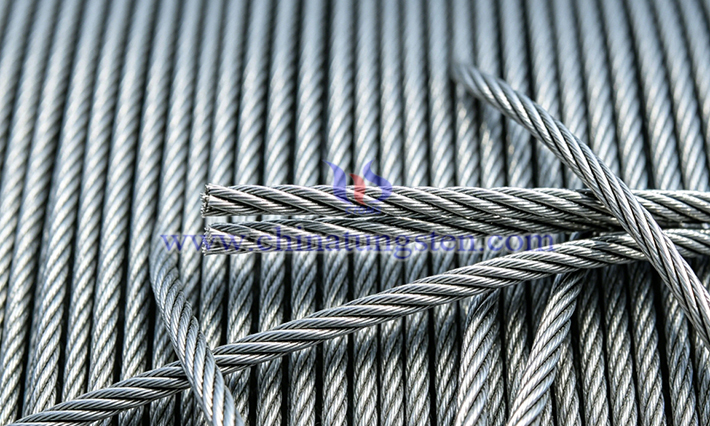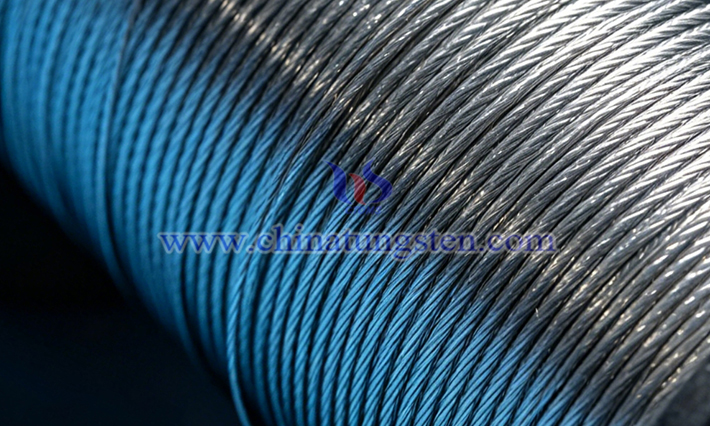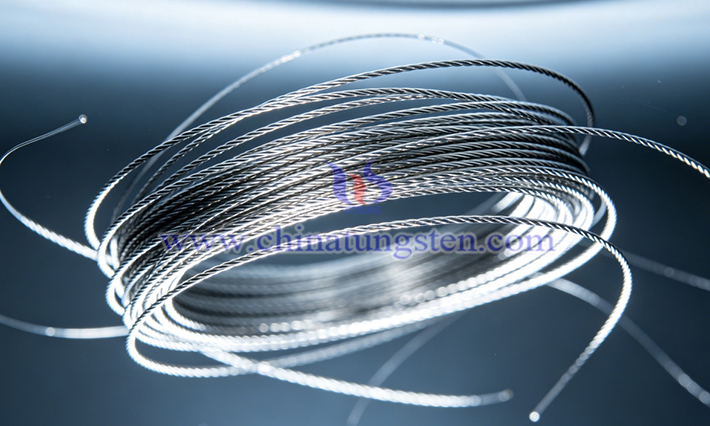
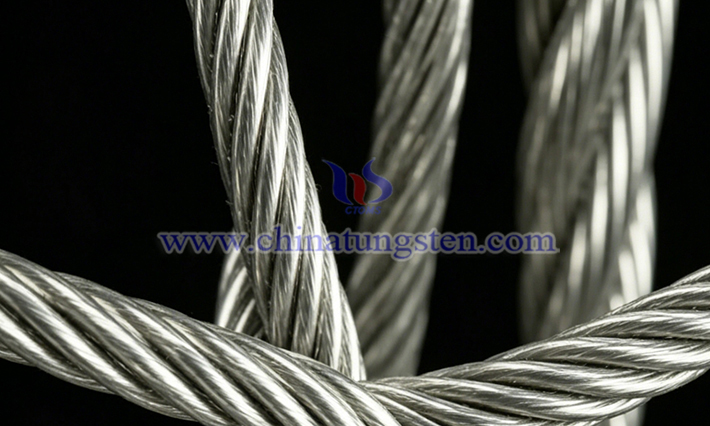
CTIA GROUP's tungsten wire tendon rope, as a high-performance rope-driven transmission material, exhibits significant advantages in extreme temperature environments due to its excellent thermal stability and mechanical properties. Especially under low-temperature conditions, tungsten wire tendon rope maintains high strength, high precision, and long lifespan, far superior to traditional steel wire rope and polymer fiber rope, making it an ideal choice for aerospace, polar exploration, and humanoid robot dexterity hands.
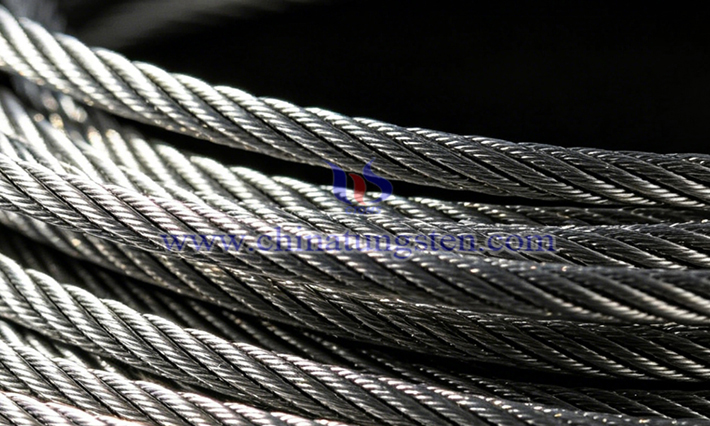
1. Performance of Tungsten Wire Tendon Rope in Low-Temperature Environments
CTIA GROUP's tungsten wire tendon rope has a wide temperature range, capable of stable operation within the temperature range of -200℃ to +350℃. This performance far exceeds that of conventional materials, laying the foundation for its reliable application in low-temperature environments.
In low-temperature environments, tungsten wire tendon rope exhibits excellent mechanical stability. Tungsten materials boast a melting point as high as 3410℃ and an extremely low coefficient of thermal expansion. Even at ultra-low temperatures, they maintain high strength, high hardness, and extremely low creep characteristics, exhibiting excellent dimensional stability. Unlike polymer fiber materials, which are prone to embrittlement at low temperatures, tungsten does not experience significant performance degradation due to temperature changes, unlike ordinary steel wire ropes.
Furthermore, tendon ropes made from fine-diameter, high-performance tungsten wires through precision braiding retain good flexibility and fatigue resistance even at small bending radii, resulting in a long cycle life. Low-temperature environments do not significantly increase their risk of brittle fracture, maintaining reliable transmission accuracy and service life.
Compared to common alternative materials, CTIA GROUP's tungsten wire tendon ropes offer more significant advantages: stainless steel or steel wire ropes generally have poor low-temperature adaptability and are susceptible to corrosion; polymer fiber ropes (such as ultra-high molecular weight polyethylene) are prone to embrittlement at low temperatures and softening at high temperatures, exhibiting significant creep. Tungsten wire tendon ropes, on the other hand, possess comprehensive environmental stability, including corrosion resistance, radiation resistance, aging resistance, and non-hygroscopic properties, making them the preferred material for extreme conditions.
2. Main Applications of Tungsten Wire Tendon Cables
Thanks to their excellent low-temperature adaptability, CTIA GROUP's tungsten wire tendon cables have been widely used in many demanding fields. In special robot systems such as aerospace and polar exploration, they can withstand cryogenic environments, ensuring the long-term stable operation of the transmission system. In the dexterous hands of humanoid robots, tungsten wire tendon cables provide crucial support for high-precision, long-life, and low-maintenance joint actuation, adapting to indoor, outdoor, and industrial low-temperature environments. Furthermore, this material is also widely used in medical devices (for high-temperature sterilization), nuclear power equipment, and other high- and low-temperature industrial environments, fully demonstrating its comprehensive performance advantages under extreme conditions.