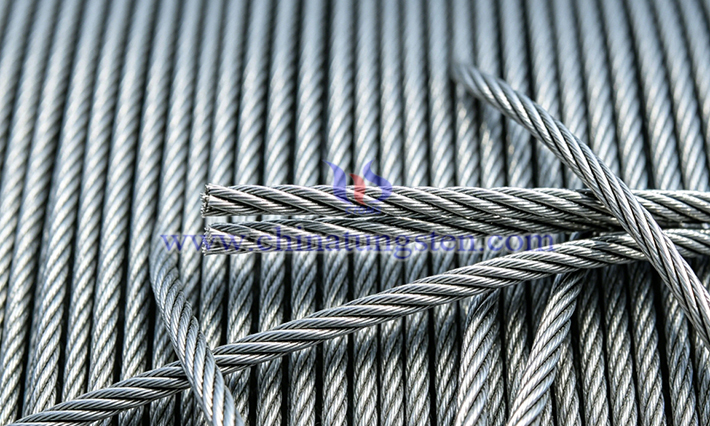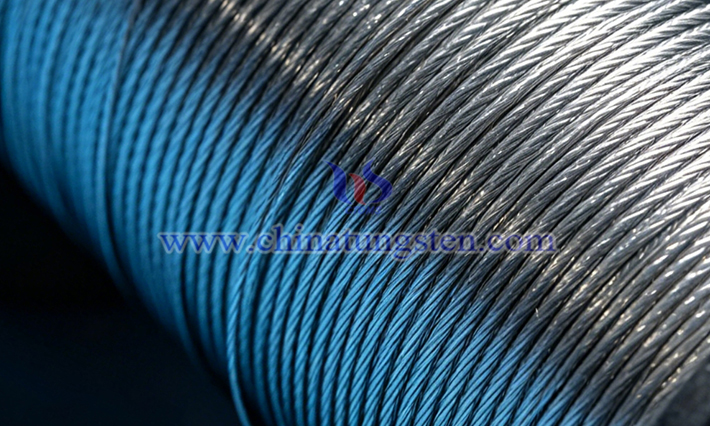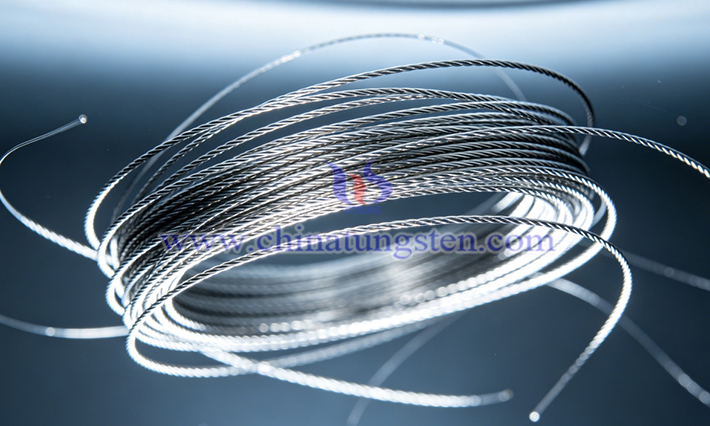
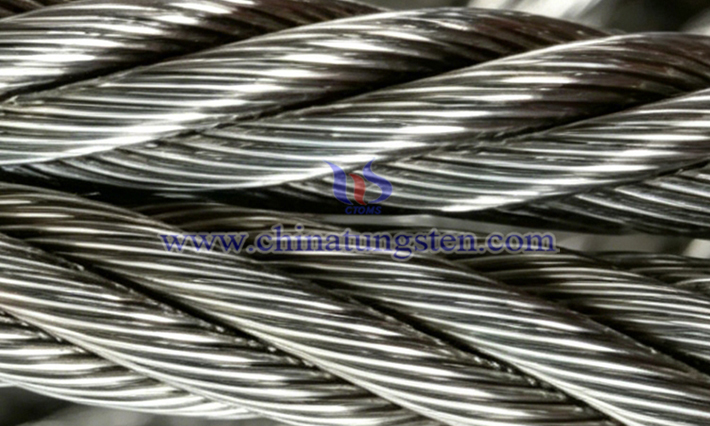
Tungsten wire tendon ropes, also known as tungsten cords, are flexible metal transmission cables made from high-purity tungsten wire or tungsten alloy wire as the base material, through stranding, braiding, or composite processes. In the robotics field, they are mainly used as artificial tendons in tendon-driven transmission systems, particularly for precision motion control in humanoid robot dexterity hands and surgical robots.
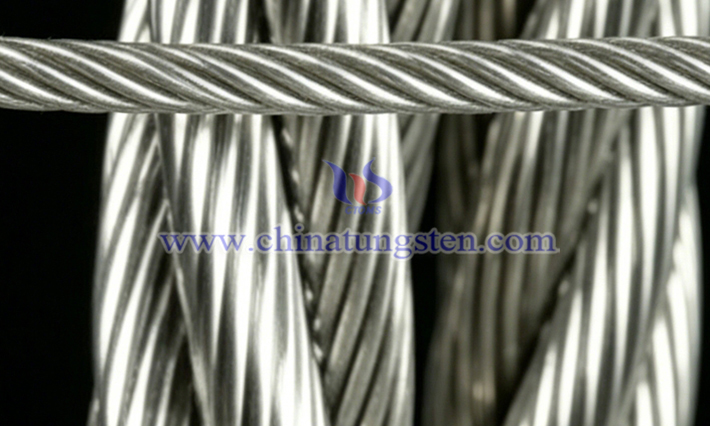
Common structures include stranding methods such as 7×7, 7×19, 7×37, 7×7×7, and 19×7×7, with diameters ranging from 0.2-4mm, adapting to the compact space and small bending radius of robot joints or the movement of limbs such as robot arms.
I. Main Advantages of Tungsten Wire Tendon Ropes
Compared to stainless steel wire ropes, tungsten wire has higher tensile strength, better fatigue life, and can achieve the same performance with finer specifications. Compared to polymer fibers, tungsten wire has no internal friction, a low coefficient of friction, high strength, and good creep resistance, but it is more expensive and carries the risk of fatigue fracture.
(1) High strength and hardness: Tungsten has extremely high strength and hardness, can withstand large tensile forces, provides high load-bearing capacity, and is not easily deformed or broken.
(2) Excellent creep resistance: It does not lengthen over long-term use and has good dimensional stability, far superior to polymer fiber ropes. This is key to the high-precision repetitive movements of dexterous hands.
(3) Fatigue resistance and durability: It has a long lifespan under repeated bending and stretching, and good wear resistance, making it especially suitable for high-degree-of-freedom dexterous hands.
(4) High temperature resistance: Tungsten has an extremely high melting point, making it suitable for high-temperature or harsh environments.
(5) Smaller diameter: Smaller diameter for the same strength, saving space and suitable for minimally invasive surgical robots and compact humanoid robots.
II. Application of Tungsten Wire Tendon Ropes in Robots
Humanoid robot dexterous hands: Used for precise traction transmission of finger joints to achieve high-degree-of-freedom dexterous operations.
Surgical robots: Used for motion control of precision instruments, requiring extremely fine cables wound around small pulleys, with extremely high requirements for lifespan and reliability.
Other precision transmission applications include industrial robots and continuous motion robots.