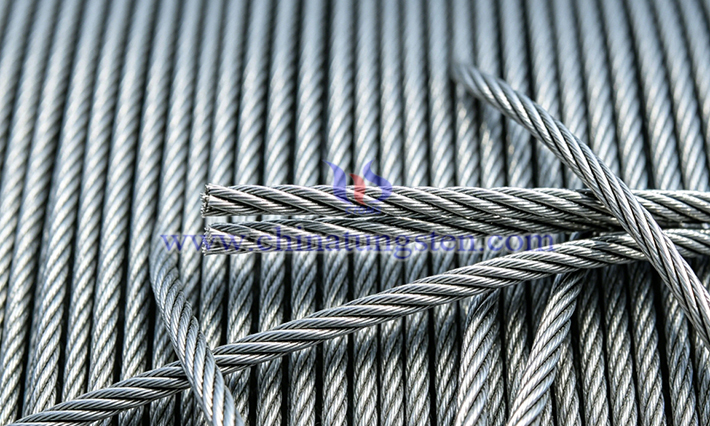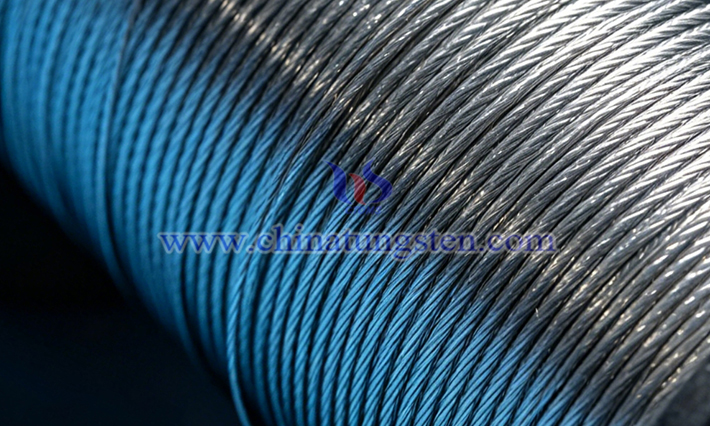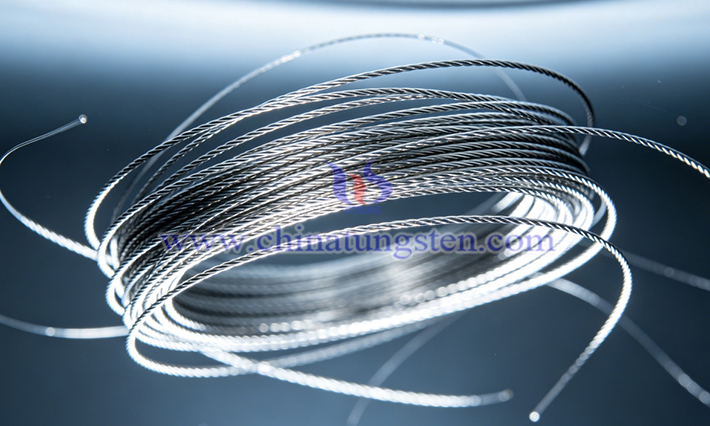
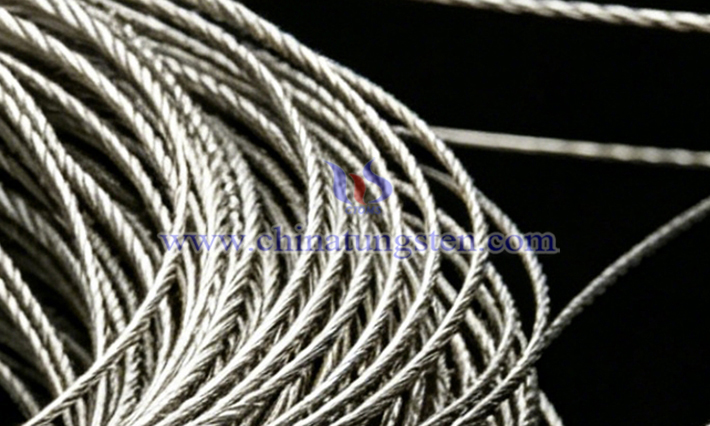
In precision tethered systems such as humanoid robot dexterous hands and surgical robots, tungsten wire tendon rope is a high-performance alternative that prioritizes maximum fatigue life, miniaturization, high precision, and low creep. It is particularly suitable for small-diameter, high-frequency bending-torsional load scenarios. Stainless steel wire rope is generally used in budget-constrained, weight-sensitive, or other conventional applications.
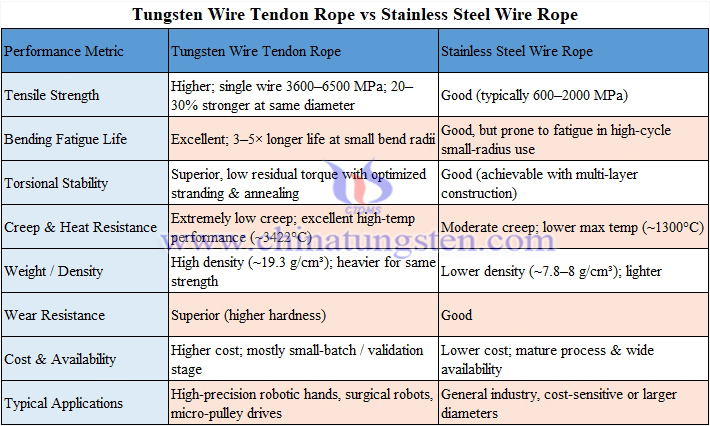
The comparison between tungsten wire tendon rope and stainless steel wire rope is as follows:
1. Strength and Breaking Tensile Strength
Tungsten wire tendon rope: Higher single-filament tensile strength (up to approximately 3600–6500 MPa), and the overall breaking tensile strength is typically 20–30% higher than that of stainless steel of the same specification. For the same breaking strength, a smaller diameter can be used, allowing for a more compact design.
Stainless steel wire rope: High strength (typically 600–2000 MPa for 316 stainless steel), but overall lower than tungsten wire. Suitable for medium loads.
2. Bending Fatigue Life and Flexibility
Tungsten wire tendon rope: Significantly superior bending fatigue life, reaching 3–5 times that of stainless steel under small pulleys (even <1mm bending radius). The multi-strand fine filament structure provides good flexibility, suitable for robot joints subjected to high-frequency repetitive bending and twisting.
Stainless steel wire rope: Good fatigue performance, but prone to fatigue fracture under small radii and high-cycle conditions.
3. Torsional Stability
Both can achieve good non-rotational properties through multi-layer reverse twisting (e.g., 7×7×7). With the same structure, tungsten wire, combined with precision tension control and annealing processes, more easily eliminates residual torque, resulting in less drift during long-term operation.
4. Creep, High Temperature Resistance, and Environmental Resistance
Tungsten wire tendon rope: Extremely low creep, high temperature resistance (melting point ~6192°F/~3422°C), suitable for high-temperature or long-term high-precision applications. Strong corrosion resistance (especially after surface optimization).
Stainless steel wire rope: Relatively high creep, temperature resistance around ~2500°F (316 stainless steel), excellent corrosion resistance (especially 316/316L), but performance degrades at high temperatures.
5. Weight and Density
Tungsten wire: High density (~19.3 g/cm3), weighing ~2.5 times more than stainless steel wire rope at the same strength.
Stainless steel: Lower density (~7.8–8 g/cm3), lighter, suitable for weight-sensitive applications.
6. Cost and Processing
Tungsten wire tendon rope: Higher raw material and precision processing costs, currently mostly in the verification/small-batch stage.
Stainless steel wire rope: Mature technology, lower cost, ample supply.
7. Other Properties
Abrasion Resistance/Surface Finish: Tungsten wire has higher hardness and better abrasion resistance, but requires good surface treatment to prevent wire slippage.
Application Compatibility: Tungsten wire is particularly suitable for medical surgical robots and high-precision small pulley transmissions for dexterous hands; stainless steel is suitable for general industrial, cost-sensitive, or large-diameter applications.