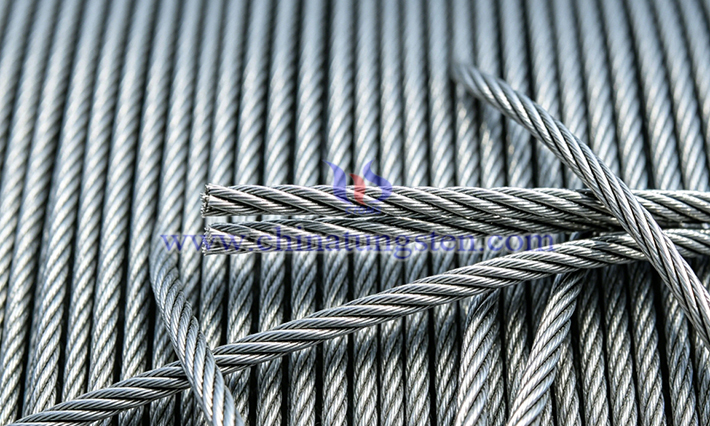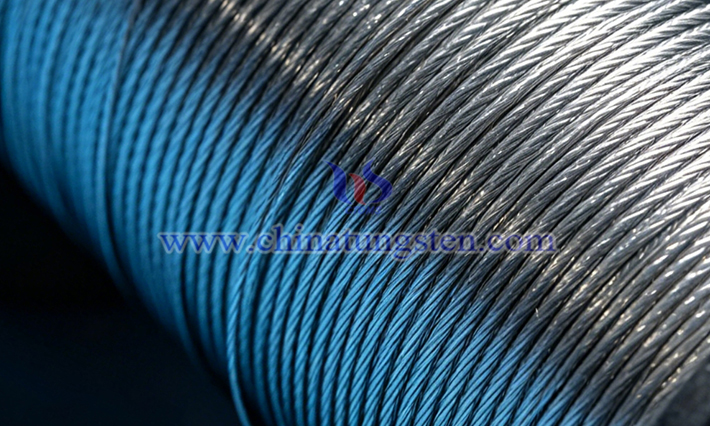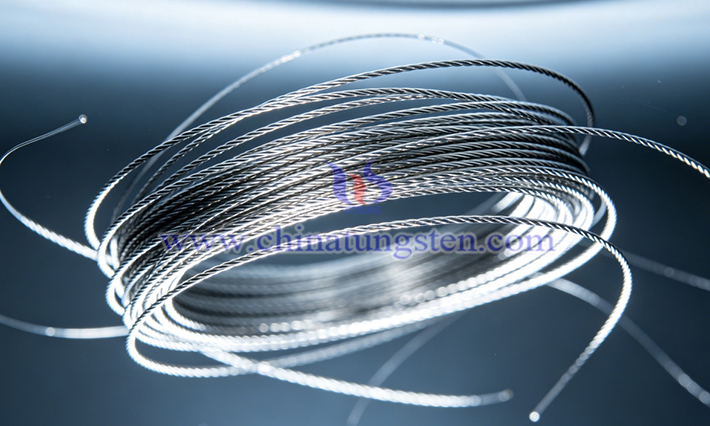
The excellent thermal conductivity of tungsten wire tendon ropes is one of their superior physical properties, primarily due to the excellent thermal conductivity of a single tungsten wire. After being fabricated into a tendon rope, its efficient thermal conductivity and the thermal resistance inherent in the twisted structure achieve a dynamic balance.
1. High Thermal Conductivity of a Single Wire
The thermal conductivity of tungsten wire tendon ropes primarily stems from its base material. Tungsten metal has a thermal conductivity of approximately 170 to 173 W/(m·K). Compared to materials such as stainless steel (approximately 15 W/(m·K)), tungsten wire has a thermal conductivity more than an order of magnitude higher, enabling more efficient heat transfer. In high-frequency transmission scenarios such as robotic dexterity hands, the friction between the tendon rope and the guide wheel generates significant heat. The high thermal conductivity of tungsten wire helps to rapidly conduct heat from the friction point to the entire tendon rope, preventing a sharp increase in localized temperature.
2. Internal Heat Transfer Network of the Tungsten Cable
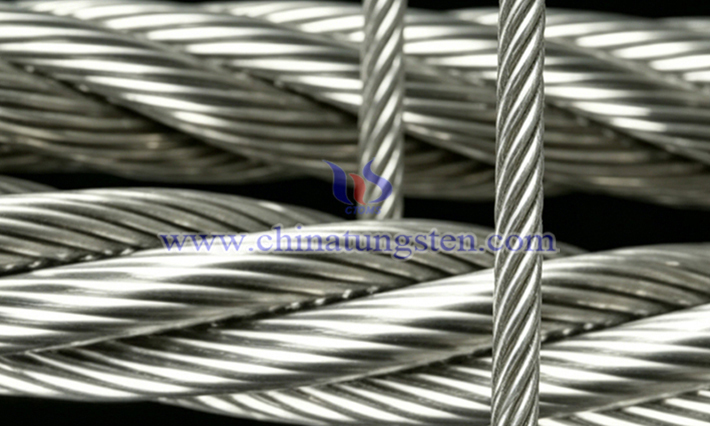
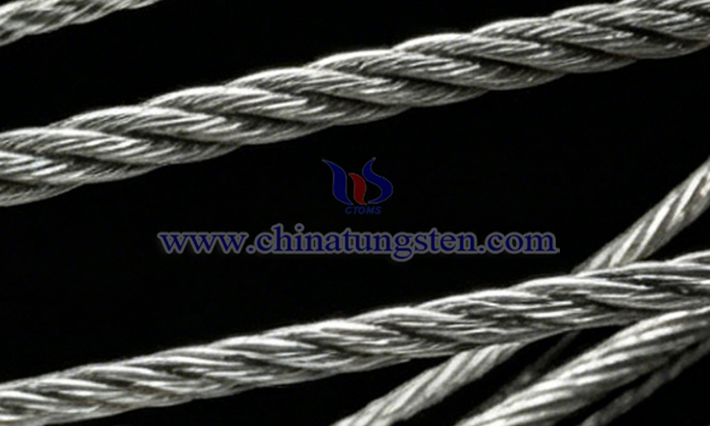
For tungsten cables made of multiple strands of monofilament twisted together, their internal microstructure forms a complex heat transfer network. Efficient heat transfer paths rely on point or line contact interfaces formed between the monofilaments. Heat flow conduction in the tungsten cable exhibits two main characteristics: first, heat can be efficiently conducted axially using the monofilaments themselves; second, heat can also be transferred radially through the contact interfaces between the strands. However, the thermal resistance of the contact interfaces is crucial to the overall thermal conductivity of the tungsten cable. When heat passes through the contact points between the monofilaments, the limited contact area generates significant contact thermal resistance, resulting in radial heat transfer efficiency far lower than axial efficiency. Therefore, the equivalent thermal conductivity of the entire tungsten cable is lower than the material value of a single tungsten wire.
3. High-Temperature Operation Stability
Tungsten wire tungsten cables can still operate reliably at high temperatures. Even at high temperatures, the tungsten wire maintains good mechanical strength and stable thermal conductivity. For example, when the temperature rises from room temperature to 1000°C, its thermal conductivity may drop to about 130 W/(m·K), but it is still better than the performance of most metals at that temperature. In high-frequency reciprocating motion, tungsten wire tendons can quickly disperse and conduct away the heat generated by friction, effectively preventing localized heat accumulation and thus protecting the tendons from thermal damage and extending their service life. This characteristic is particularly crucial for the internal tendon systems of robots that operate for long periods and are difficult to maintain, reducing the risk of tension relaxation and breakage due to thermal aging.