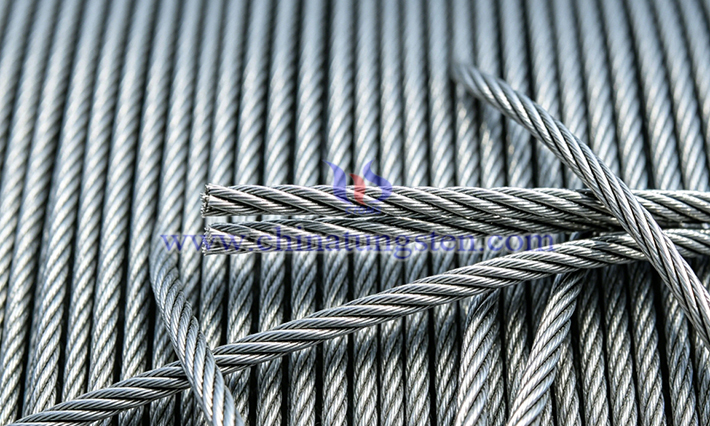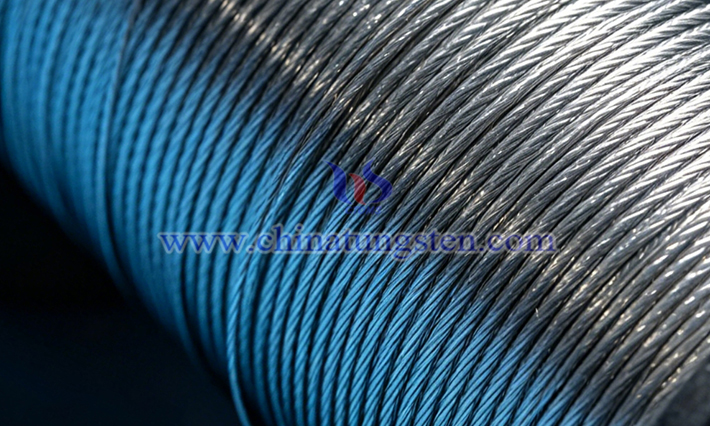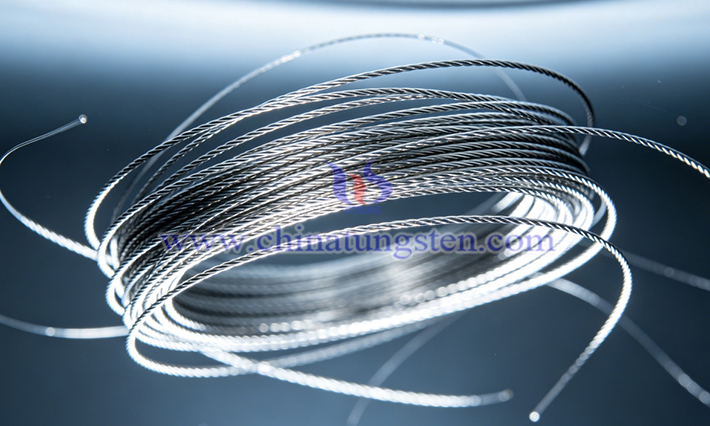
The twisting process of tungsten wire tendon rope is the core factor determining its mechanical properties, fatigue life, and transmission accuracy. This process, through the precise twisting and tension control of multiple tungsten wires, constructs a rope-like structure that combines high strength, high flexibility, and wear resistance to meet the stringent requirements of high-frequency, heavy-load transmission scenarios such as dexterous hands in humanoid robots.
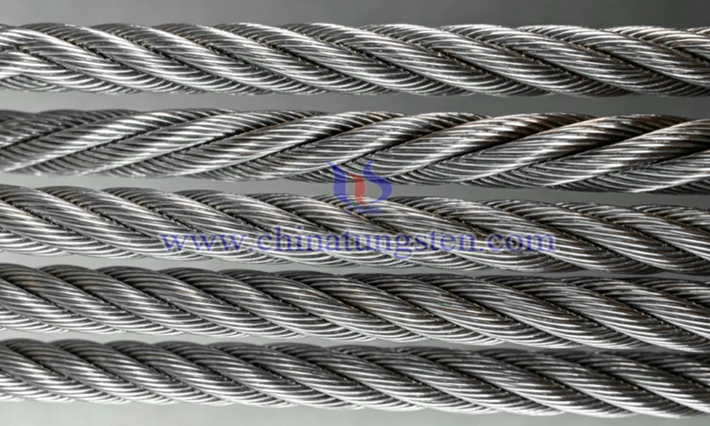
1. Differentiated Pretension Treatment During the stranding stage, a differentiated pretension proportional to the diameter of each individual filament is applied to the tungsten wire tendon rope. Process research on high-tensile, low-relaxation tungsten wire tendon rope for dexterous hands shows that the pretension value can be set according to the principle of multiplying the wire diameter by 30 Newtons. This differentiated tension configuration optimizes the internal stress distribution, significantly improving breaking strength and reducing stress relaxation rate. In industrial production, advanced pre-stretching treatment strictly controls the stress relaxation rate of tendon ropes to within 5%, ensuring no loose ends or broken wires after cutting, and guaranteeing zero deviation in power transmission.
2. Tungsten Wire Tendon Rope Precision Twisting Process The twisting method directly determines the mechanical properties of the tendon rope and the feasibility of subsequent processing. Using an advanced twisting mechanism to intertwine multiple strands of tungsten wire results in a tight rope structure that is not easily loosened. The 7×7 composite twisting structure is the most typical, its core being the optimization of the stress and relative movement between the inner and outer strands. This unique twisting structure gives the tendon rope a smaller bending radius while enhancing its wear and fatigue resistance. Furthermore, the tiny gaps between the strands after twisting can serve as oil storage and chip removal spaces, thereby improving lubrication.
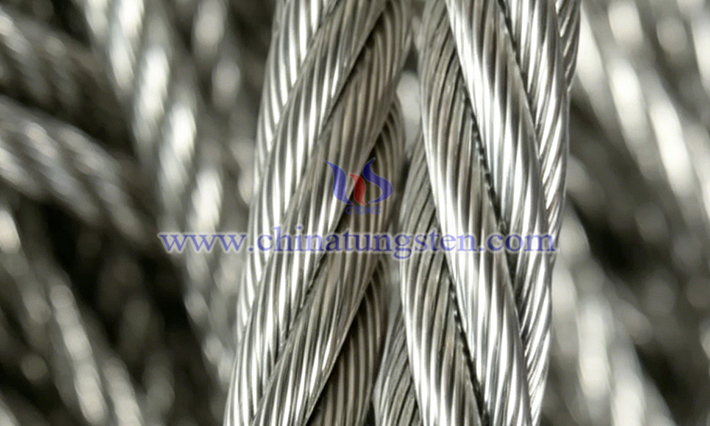
3. Tungsten Wire Tendon Rope Structural Design Ultimately, the performance of the tendon rope is often determined by its internal twisting structure. For example, a complex structure employing multiple layers of tungsten wires with varying diameters (e.g., 7×7×7×D1+6×[(7×7×D1)+6×(7×D2)], where D1 and D2 represent parameters indicating different tungsten wire diameters) is the core design principle for achieving high strength, high flexibility, and fatigue resistance. This structure ensures the tendon rope maintains excellent internal wear resistance under high-frequency bending conditions, a prerequisite for extending its fatigue life.
4. Post-Twisting Heat Setting To eliminate residual stress within the tendon rope after twisting, precise heat setting is required after twisting. By precisely controlling temperature, time, and atmosphere conditions during heat treatment, the single filaments harden and their geometry is fixed, significantly improving the thermal dimensional stability of the tendon rope and preventing elongation or relaxation due to stress release during later use. This is crucial for robotic applications requiring high repeatability and positioning accuracy.