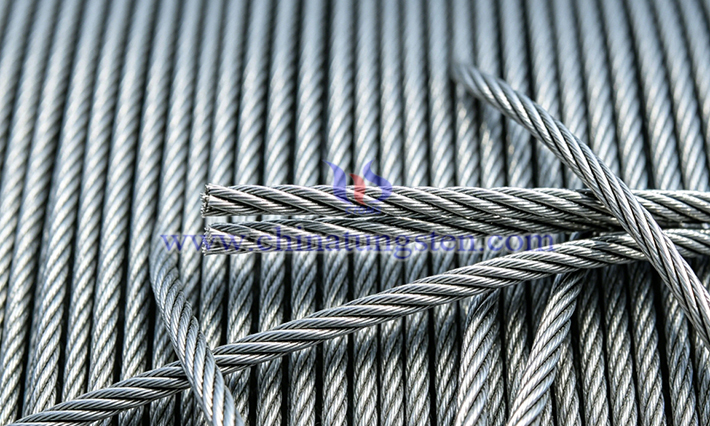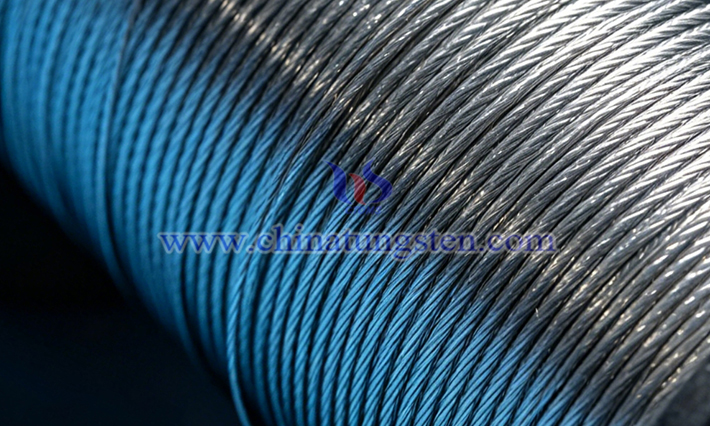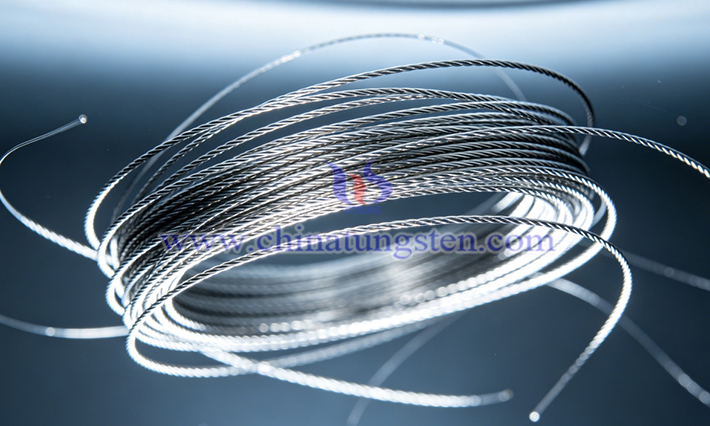
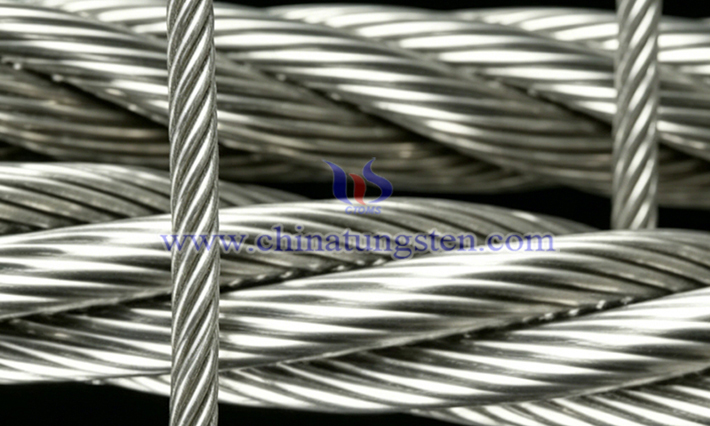
CTIA GROUP tungsten wire tendon rope is a high-performance rope woven from multiple strands of fine tungsten wire. It has advantages such as high strength, low creep, small bending radius, fatigue resistance, high temperature resistance, and corrosion resistance, and is often used as a bionic tendon for transmitting force and movement in robots. However, tungsten wire is relatively brittle at room temperature, and its brittleness increases after high-temperature use. Strict adherence to operating procedures is necessary to avoid wire breakage, strand unraveling, or failure. The main precautions for using tungsten wire tendon rope are as follows:
1. Pre-use Inspection
Appearance and Surface Quality: Carefully inspect for hard damage, knots, hard folds, scratches, burrs, oxidation, or deformation. Check that the tension is even and appropriate during winding.
Dimensions and Performance: Confirm that the diameter tolerance, breaking force, etc., meet specifications. Stop using immediately if any problems are found.
For robot tendon chord assemblies, it is also necessary to check whether the crimped terminals at both ends are secure and undamaged, noting that crimping points are common breakage points.
2. Installation and Operation
Handle with care: Avoid excessive pulling, forced twisting, or bending during installation, especially sharp bends. When unwinding, operate slowly along the original winding direction.
Avoid collisions and compression: During installation, debugging, or robot operation, prevent the tendon chord from colliding, being compressed, or getting stuck with mechanical parts.
Bending radius: Composite tungsten wire tendon chords have the advantage of a smaller radius, but the minimum bending radius requirement must still be observed.
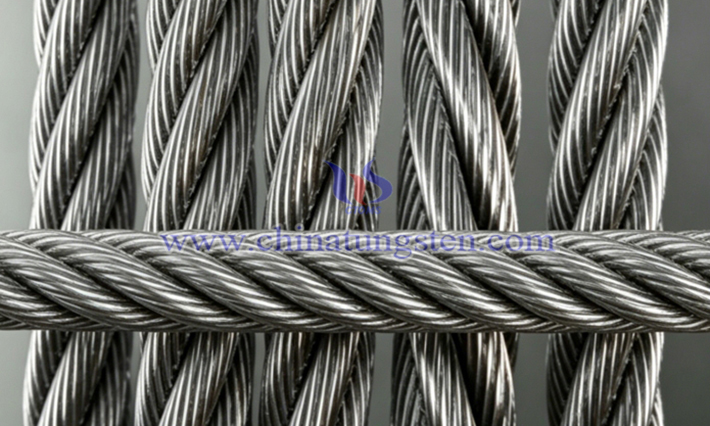
Rotation direction: During operation, the rotation direction should be consistent with the weaving winding direction; otherwise, loose strands, twisting, or wire breakage may occur.
Terminal crimping: Ensure that the crimping process does not damage individual filaments and avoid stress concentration. In robot applications, tendon chords are often pre-crimped assemblies and installed directly according to the design.
3. Monitoring during use
Load and fatigue: Avoid overloading. Robotic dexterity hands need to consider repeated high-frequency bending and stretching, monitoring creep and wear. Tungsten wire exhibits good creep resistance, but its fatigue resistance is relatively poor compared to metallic materials; therefore, the risk of breakage should be considered.
Environmental Adaptability: Resistant to high temperatures and corrosion, but extreme chemical environments or excessive mechanical impact should still be avoided. Material compatibility needs to be confirmed for medical or sterilization applications.
Lubrication and Protection: Appropriate lubrication or protective sleeves may be required as recommended by the manufacturer to reduce wear.
Regular Inspection: Monitor for abnormal sounds, vibrations, or operational deviations during operation. Regularly clean dust and inspect for wear/broken wires.
4. Maintenance After High-Temperature Use
After high-temperature use, the tungsten wire tendon rope becomes more brittle at room temperature. Avoid violent vibrations and impacts to connecting components, such as weights and chucks, during loading and unloading.
Re-inspect before each batch/cycle of use and replace if necessary.
5. Storage and Transportation
Store in a dry, well-ventilated environment with a suitable temperature (≤40°C) and humidity ≤60%, away from acids, alkalis, corrosive gases, and moisture.
When packaging, wind it around a reel and cover it with moisture-proof material, avoiding violent vibrations.
Pay attention to the shelf life; discard expired or degraded products. 6. Other General Recommendations
Professional Operation: Installation and commissioning should be performed by technicians familiar with the robot system, strictly following the manufacturer's installation instructions and robot design requirements.
Replacement Strategy: The dexterous hand tendon tether is a consumable part; a preventative replacement plan is recommended, especially in high-intensity usage scenarios.