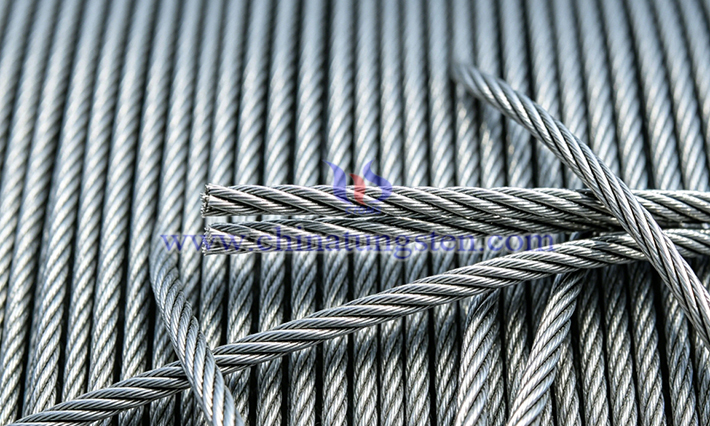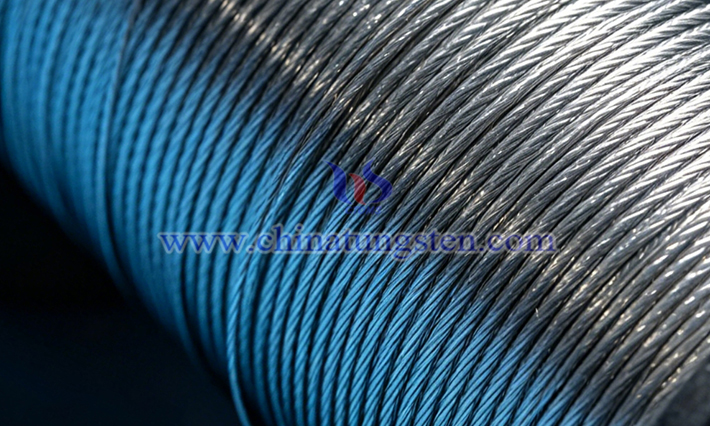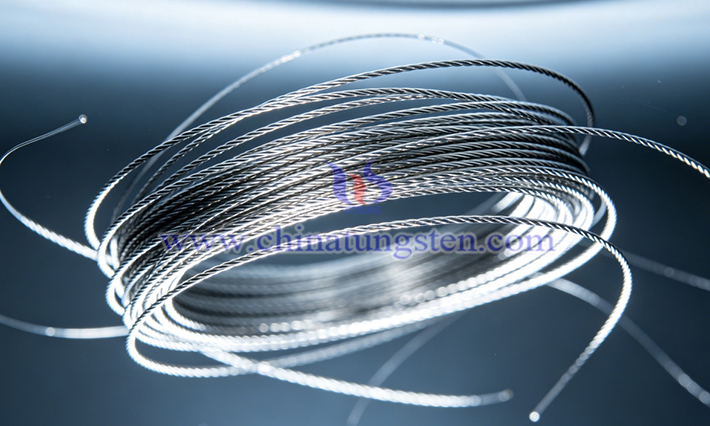
This manufacturing process is a sophisticated, complex technology involving a complete value chain—from raw tungsten material to the production of ultra-fine monofilaments, followed by precision braiding and post-processing. The core objective is to achieve a balance of high strength, high consistency, low internal stress, and excellent flexibility, thereby meeting the rigorous demands for dimensional accuracy and long-term stability required by high-end applications such as robotic dexterous hands.
1. Production of Ultra-fine Tungsten Monofilaments
Production begins with high-purity tungsten powder (typically >99.95% purity). Key steps include powder compaction, pre-sintering, high-temperature sintering, breakdown via swaging or hammering, multi-pass cold drawing, and repeated intermediate annealing (conducted in a protective hydrogen atmosphere at 800–1100°C). Precision wire-drawing processes reduce the tungsten wire to diameters of 18–30 μm (or even finer). Strict controls are maintained over diameter tolerance (within ±0.5 μm), surface finish (Ra < 0.2 μm), and strength consistency (deviation < 3%) to ensure the monofilaments possess high strength and excellent toughness.
2. Multi-strand and Multi-layer Precision Braiding
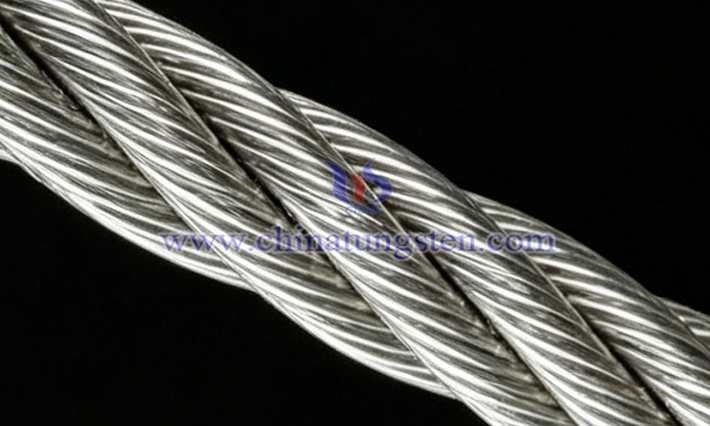
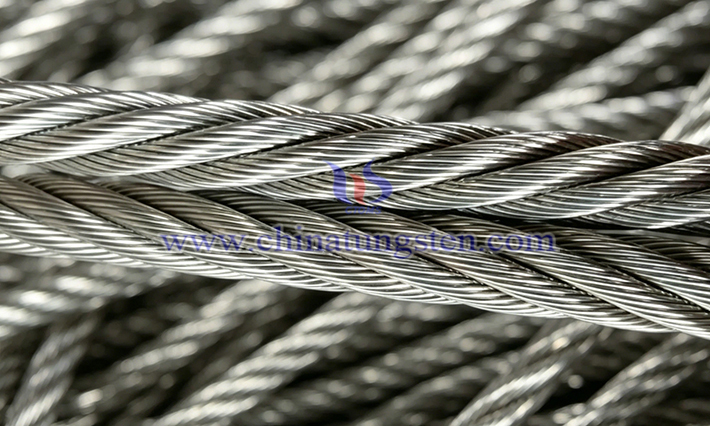
Qualified ultra-fine tungsten wires undergo multi-strand stranding and multi-layer braiding. Common configurations include 7×7, 7×7×7, 19×19, and 1×37 structures; the number of strands, lay length, and stranding method are customized based on specific applications, typically utilizing a multi-layer, counter-rotating, non-rotating braiding pattern. Specialized, modified equipment is employed to achieve closed-loop tension control throughout the process, keeping monofilament tension deviation within 1%. This ensures high rope roundness (error < 0.02 mm) and uniform stress distribution, while preventing twisting or strand unraveling.
3. Post-processing and Finished Product Fabrication
Following the braiding process, critical post-processing steps are performed. These include multi-stage pre-stretching—using graduated loads to eliminate structural stresses—and vacuum stabilization heat treatment to relieve residual lattice stresses, achieving an internal stress relief rate exceeding 95%. Finally, the product undergoes surface optimization, composite coating, and non-destructive terminal crimping. Comprehensive quality inspections—including breaking force tests, fatigue life testing, and ultrasonic flaw detection—ensure a residual elongation of less than 0.1% and reliability over one million cycles.