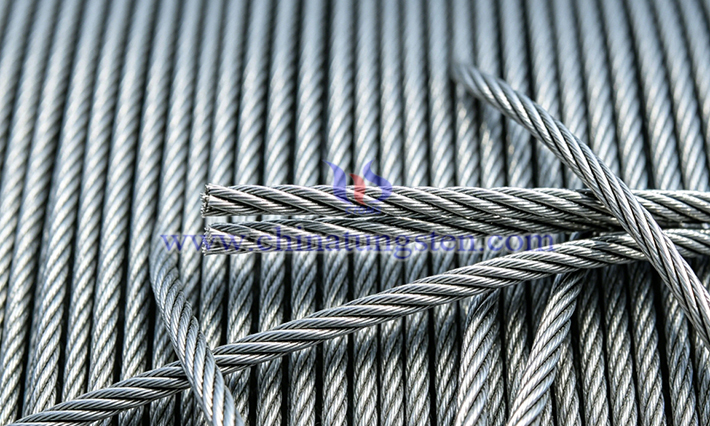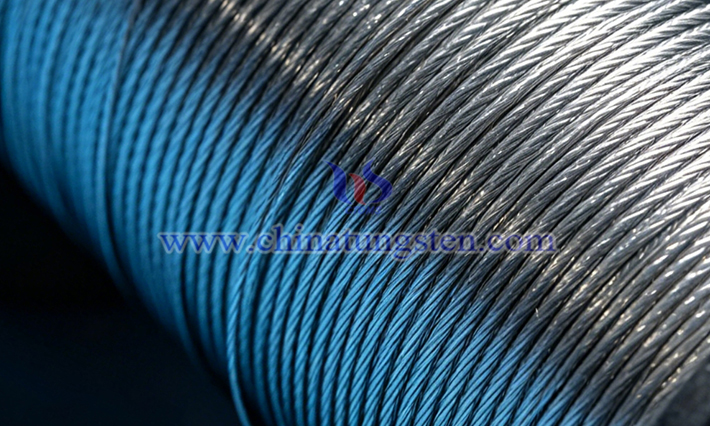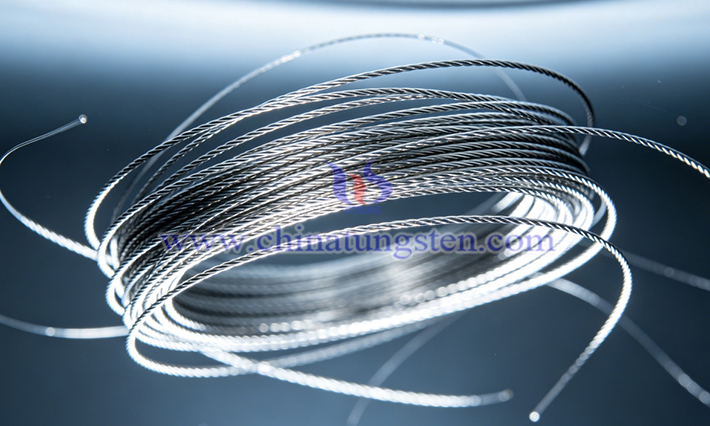
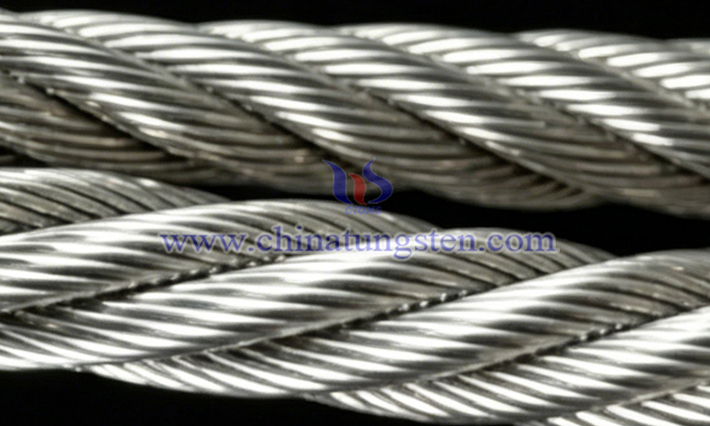
CTIA GROUP’s tungsten wire tendon ropes are manufactured using high-purity, ultra-fine tungsten wires through precise multi-strand, multi-layer braiding. They offer exceptional tensile strength and high load-bearing capacity despite their small diameters, meeting the rigorous demands for high load capacity and reliability in precision transmission systems like robotic joints.
1. Tensile Strength Values
The tensile strength of individual tungsten filaments produced by CTIA GROUP typically ranges from 5,200 to 5,800 MPa or higher (with some optimized wires exceeding 6,000 MPa). This significantly outperforms common materials such as stainless steel wire ropes (1,000–1,800 MPa) and ultra-high-molecular-weight polyethylene (UHMWPE) fiber ropes (approximately 3,000–4,000 MPa). The breaking strength of the finished tendon rope varies based on diameter and structure; for instance, a rope with a diameter of approximately 1 mm can withstand a breaking load exceeding 1,800 N, while thicker specifications (e.g., 2.0–2.5 mm) can withstand several thousand Newtons.
2. Factors Influencing Tensile Strength
Material Composition and Microstructure: Factors such as tungsten purity, grain size, doping elements (e.g., lanthanum oxide, molybdenum, and other alloying additives), as well as strengthening mechanisms like nano-dispersion strengthening and solid-solution strengthening, directly determine the base strength of the individual filament. High purity, fine-grained structures, and appropriate doping can significantly enhance strength.
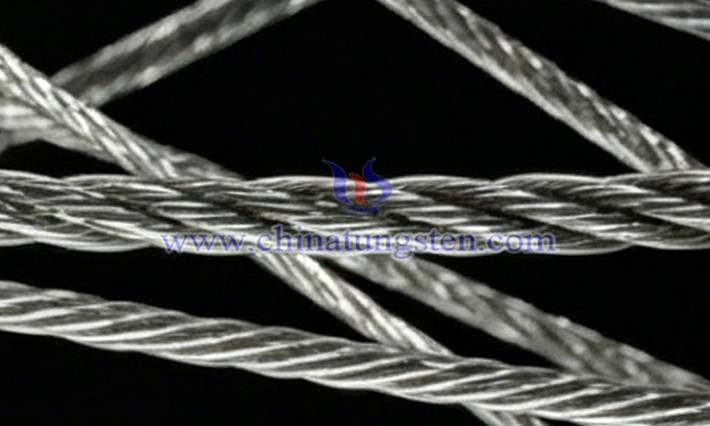
Filament Manufacturing Process: Key factors include cold drawing passes, the degree of work hardening, wire-drawing temperature control, surface treatment (e.g., electropolishing), and diameter tolerance consistency (e.g., within ±0.5 μm). Optimizing dislocation density and the friction coefficient during the drawing process effectively improves both strength and production yield. Braided Structure Design: Parameters such as strand configuration (e.g., 7×7, 19×19), lay length (typically 6–8 times the diameter), stranding method (lang lay vs. regular lay), fill factor (compact vs. loose), and multi-layer counter-winding processes influence stress distribution uniformity and overall strength utilization efficiency.
Post-processing and Heat Treatment: Processes such as pre-stretching and annealing in a vacuum or hydrogen-protected atmosphere (at temperatures of 800–1100°C) serve to eliminate residual internal stresses and improve crystalline structure, thereby enhancing strength retention and actual breaking load.
Compositing and Surface Modification: Outer cladding, coatings, or nano-treatments can further optimize surface quality, minimize defects, and improve overall load-bearing capacity.
Specifications and External Conditions: Factors such as rope diameter, load type, operating temperature, and manufacturing quality control (e.g., consistency of individual filament strength) also impact final performance; strength retention in high-temperature environments is a critical consideration.
3. Application Advantages of High-Tensile-Strength Tungsten Wire Tendons
The high tensile strength of CTIA GROUP’s tungsten wire tendons enables the reliable transmission of significant tensile forces within confined spaces. They are ideally suited for high-frequency joint actuation in humanoid robot dexterous hands, precision control in medical surgical robots, and high-load operations in industrial robots. These tendons reduce the risk of breakage, enhance system safety and service life, and facilitate more compact designs, driving the evolution of precision equipment toward higher performance.