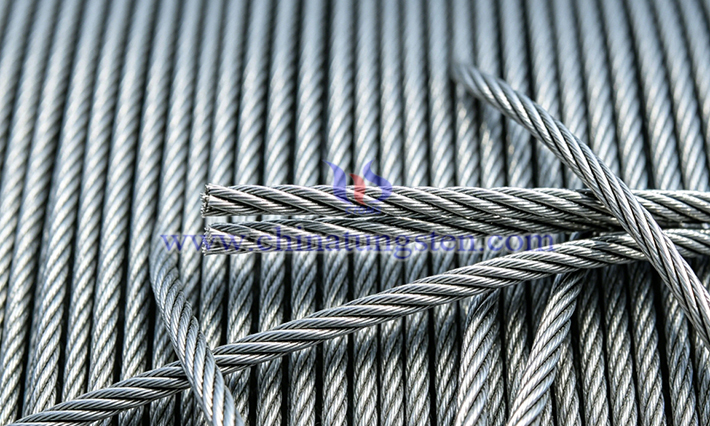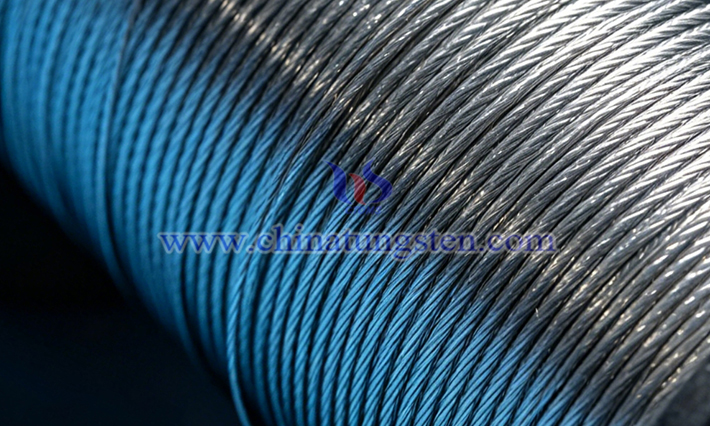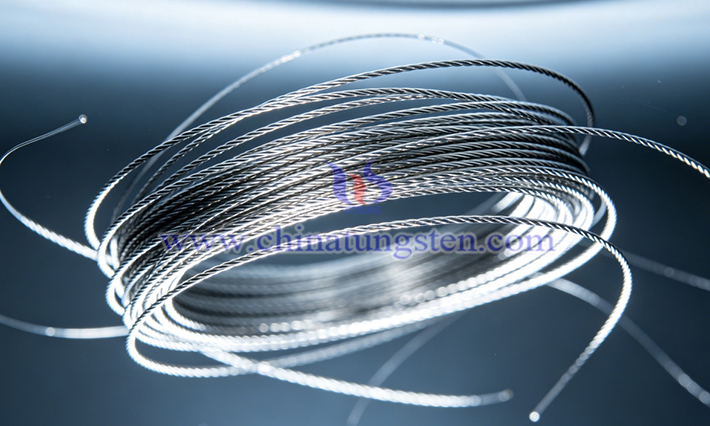
Tungsten wire tendon ropes from CTIA GROUP exhibit excellent stability. They operate reliably over the long term in typical applications—such as robotic drive systems, medical devices, and high-temperature furnace components—and are suitable for both standard and most demanding operating conditions. However, in specialized environments involving high temperatures with oxygen exposure or strong alkalis, measures such as protective coatings, atmosphere control, or material substitution are required.
I. Chemical Stability of Tungsten Wire Tendon Ropes
Tungsten wire tendon ropes demonstrate good chemical stability at room and moderate temperatures. Tungsten does not readily oxidize in dry air, as a dense protective tungsten oxide film forms on its surface; it exhibits strong corrosion resistance against most inorganic acids (sulfuric, hydrochloric, and nitric acids) and alkaline solutions, remaining stable in humid environments, organic solvents, and biological fluids. However, under high-temperature (above 500°C) conditions with oxygen present, tungsten oxidizes rapidly to form volatile tungsten trioxide, resulting in material loss. Additionally, hydrofluoric acid rapidly corrodes tungsten, while hot concentrated nitric acid or aqua regia causes slow corrosion. In marine salt-spray environments, tungsten’s corrosion resistance surpasses that of ordinary steel, though care must be taken regarding galvanic corrosion caused by contact with dissimilar metals.
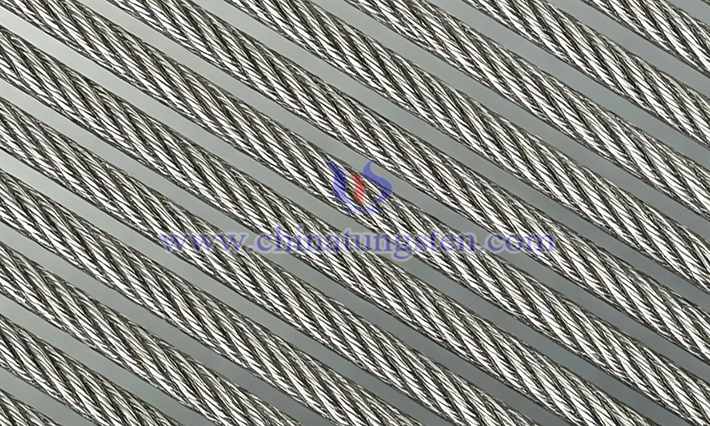
II. Thermal Stability of Tungsten Wire Tendon Ropes
The thermal stability of tungsten wire tendon ropes is primarily characterized by their high melting point and ability to retain strength at elevated temperatures. With a melting point of 3422°C—the highest among all metals—CTIA GROUP’s tungsten wire tendon ropes can operate stably for extended periods between 1500°C and 2400°C in vacuum or inert atmospheres, with short-term temperature tolerance exceeding 2800°C. In such high-temperature environments, the tungsten wire neither melts nor softens, and it maintains a high level of creep resistance. However, in an air atmosphere, significant oxidation occurs above 500°C, shifting the material from thermal stability to thermochemical instability; therefore, high-temperature applications require inert gas protection or a vacuum environment.
III. Dimensional Stability of Tungsten Wire Tendon Ropes
Dimensional stability refers to the ability of tungsten wire tendon ropes to maintain their geometric dimensions under the influence of external forces and temperature fluctuations. Tungsten possesses a very low coefficient of thermal expansion—approximately 4.5 × 10??/K between room temperature and 100°C—which is far lower than that of common metals such as aluminum, copper, and steel. Consequently, it undergoes minimal dimensional changes amidst temperature fluctuations, helping to maintain the positioning accuracy of precision transmission systems. Furthermore, CTIA GROUP tungsten wire tendons exhibit excellent creep resistance under long-term loading at room temperature; at 70% of the breaking load, the creep strain over seven days is less than 0.3%, significantly outperforming polymer fiber materials. These characteristics ensure dimensional stability, as the tendons are resistant to slackening or permanent elongation following cyclic loading and temperature variations.
IV. Mechanical Property Stability of Tungsten Wire Tendons
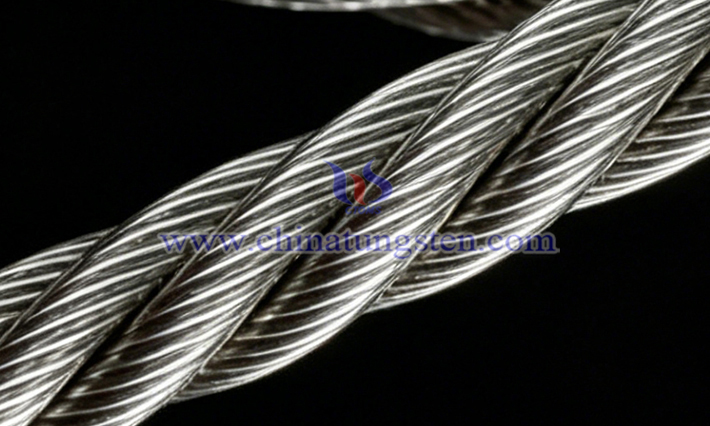
Mechanical property stability refers to the ability to maintain parameters such as tensile strength, fatigue life, and hardness during long-term use. The individual filaments of CTIA GROUP tungsten wire tendons boast a tensile strength of 3,000–4,000 MPa; when stranded together, external loads are distributed across the filaments, resulting in stable overall breaking strength. Under conditions involving alternating bending or reciprocating sliding, medical-grade tungsten wire tendons (approximately 0.5 mm in diameter) can achieve a fatigue life exceeding one million cycles with slow strength degradation. Hardness is uniformly distributed within the 350–500 HV range, and the surface is dense and smooth, showing no significant hardness loss after long-term storage or cyclic use at room temperature. It should be noted that mechanical stability relies on a defect-free surface; scratches or micro-cracks can accelerate fatigue-induced failure.
V. Environmental Adaptability of Tungsten Wire Tendons
Tungsten wire tendons demonstrate high stability in the following environments: indoor and industrial atmospheres, vacuum and inert gas atmospheres, low-to-moderate temperature ranges (-200°C to 400°C), most acidic and neutral aqueous solutions, and contact with biological tissues or disinfectants. Stability decreases significantly in the following environments: high-temperature air (above 500°C), hydrofluoric acid or hot concentrated nitric acid, high-temperature/high-concentration strong alkaline solutions, and high-temperature environments involving carbon or halogen gases.