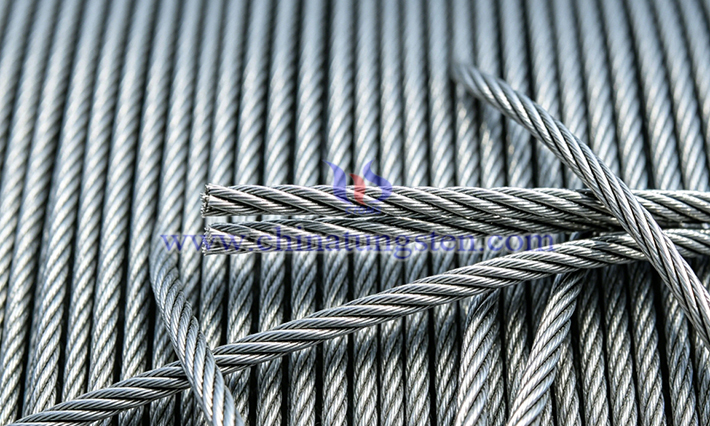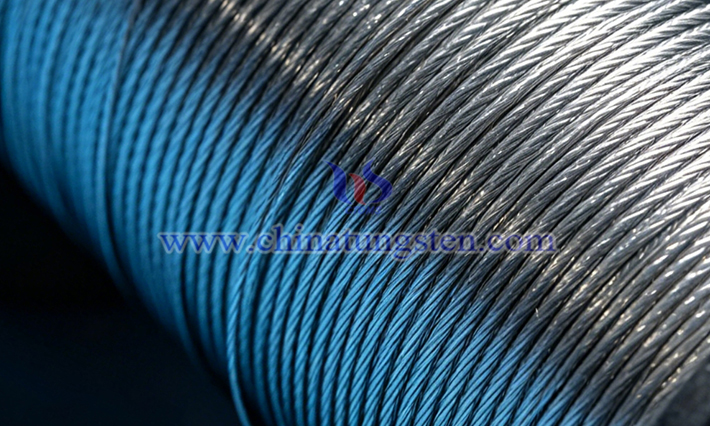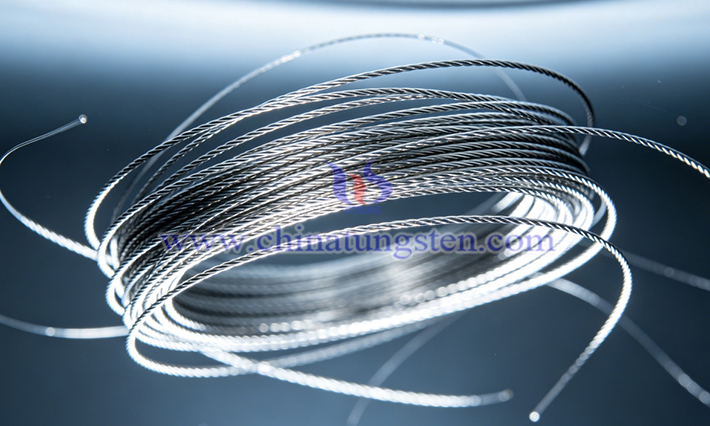
Toughness refers to a material's ability to absorb energy and undergo plastic deformation under stress without suffering brittle fracture. For transmission materials, toughness is primarily manifested in resistance to bending, fatigue, and crack propagation; it serves as a critical indicator of the balance between strength and flexibility.
CTIA GROUP’s tungsten wire tendon ropes are manufactured using ultra-fine, high-purity tungsten wires through precise multi-strand, multi-layer braiding. They exhibit excellent overall toughness while maintaining extremely high strength. Capable of withstanding repeated cycles of tensioning, bending, and relaxation—even at tight bending radii—they demonstrate superior energy absorption and fracture resistance. This toughness ensures they do not suffer sudden, brittle failure and allows them to maintain structural integrity during high-frequency movement, thereby meeting the requirement for a combination of rigidity and flexibility in precision robotic joints.
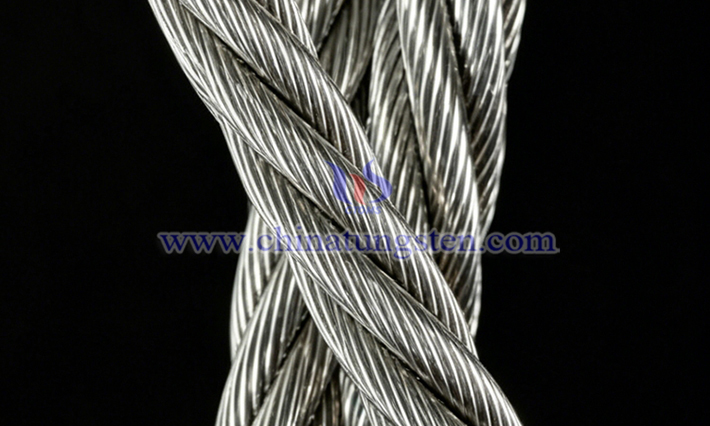
The toughness of tungsten wire tendon ropes is influenced by several key factors: (1) Monofilament fabrication process: Parameters such as the number of cold-drawing passes, annealing protocols, grain refinement, and doping elements significantly affect the ductility and crack tolerance of the individual wires; optimized ultra-fine tungsten wires exhibit superior toughness. (2) Braiding structure design: Factors such as the number of strands, twist direction combinations, twist pitch ratios, and packing density determine the uniformity of stress distribution; a well-designed multi-layer counter-twisting structure can effectively disperse localized stress and enhance overall fatigue toughness. (3) Post-processing: Treatments such as pre-tension stabilization, vacuum heat treatment, and surface modification can relieve residual stresses and improve the microstructure, thereby enhancing toughness. (4) External operating conditions: Factors such as operating temperature, bending frequency, load amplitude, and the environmental medium also impact toughness performance; toughness may be reduced under high-temperature or overload conditions.
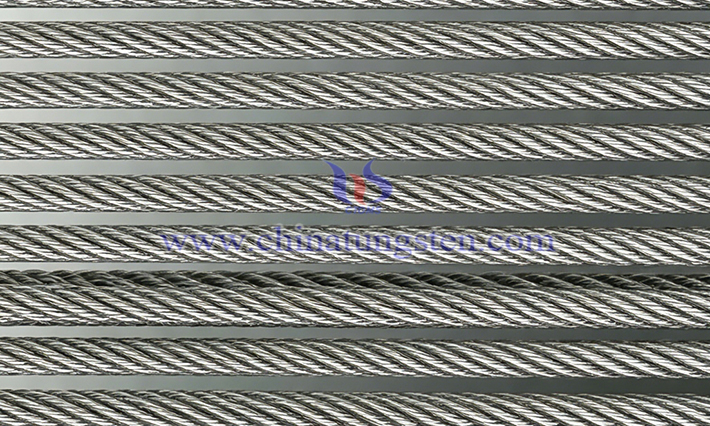
CTIA GROUP’s high-toughness tungsten wire tendons are ideally suited for applications requiring frequent joint articulation and complex posture adjustments—such as finger joint actuation in humanoid robotic hands, end-effectors for medical minimally invasive surgical robots, and high-frequency robotic arms in industrial assembly. Capable of withstanding intensive bending cycles over the long term without succumbing to fatigue damage, these tendons ensure smooth, safe system operation, reduce unplanned downtime and maintenance costs, and drive the evolution of robotics toward greater anthropomorphism and reliability.