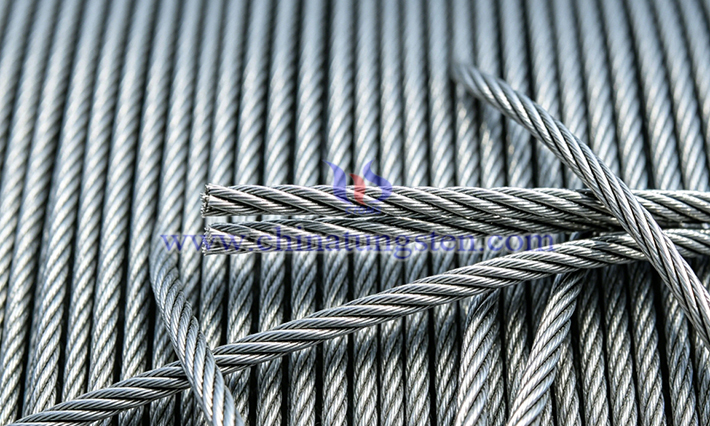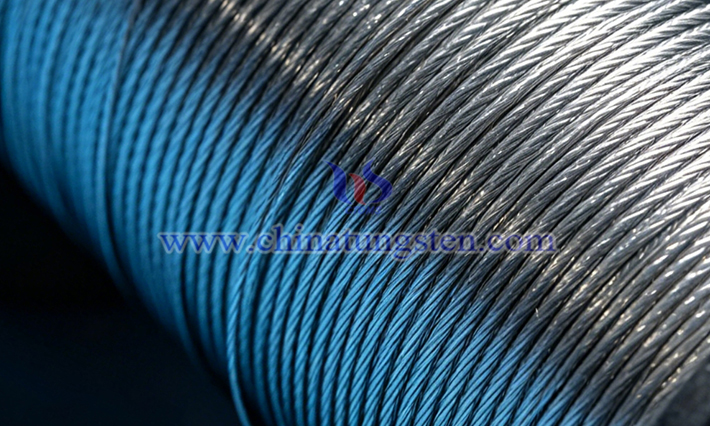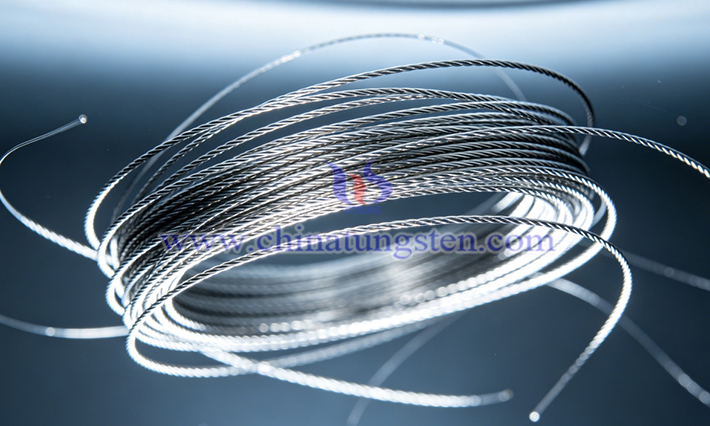
The high elastic modulus of tungsten wire tendon ropes is the key mechanical foundation that allows them to excel in the field of precision transmission. CTIA GROUP’s tungsten wire tendon ropes are primarily manufactured through the precision braiding of high-purity tungsten wires. Their elastic modulus (Young's modulus) inherits the inherent high rigidity of tungsten material, significantly minimizing deformation within tendon-driven systems and ensuring reliable, high-precision force and motion transmission.
1. Elastic Modulus Values
The elastic modulus of CTIA GROUP’s tungsten wire tendon ropes is approximately 400–411 GPa (with a typical value of 411 GPa). This figure is significantly higher than that of ordinary stainless steel (approx. 200 GPa) and most polymer fiber materials (typically 10–150 GPa). This high-modulus characteristic ensures minimal axial elongation under tensile loads, helping to maintain system transmission rigidity and rapid response times.
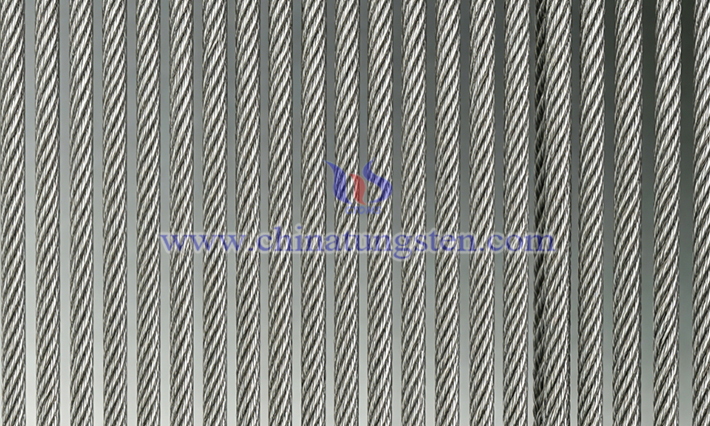
2. Factors Influencing Elastic Modulus
Material Composition and Microstructure: Factors such as tungsten purity, grain size, and trace doping elements influence the modulus value; high-purity, fine-grained tungsten wires typically exhibit a higher modulus. Additionally, the increased dislocation density resulting from the cold-drawing process can enhance effective rigidity to some extent.
Temperature Environment: Rising temperatures lead to a gradual decrease in elastic modulus (dropping by approximately 1–2% per 100°C increase). Consequently, in high-temperature applications, the potential impact of modulus degradation on transmission precision must be considered.
Rope Structure and Post-processing: Factors such as multi-strand/multi-layer braiding patterns, lay length design, pre-stretching, and vacuum heat treatment processes affect the overall effective elastic modulus. Composite coating materials (such as an outer polymer layer) may slightly reduce the system's overall modulus but can improve bending flexibility.
Operating Conditions: Factors such as long-term cyclic loading, bending frequency, and ambient humidity can also indirectly influence rigidity performance during actual operation.
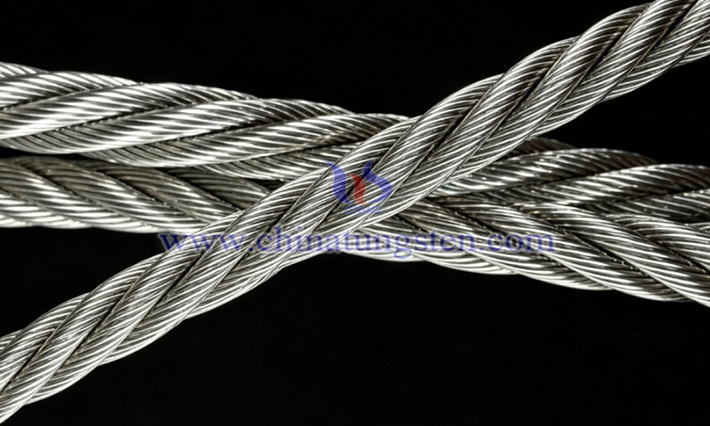
3. Application Advantages of High Elastic Modulus
The combination of high elastic modulus and low creep characteristics enables CTIA GROUP’s tungsten wire tendons to maintain exceptional dimensional stability and transmission consistency during prolonged, high-frequency operation, significantly mitigating precision drift caused by material creep. In applications such as dexterous hands for humanoid robots, minimally invasive medical instruments, and precision industrial assembly robots, this advantage facilitates finer force-feedback control and coordinated multi-joint movement, while reducing maintenance frequency and enhancing overall system reliability. Furthermore, in scenarios requiring high dynamic response and strict positional accuracy, the high modulus effectively suppresses vibration and energy loss, supporting the evolution of equipment toward higher performance levels.