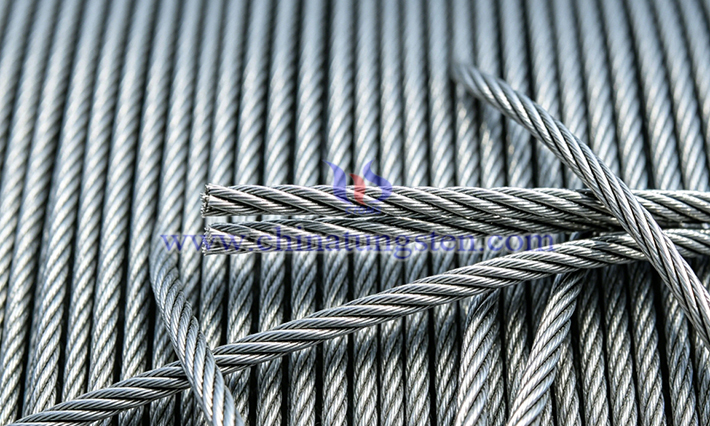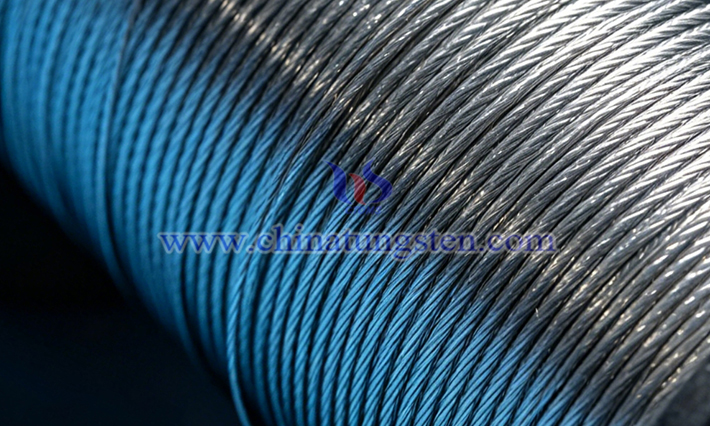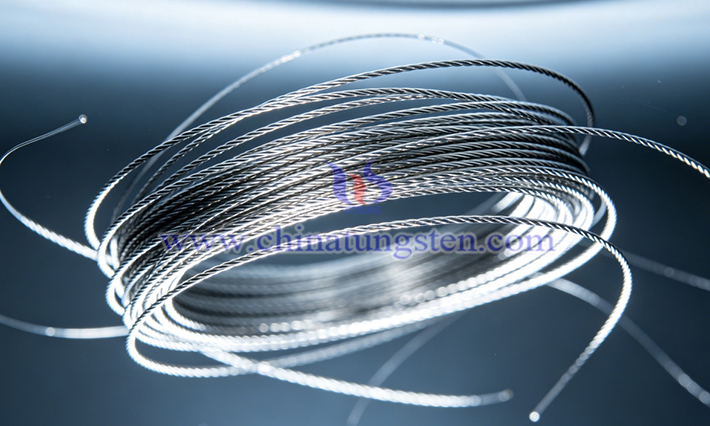
The wear resistance of tungsten wire tendon ropes stems from their high hardness, smooth surface, and self-forming oxide film; under conditions of room temperature, light loads, and lubrication, they can achieve a friction lifespan exceeding one million cycles. By properly controlling surface quality, lubrication conditions, mating material properties, and operating tension, their wear-resistant advantages can be fully realized, making them a preferred material for high-frequency reciprocating friction applications in fields such as robotic transmissions, medical devices, and precision machinery.
1. Sources of Wear Resistance in Tungsten Wire Tendon Ropes
High Hardness: The Vickers hardness of tungsten wire at room temperature typically ranges from 350 to 500 HV, significantly higher than that of ordinary stainless steel (approx. 200–300 HV) and most organic fibers. High hardness means that when the tendon rope undergoes sliding friction against hard surfaces—such as pulleys, guide tubes, or metal apertures—the tungsten wire surface exhibits superior resistance to cutting and plowing, resulting in a lower wear rate.
High Surface Density: Through multi-pass cold drawing, the tungsten wire surface develops a highly dense, smooth, fibrous microstructure with minimal microscopic protrusions; initial surface roughness can be controlled to below Ra 0.2–0.4 μm. A smooth surface effectively lowers the coefficient of friction, reducing wear on mating components as well as shear-induced delamination of the wire's own surface layer.
Stable Oxide Layer: In an ambient atmospheric environment, a very thin (nanometer-scale) and dense tungsten oxide (WO?) film spontaneously forms on the tungsten surface. This film provides a degree of lubrication, reducing direct metal-to-metal contact under light loads and thereby helping to minimize friction and wear.
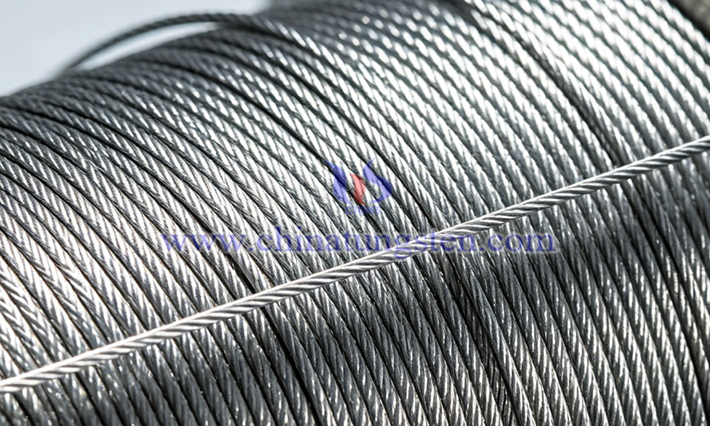
2. Factors Influencing the Wear Resistance of Tungsten Wire Tendon Ropes
Surface Quality and Defects: Tungsten wire is a brittle material. If surface defects such as scratches, pits, or micro-cracks are present, they easily become sources of stress concentration during friction. This can lead to surface flaking or micro-fractures, significantly reducing wear life. Consequently, high-grade tungsten wire tendon ropes typically undergo electropolishing or precision grinding processes to achieve a high-quality surface finish. Lubrication conditions: Under dry friction conditions, the friction coefficient between tungsten wire tendon cables and metal components is approximately 0.5–0.7, resulting in relatively rapid wear. However, in the presence of lubricating oil or solid lubricants (such as molybdenum disulfide or graphite), the friction coefficient can drop to 0.1–0.2, and the wear rate can be reduced by more than an order of magnitude. In enclosed transmission systems, such as those found in robotic dexterous hands, minimal lubrication or self-lubricating coatings are typically employed alongside tungsten wire tendon cables.
Counter-surface materials: The wear resistance of tungsten wire tendon cables depends heavily on the material and hardness of the contacting components. When sliding against materials of similar or greater hardness (e.g., cemented carbide, ceramics, or hardened steel), the wear rate of the tungsten wire accelerates significantly; conversely, when sliding against softer materials (e.g., bronze, plastics, or aluminum alloys), the wear on the tungsten wire is minimal, though the counter-surface component itself wears more rapidly. In engineering applications, pulleys made of carburized steel, hard-chrome plated steel, or ceramic-coated materials are commonly used with tungsten wire tendon cables to balance wear between the two.
Tension and bending radius: Higher tensile forces and smaller bending radii increase the normal force between the tendon cable and the contact surface, thereby increasing frictional work and reducing wear resistance. Therefore, practical applications require minimizing operating tension within permissible limits and utilizing sufficiently large bending radii for guide pulleys or conduits.
3. Application advantages of wear-resistant tungsten wire tendon cables
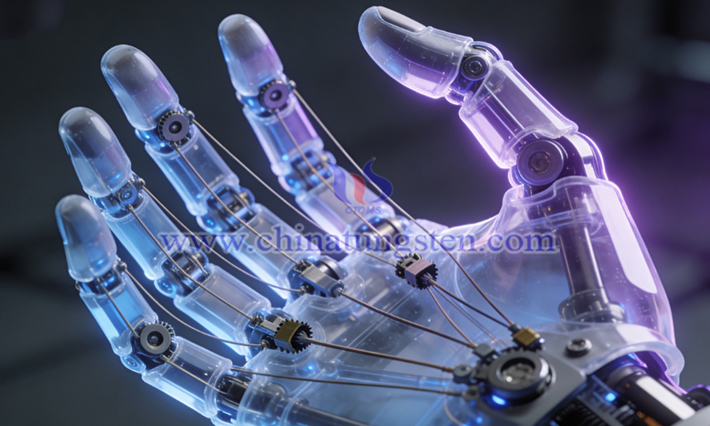
Humanoid robot dexterous hands: Tendon cables must repeatedly bend and slide within pulleys or conduits only a few millimeters in diameter, potentially undergoing tens of thousands of friction cycles daily. Tungsten wire tendon cables offer a wear life exceeding one million cycles, far surpassing stainless steel stranded cables of the same diameter (which are prone to wire breakage due to fretting wear) and polymer fibers (which are prone to fraying and strength loss due to friction).
Surgical robots: Tendon cables undergo long-term reciprocating motion within tortuous instrument channels and cannot be frequently replaced. The high wear resistance of tungsten ensures the repeatability of positioning and the safety of surgical instruments even after multiple uses. High-temperature or corrosive environments: At high temperatures, organic fibers rapidly carbonize or soften, and stainless steel strands suffer accelerated wear due to the spalling of oxide scale; in contrast, tungsten wire retains its hardness and surface stability within this temperature range, experiencing minimal degradation in wear resistance.