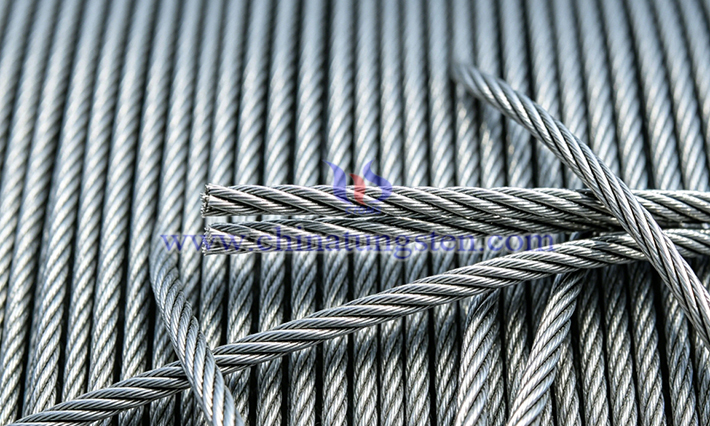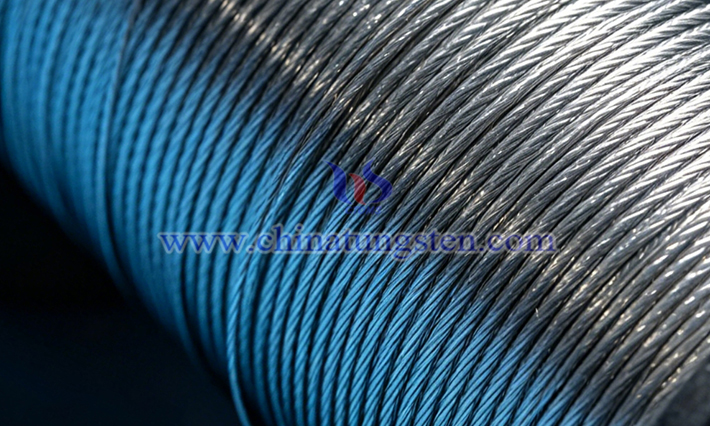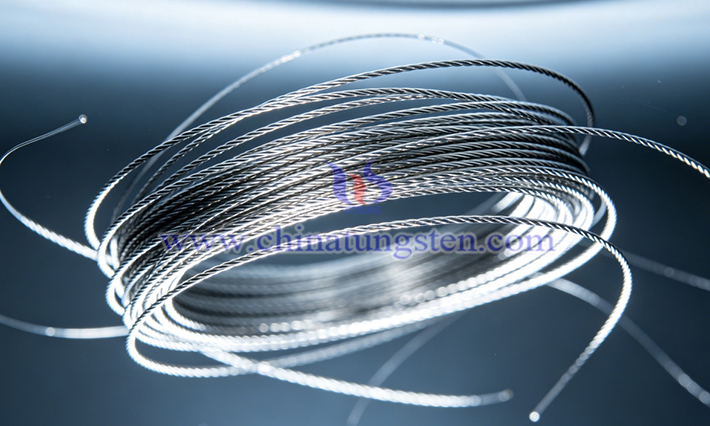
Tungsten wire tendon rope inherits the high hardness characteristic of tungsten material, granting it superior resistance to wear and deformation. It is well-suited for precision transmission applications involving high-frequency bending, friction, and long-term repetitive motion. Its hardness stems from the intrinsic properties of high-purity tungsten wire and work hardening during the wire-drawing process; specific hardness values vary based on factors such as filament diameter, drawing techniques, annealing treatments, surface coatings, and composite structures.
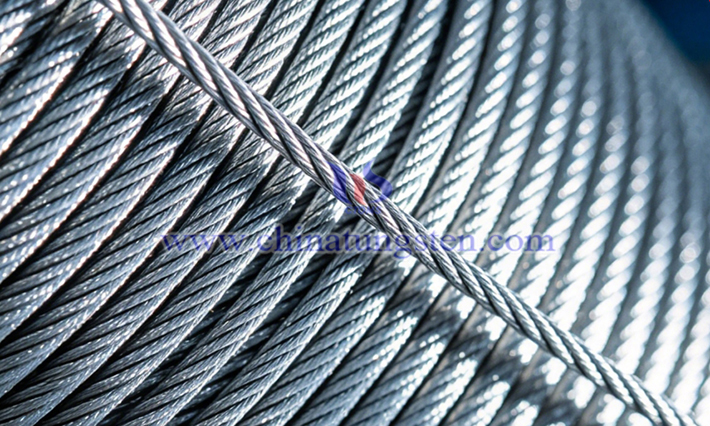
1. Hardness Values of Tungsten Wire Tendon Rope
Tungsten has a Mohs hardness of approximately 7.5, a high level among metallic materials (approaching diamond's rating of 10). This gives the rope surface excellent scratch and wear resistance, effectively withstanding long-term friction against pulleys or guide rails. The Vickers hardness (HV) of pure tungsten is typically around 340–400 HV (in the annealed state). For ultra-fine tungsten wire subjected to drawing, intense work hardening can significantly boost Vickers hardness to 400–800 HV or higher, depending on the degree of cold drawing and heat treatment. The Rockwell hardness (HRA) of tungsten wire generally falls between 60 and 75 HRA. While the overall hardness of the finished tendon rope is influenced by its multi-strand braided structure, the high hardness of the individual filaments ensures the rope resists wear and plastic deformation during frictional contact.
2. Impact of Hardness on Performance
High hardness imparts excellent wear resistance and surface stability to the tungsten wire tendon rope, reducing wear and the risk of wire breakage during use. When combined with high tensile strength, this further enhances fatigue life. Additionally, high hardness allows the rope to maintain superior mechanical properties in high-temperature environments, making it suitable for applications such as medical device sterilization and continuous industrial operations.

3. Factors Influencing Hardness
(1) Material Purity: Impurities within the material affect hardness; high purity is the foundation for achieving excellent performance. (2) Cold working and wire drawing: The wire drawing process causes grains to become highly oriented along the axial direction, forming a fibrous structure that enhances both axial strength and hardness. (3) Heat treatment: This is the primary method for controlling hardness. Annealing at specific temperatures relieves internal stresses and softens the material; however, excessive temperatures—such as those approaching the recrystallization temperature of approximately 1330°C—result in a sharp drop in hardness. Thermomechanical processing combines deformation and heat treatment to further optimize properties. (4) Doping and alloying: The addition of trace elements can significantly alter tungsten's characteristics. For instance, potassium (K) doping refines grain size, indirectly increasing hardness through grain-boundary strengthening, whereas the addition of rhenium (Re) focuses on reducing brittleness and enhancing toughness. To meet requirements for extreme wear resistance, the application of tungsten carbide (WC) coatings or hard coatings such as TiN is a common solution; these can dramatically boost surface hardness from the ~500 HV range to over 2000 HV.