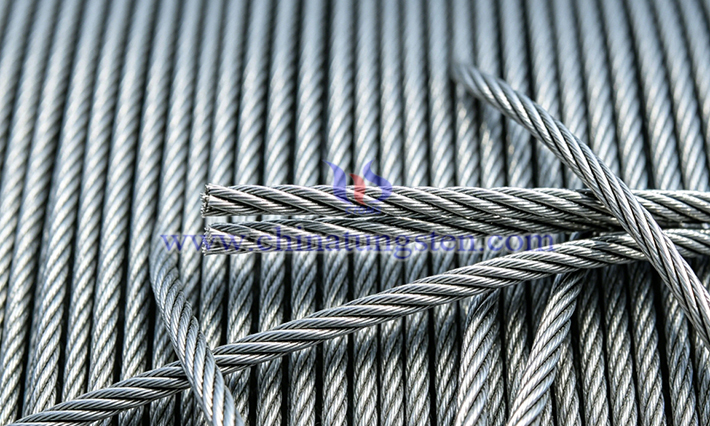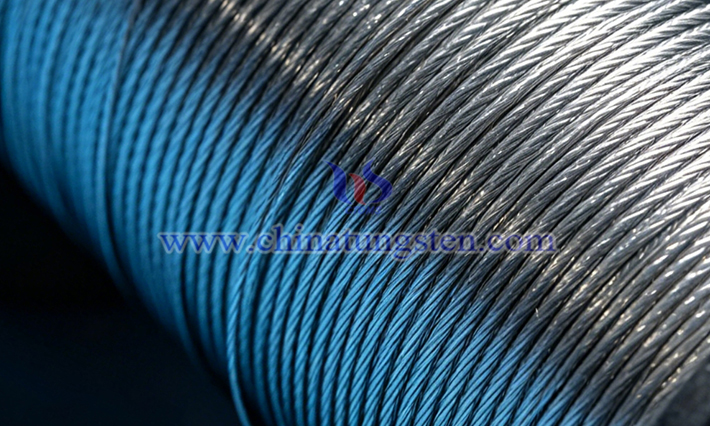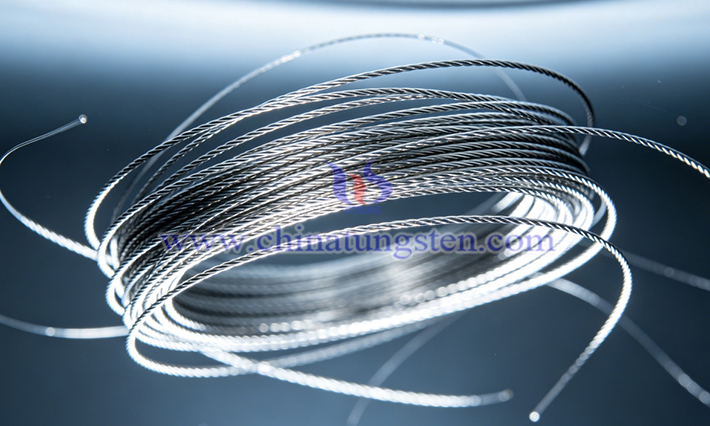
The performance of tungsten wire tendon rope is largely determined by its material composition. Its core consists of a high-purity tungsten matrix, with a series of precisely controlled dopant elements selectively added to meet the requirements of specific applications. CTIA GROUP and its parent company, Chinatungsten Online, have been deeply involved in the tungsten and molybdenum product industry for nearly 30 years. Specializing in flexible, customized global services for tungsten and molybdenum products, they provide tungsten wire products in a wide range of specifications, performance characteristics, and dimensions. For detailed information on various tungsten wire products, please visit www.tungsten-wire.com.cn or contact sales@chinatungsten.com.
The composition of tungsten wire tendon rope is described below in terms of its primary element and dopant elements.
I. Primary Element
Tungsten wire tendon rope utilizes metallic tungsten (W) as its base and principal component. The tungsten content of industrial-grade tungsten wire is typically no less than 99.95%. Tungsten is selected as the matrix material due to its inherent advantages, including an extremely high melting point (approximately 3422°C), excellent high-temperature strength, high density, and superior electrical and thermal conductivity.
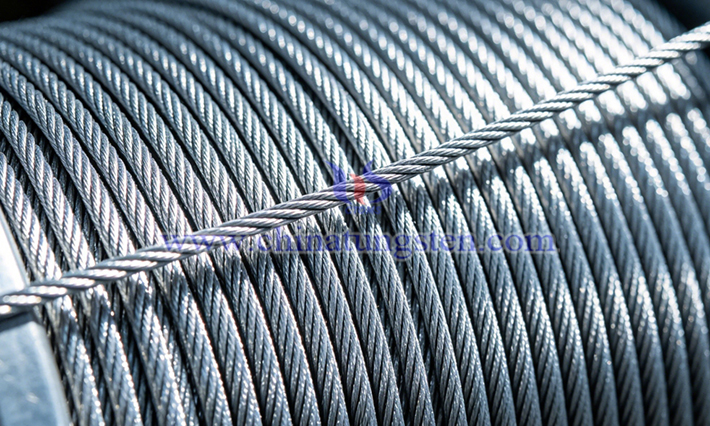
II. Dopant Elements
Although pure tungsten possesses excellent properties, it has limitations regarding high-temperature sag resistance and room-temperature brittleness. Consequently, doped tungsten wires—which incorporate trace amounts of specific elements to enhance targeted performance characteristics—are more commonly used in practical applications. The main doping systems include the following:
1. Classic System: Potassium-Silicon-Aluminum (AKS Doping)
This is the longest-established and most widely used doping system, primarily employed to improve the high-temperature performance and sag resistance of tungsten wire. Its mechanism of action involves the synergistic effect of potassium, silicon, and aluminum; these elements form nanoscale potassium bubbles and dispersed oxide particles within the tungsten wire. These features pin grain boundaries, thereby significantly raising the recrystallization temperature and lowering the ductile-to-brittle transition temperature. Potassium (K): Content typically ranges from tens to hundreds of parts per million (ppm); it forms nanoscale potassium bubbles that pin grain boundaries, inhibit grain growth, and enhance high-temperature sag resistance.
Silicon (Si): Content typically ranges from 100 to 500 ppm; it generates aluminum-silicon-oxygen composite oxide particles that work synergistically with potassium bubbles to boost high-temperature strength.
Aluminum (Al): Content is also around 100 to 500 ppm; it forms aluminum-silicon-oxygen composite oxide particles, assists in the formation of potassium bubbles, and improves processability during powder metallurgy.
Total doping amount: The total doping level in the AKS system is usually controlled between 0.3% and 2.0% (by mass).
2. Specialized reinforcement: Rare-earth oxides
This type of doping is primarily used to enhance high-temperature strength and creep resistance, commonly found in specific applications such as high-temperature structural components.
Common rare-earth elements: Lanthanum oxide (La?O?), cerium oxide (CeO?), etc.
Mechanism: Rare-earth oxides act as a dispersed phase, effectively refining grains and pinning dislocations, thereby significantly improving the material's high-temperature strength and creep resistance.
Application example: Lanthanum oxide-doped tungsten wire is often used for tungsten wire tendons in dexterous hands to achieve high breaking strength and excellent bending fatigue life.

3. Other functional additives
Rhenium (Re): Primarily used to improve room-temperature ductility and processability. Adding 1% to 5% rhenium can significantly increase the elongation of tungsten wire, reduce brittleness, and improve processing characteristics.
Nickel (Ni): Primarily used for producing tungsten alloy wires; nickel doping enables the formation of alloy systems such as Ni-Fe-W, altering the material's overall properties.
Cobalt (Co): An element extending the AKS system, also aimed at enhancing the overall performance of the tungsten wire.
4. Composition requirements for tungsten wire tendons in different application scenarios
Tendon cables for humanoid robots and dexterous hands: Fine metal cables based on tungsten, requiring extremely high fatigue strength and creep resistance. Tungsten content is no less than 99.95%; typically doped with rare-earth oxides (such as lanthanum oxide) or AKS.
Ropes for high-temperature furnaces and monocrystalline silicon furnaces: Must withstand temperatures exceeding 1000°C; strict requirements apply regarding high-temperature sag resistance and recrystallization temperature. Tungsten content exceeds 99%; utilizes AKS or rhenium doping systems.
Medical and precision instruments: Used in minimally invasive surgery or for transmission mechanisms in precision instruments; requires high biocompatibility, corrosion resistance, and fatigue life. Tungsten content is no less than 99.95%; typically utilizes lanthanum oxide or rhenium doping systems.
Standard-grade tungsten wire: A general-purpose industrial tungsten wire meeting standard requirements. Specifications are based on standard grades (such as W91, W71, etc.); tungsten content is no less than 99.9%; typically utilizes AKS doping systems.