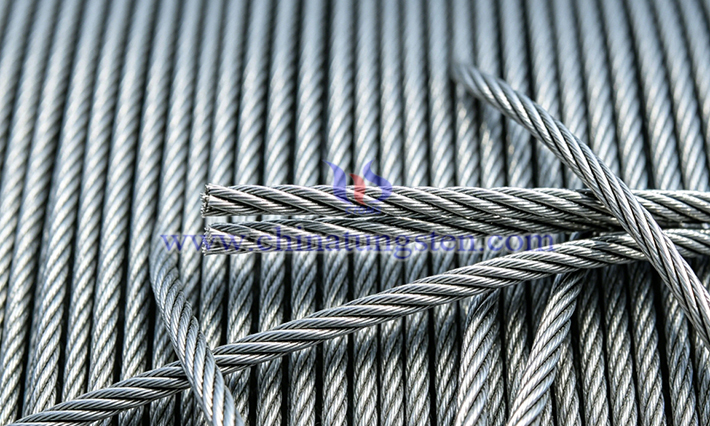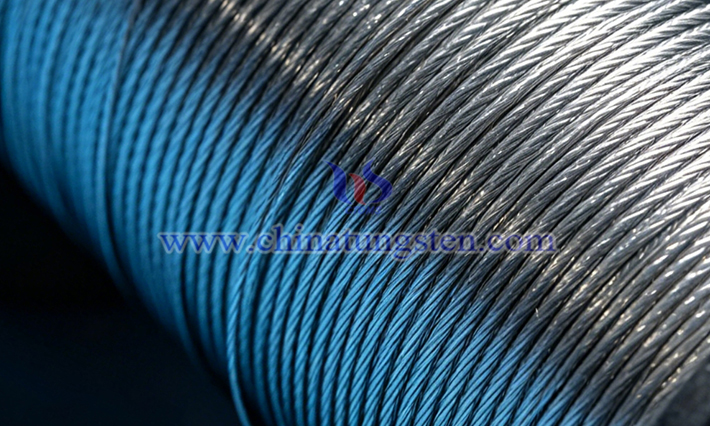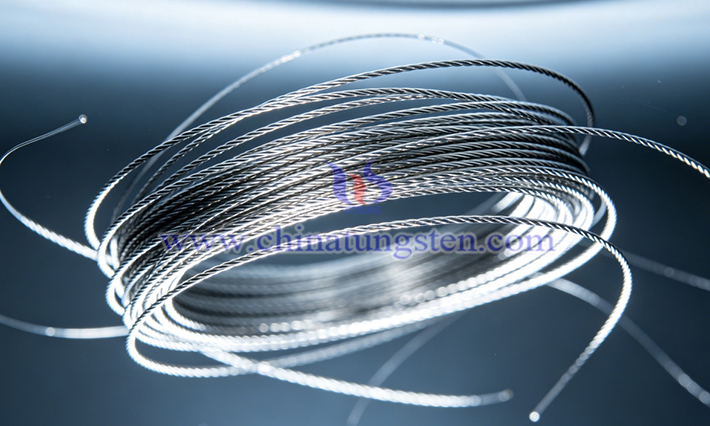
The chemical behavior of tungsten wire tendon ropes is primarily determined by the intrinsic chemical properties of metallic tungsten, resulting in significantly different performance characteristics depending on the environment. Under ambient temperatures and non-extreme conditions, tungsten exhibits excellent chemical stability; however, in high-temperature settings, specific media, or long-term service scenarios, there are notable limitations regarding its chemical performance.
I. Chemical Stability at Room Temperature
At room temperature and within moderate temperature ranges, tungsten wire tendon ropes are characterized by strong chemical inertness and generally good corrosion resistance.
Resistance to Acid and Alkali Corrosion: They exhibit good resistance to most inorganic acids (such as sulfuric, hydrochloric, and nitric acids) and alkalis (such as sodium hydroxide), showing little tendency to react. Their chemical properties are particularly stable in weakly acidic or neutral environments.
Environmental Adaptability: Chemically stable, they do not readily react directly with water, oxygen, or common salts. They maintain stable performance in general industrial environments, humid air, and even organic solvents.
Impact of Material Purity: Industrial-grade tungsten wire typically requires a purity level exceeding 99.95%. Excessive levels of impurities (such as iron or nickel) can significantly reduce resistance to stress corrosion cracking and intergranular corrosion.
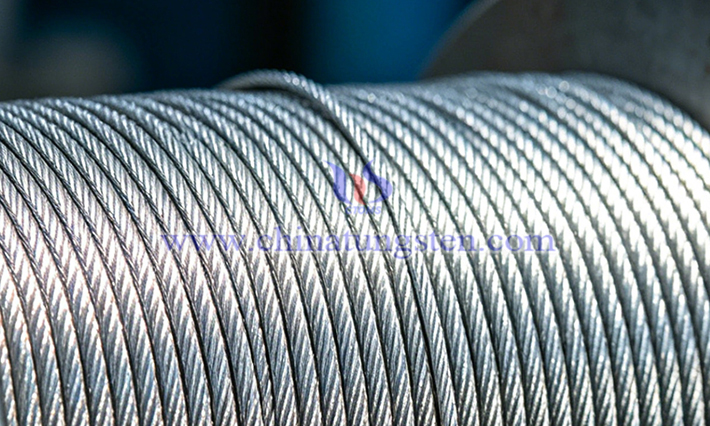
II. High-Temperature Chemical Behavior and Limitations
As temperatures rise, the chemical activity of tungsten increases, necessitating a re-evaluation of its suitability for specific environments.
Oxidation Resistance: In dry environments at room temperature, a dense oxide film forms on the tungsten surface, providing a degree of protection. However, when temperatures exceed approximately 500–600°C, the oxidation rate accelerates rapidly, producing volatile tungsten trioxide; this leads to material loss, embrittlement, and potential fracture. Consequently, long-term use of tungsten wire tendon ropes in high-temperature, oxygen-rich environments requires protection via inert gas (such as argon) or a vacuum.
Halogen Corrosion: At high temperatures, tungsten reacts with halogen gases—such as fluorine, chlorine, and bromine—to form volatile halides. This characteristic limits its application in high-temperature industrial environments containing such gases.
Atmosphere-dependent chemical reactions: Depending on the atmosphere of the operating environment, tungsten may undergo the following reactions:
Reducing atmospheres: In reducing atmospheres such as hydrogen, tungsten may experience slight hydrogen embrittlement, resulting in reduced toughness.
Carbon-containing atmospheres: At high temperatures, tungsten can react with carbon to form extremely hard tungsten carbide. While this property can be utilized for surface hardening treatments, it also means that the impact on the material's overall properties must be considered in certain applications.
Nitrogen-containing atmospheres: At high temperatures, tungsten can also react with nitrogen to form tungsten nitride, which likewise alters the material's surface properties.
III. Chemical properties in specific environments
Strongly alkaline environments: Tungsten exhibits reasonable stability in dilute alkaline solutions at room temperature; however, in high-temperature or high-concentration strong alkali environments (such as sodium hydroxide or potassium hydroxide), the corrosion rate accelerates sharply, leading to a degradation of material properties.
Strongly acidic environments: Overall acid resistance is good, though specific conditions require attention. Hydrofluoric acid (HF) can rapidly corrode tungsten, while hot concentrated nitric acid or aqua regia can cause slow corrosion.
Marine environments (salt spray): Tungsten generally performs better than ordinary steel in marine environments, demonstrating strong resistance to salt spray corrosion. However, high concentrations of chloride ions may trigger pitting corrosion at surface defects, and galvanic corrosion may occur if the material comes into contact with other metals.
Biological and medical environments: Due to its chemical stability, tungsten wire does not readily undergo adverse reactions with biological tissues, body fluids, or common disinfectants, making it an ideal material for medical devices such as surgical sutures and endoscopic guidewires.