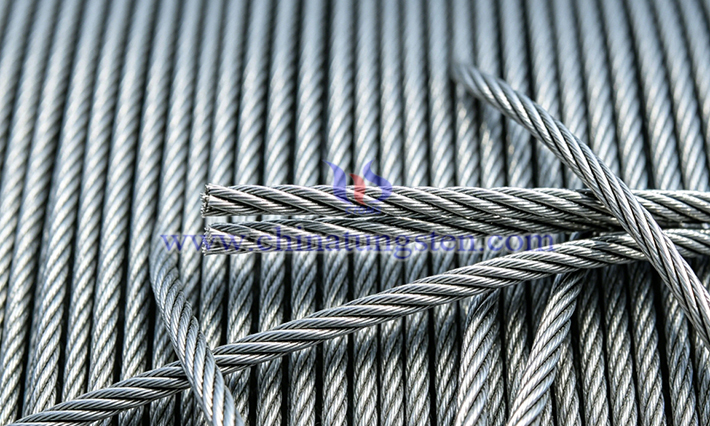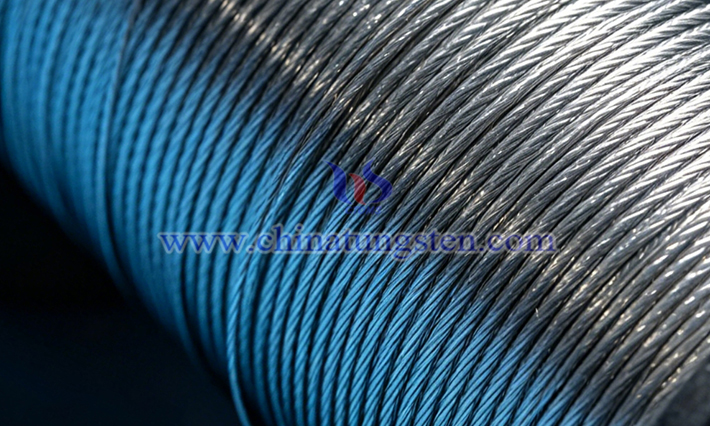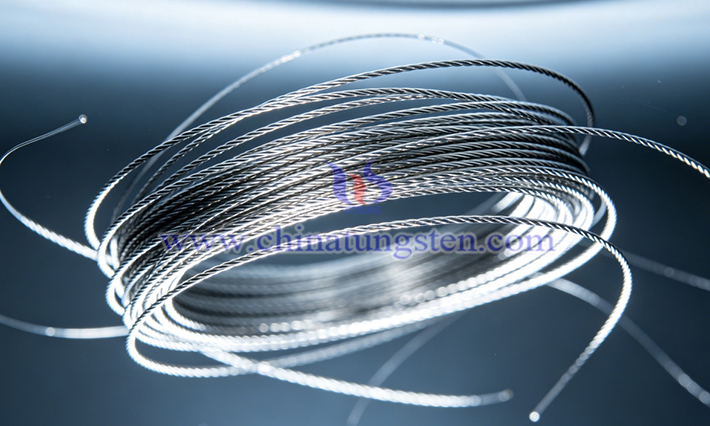
Tungsten wire tendon ropes feature a precision-braided design utilizing multiple strands and layers of ultra-fine tungsten wire. This structure achieves a material profile that balances high strength, flexibility, low creep, non-rotating characteristics, and adaptability to extremely tight bending radii. They are particularly well-suited for high-precision, high-frequency motion applications, such as the dexterous hands of humanoid robots.
1. Raw Materials
The ropes are made from high-purity tungsten wire (tungsten content ≥ 99.95%) capable of reaching strength levels of 6,500 MPa. Currently, individual wire diameters typically range from 18 to 30 μm—far finer than a human hair (60–90 μm). These ultra-fine filaments are key to achieving high flexibility and tight bending radii (R1.5–R3 mm) while maintaining exceptional rigidity and fatigue resistance.
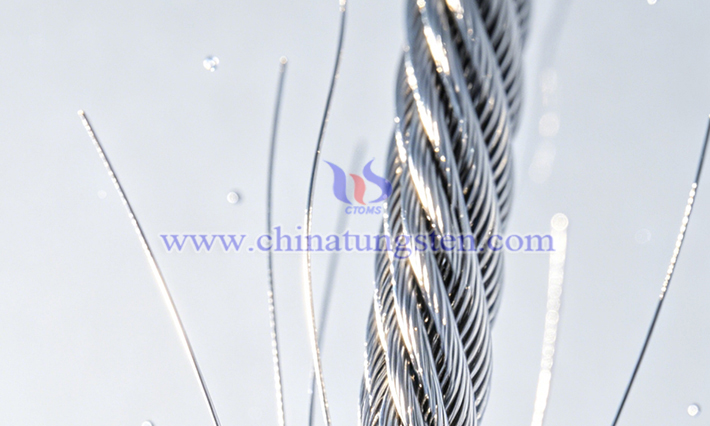
2. Structural Design
Tungsten wire tendon ropes are manufactured using a multi-layer, non-rotating braiding process. The outer and inner layers are twisted in opposite directions to minimize torsional tendency and ensure transmission stability. Typical configurations include: (1) 7×7 and 7×7×7 (49+ strands), commonly used for precision transmission in dexterous hands; and (2) 19×19 multi-layer strand structures, composed of over 300 ultra-fine tungsten wires, typically used in high-strength applications such as robotic torso or arm actuation. (3) Other configurations—such as 1×37, 19×7, and 7×19—can also be customized upon request through CTOMS (China Tungsten Online).
Composite tungsten wire tendon ropes feature a core of multi-strand tungsten wire encased in a polymer coating. This design further enhances wear resistance and flexibility while preserving the low-creep advantages of the metal core.
3. Advantages of the Tungsten Wire Tendon Structure
The multi-layer counter-braided design prevents twisting during use, thereby avoiding precision drift. Force is evenly distributed, enhancing overall load-bearing capacity and fatigue resistance. Enhanced flexibility allows for multi-directional bending, stretching, and rotation. The rope features high roundness, reducing friction with pulleys or guide wheels and minimizing the risk of strand displacement; it maintains structural integrity without unraveling, even at extremely tight bend radii.