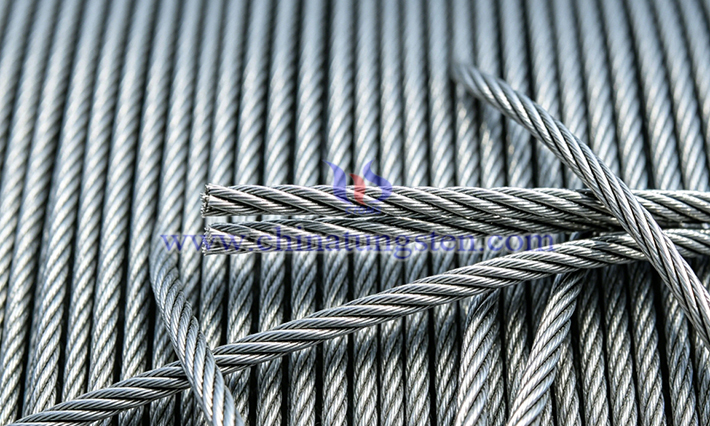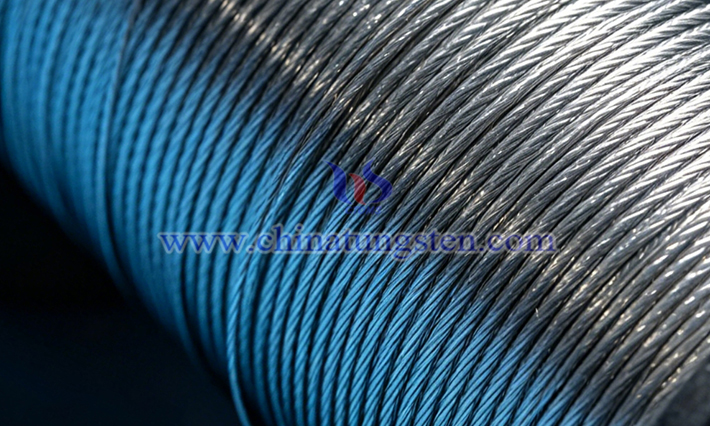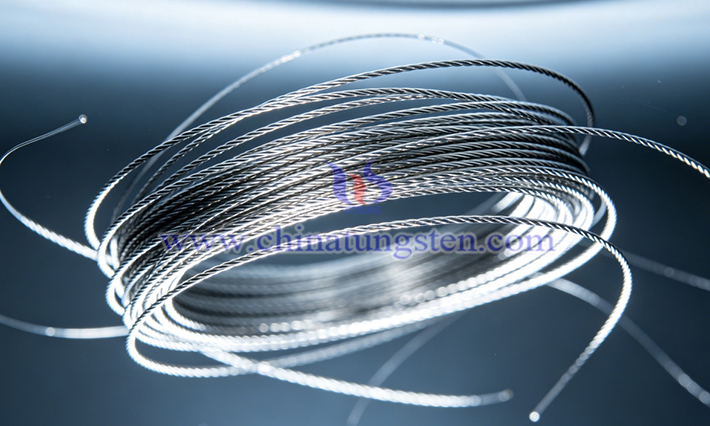
CTIA GROUP’s tungsten wire tendon rope (also known as tungsten tendon cable) is a high-performance precision transmission material. It is primarily constructed by precisely braiding multiple strands and layers of ultra-fine tungsten wire (with individual filament diameters typically ranging from 18 to 30 μm, or even finer) to mimic the function of human tendons in transmitting motion and force.
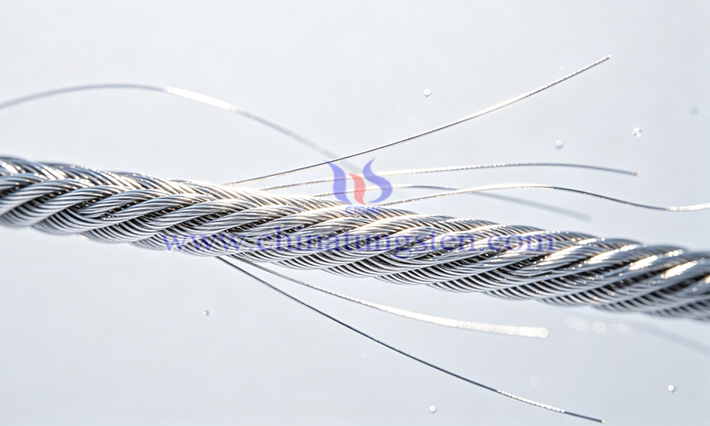
The core advantages of tungsten wire tendon ropes include: (1) Superior creep resistance: Tungsten has an elastic modulus of up to 411 GPa (more than double that of steel); after pre-stretching, it exhibits minimal residual elongation and maintains dimensional stability over millions of cycles, ensuring consistent robotic movement precision without drift. (2) Long fatigue life: Even with extremely tight bending radii (around R2 mm), the rope can withstand over 2 million cycles—more than ten times the lifespan of stainless steel wire ropes—making it ideal for the durability requirements of mass-produced dexterous robotic hands. (3) Excellent environmental resilience: With a melting point of 3410°C, tungsten withstands high and low temperatures, resists corrosion and radiation, does not absorb moisture, and does not degrade over time, making it suitable for medical sterilization, high-temperature industrial processes, and extreme environments. (4) High strength and miniaturization: Tungsten wires can be produced with diameters as fine as 24 μm (or less) while maintaining high strength and excellent flexibility.
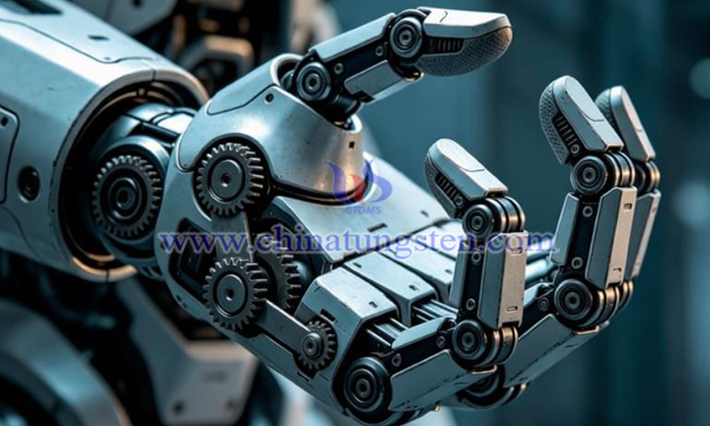
CTIA GROUP’s tungsten wire tendon ropes are primarily used in the tendon-driven systems of dexterous hands for humanoid robots, serving as a critical component for joint actuation. They are also utilized in applications requiring high precision, compact dimensions, and long service life, such as medical surgical robots and minimally invasive instruments.
In the field of humanoid robot tendon systems, the primary competitor to tungsten wire is Ultra-High Molecular Weight Polyethylene (UHMWPE) fiber. While UHMWPE is lighter and more pliable, it suffers from issues such as creep (long-term elongation) and degradation due to moisture absorption. In contrast, tungsten wire ropes offer superior precision, longevity, and resilience in extreme environments, making them the preferred choice for high-end applications or specialized use cases.