The toughness of cemented carbide rods designed and produced by CTIA GROUP refers to their ability to resist crack initiation under external forces and to inhibit rapid crack propagation until fracture occurs. In materials science, this property is usually characterized by fracture toughness, which reflects the material’s ability to withstand stress in the presence of defects or cracks. For cemented carbide rods, toughness mainly depends on the plastic deformation capability of the cobalt binder phase, as well as its bonding and coordination effect between WC grains.
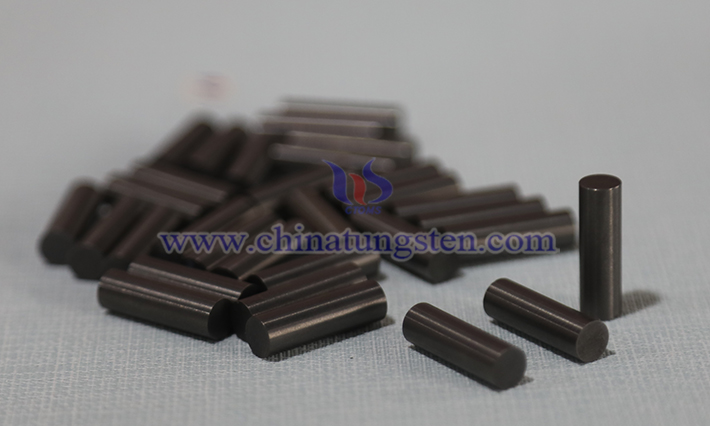
Images of cemented carbide rods manufactured by CTIA GROUP
CTIA GROUP and its parent company, CHINATUNGSTEN ONLINE, have been dedicated to the tungsten-molybdenum products industry for nearly 30 years. They specialize in providing flexible, customized global services for tungsten-molybdenum products, designing, manufacturing, and precisely processing various standard specifications, grades, and dimensional precision according to customer requirements, suitable for a wide range of applications. For more information on tungsten carbide, please visit the website: http://www.tungsten-carbide.com.cn/index.html. If you require tungsten carbide, please contact CTIA GROUP: sales@chinatungsten.com, 0592-5129595.
In engineering materials, the fracture toughness of cemented carbide rods is typically in the range of approximately 8–25 MPa·m1?2, and the exact value varies with cobalt content, WC grain size, and the degree of microstructural densification. Generally, cemented carbide rods with low cobalt content or fine-grained structures tend to have lower toughness, while those with higher cobalt content or coarse-grained structures exhibit relatively higher toughness.
What factors affect the toughness of CTIA GROUP’s cemented carbide rods?
1. Effect of cobalt content on the toughness of cemented carbide rods
Cobalt content is one of the key factors affecting toughness. As Co content increases, the binder phase becomes more continuous in the microstructure and can undergo plastic deformation during crack propagation, playing a “bridging” role that slows down crack growth and thus improves toughness. However, when cobalt content is too high, although toughness increases, hardness and wear resistance decrease accordingly.
2. Effect of tungsten carbide grain size on the toughness of cemented carbide rods
Grain size has a significant influence on crack propagation paths. In fine-grained structures, the number of grain boundaries increases and crack paths become more tortuous, but the binder phase may become thinner, resulting in a more complex toughness behavior. Coarse-grained structures are more prone to grain pull-out, but under certain cobalt content conditions, crack propagation resistance may be improved.
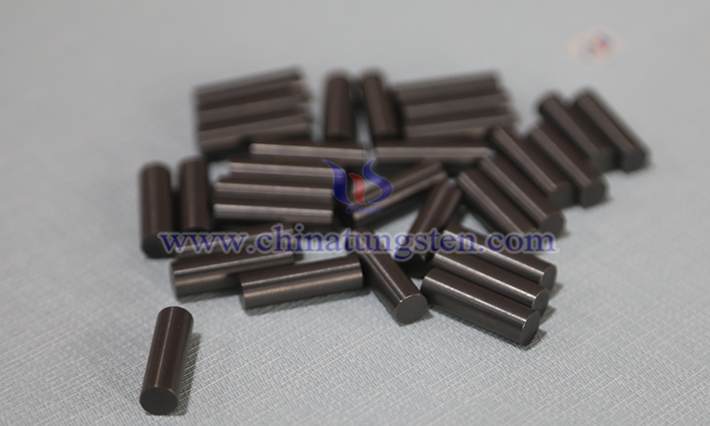
Images of cemented carbide rods manufactured by CTIA GROUP
3. Effect of microstructural defects on the toughness of cemented carbide rods
Porosity, inclusions, and sintering defects can significantly reduce the toughness of cemented carbide rods. These defects often act as crack initiation sites, leading to failure at relatively low stress levels. Therefore, the degree of densification has an important impact on toughness stability.
4. Effect of additives on the toughness of cemented carbide rods
Carbide additives such as TiC and TaC can, to some extent, help stabilize toughness by refining grains and improving microstructural uniformity. However, if localized brittle phase enrichment occurs, it may adversely affect crack propagation behavior.