The performance of cemented carbide rods designed and produced by CTIA GROUP is not only related to factors such as raw material ratio, purity, and intrinsic properties, but is also closely linked to the sintering process. In industrial production, the sintering process typically adopts stepwise heating, vacuum conditions, or controlled protective atmospheres to reduce oxidation and improve microstructural uniformity. Meanwhile, by controlling the heating rate, holding time, and subsequent hot isostatic pressing (HIP) treatment, material properties can be adjusted within a certain range.
CTIA GROUP and its parent company, CHINATUNGSTEN ONLINE, have been dedicated to the tungsten-molybdenum products industry for nearly 30 years. They specialize in providing flexible, customized global services for tungsten-molybdenum products, designing, manufacturing, and precisely processing various standard specifications, grades, and dimensional precision according to customer requirements, suitable for a wide range of applications. For more information on tungsten carbide, please visit the website: http://www.tungsten-carbide.com.cn/index.html. If you require tungsten carbide, please contact CTIA GROUP: sales@chinatungsten.com, 0592-5129595.
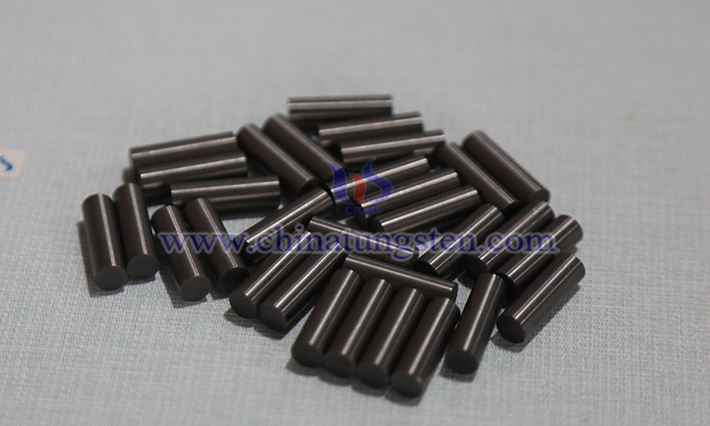
Images of cemented carbide rods manufactured by CTIA GROUP
The sintering process affects the degree of densification, grain growth behavior, and interfacial bonding state of the material, and is one of the key manufacturing steps influencing hardness, transverse rupture strength, toughness, and wear resistance.
I. Effect of sintering temperature on the densification of cemented carbide rods
Sintering temperature is one of the key parameters affecting the microstructure formation of CTIA GROUP cemented carbide. During liquid-phase sintering, the Co phase is in a molten state, and WC grains undergo rearrangement and dissolution–reprecipitation processes in the liquid phase, thereby forming a dense structure.
When the sintering temperature is too low, insufficient liquid phase formation or poor fluidity may occur, making it difficult to eliminate internal pores, and residual porosity may remain, which adversely affects subsequent mechanical properties. As the temperature is appropriately increased, densification becomes more complete, porosity decreases, interparticle bonding becomes stronger, and microstructural uniformity improves.
However, when the temperature is too high, WC grains may undergo significant growth, leading to microstructural coarsening and reduced property stability. Therefore, sintering temperature must be balanced between densification and grain growth control.
II. Effect of sintering time on WC grain growth behavior
Sintering time mainly affects WC grain growth and phase stability. Under a given temperature, extending the holding time helps the liquid phase act more fully, further reducing residual porosity and promoting microstructural homogenization.
However, with prolonged time, WC grains continue to grow through a dissolution–reprecipitation mechanism, and the average grain size may gradually increase. Grain coarsening typically reduces the material’s resistance to plastic deformation, thereby affecting hardness and also altering crack propagation paths.
In practical production, sintering time is usually optimized according to the material system and target performance to avoid excessive grain growth.
III. Effect of sintering pressure on densification of cemented carbide rods
In some high-performance cemented carbide manufacturing processes, pressure-assisted sintering such as hot isostatic pressing (HIP) is used to further reduce porosity and improve internal defect conditions.
Pressure promotes closure of residual pores, resulting in a denser structure and improved bonding between grains and the binder phase. Studies have shown that HIP-treated cemented carbides exhibit significantly reduced porosity and improved transverse rupture strength and fatigue performance.
In addition, pressurized conditions may also suppress grain growth to some extent, resulting in a more uniform microstructure.
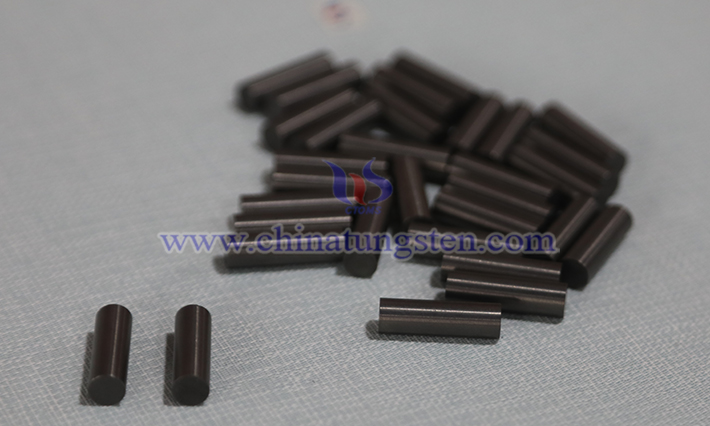
Images of cemented carbide rods manufactured by CTIA GROUP
IV. Effect of sintering process on hardness of cemented carbide rods
The hardness of CTIA GROUP’s cemented carbide rods is closely related to grain size and densification. When sintering is sufficient and grains are fine, the material exhibits strong resistance to indentation deformation, resulting in higher hardness.
If sintering is insufficient, residual porosity reduces the effective load-bearing area, leading to decreased hardness. Conversely, in cases of over-sintering or significant grain growth, the supporting effect between hard phases is weakened, which may also reduce hardness. Therefore, the sintering process indirectly determines hardness by influencing densification and grain structure.
V. Effect of sintering process on transverse rupture strength of cemented carbide rods
Transverse rupture strength is highly sensitive to internal defects, and pores, inclusions, and non-uniform grain distribution may act as crack initiation sites. When sintering quality is high, porosity decreases and microstructural uniformity improves, making crack propagation paths more tortuous and thereby enhancing transverse rupture strength.
Relevant studies show that well-densified WC-Co cemented carbides typically achieve transverse rupture strength in the range of 2000–3500 MPa, depending on grain size and Co content.
If residual porosity or local structural inhomogeneity exists during sintering, transverse rupture strength may decrease significantly.
VI. Effect of sintering process on toughness of cemented carbide rods
Toughness is closely related to the distribution state of the binder phase and the quality of grain boundary bonding. When the sintering process is well controlled, the Co phase forms a continuous and uniform distribution between WC grains, providing plastic coordination capability during loading and resulting in good toughness.
If sintering is insufficient, pores or poorly bonded regions exist in the structure, making cracks more likely to propagate locally and reducing toughness. Conversely, in cases of over-sintering leading to grain coarsening, crack propagation paths may become straighter, which may also negatively affect toughness.
VII. Effect of sintering process on wear resistance of cemented carbide rods
The wear resistance of CTIA GROUP’s cemented carbide rods is mainly influenced by hardness, grain size, and structural stability. When sintering is sufficient and grains are fine, the material exhibits strong resistance to abrasion during wear, and abrasive cutting effects are relatively weakened.
If significant grain growth occurs during sintering, weak local regions may form on the surface, increasing the likelihood of grain pull-out or microcrack propagation during wear, thereby reducing wear performance. Therefore, the influence of the sintering process on wear resistance is mainly achieved through microstructural refinement and defect control.