The performance of CTIA GROUP’S tungsten carbide rods is determined by multiple factors, mainly including material composition parameters (tungsten carbide content, cobalt content, grain size, types of added carbides) and process parameters (sintering method, sintering atmosphere, post-treatment processes). In addition, the surface treatment condition of the product also affects its application performance.
CTIA GROUP and its parent company, CHINATUNGSTEN ONLINE, have been dedicated to the tungsten-molybdenum products industry for nearly 30 years. They specialize in providing flexible, customized global services for tungsten-molybdenum products, designing, manufacturing, and precisely processing various standard specifications, grades, and dimensional precision according to customer requirements, suitable for a wide range of applications. For more information on tungsten carbide, please visit the website: http://www.tungsten-carbide.com.cn/index.html. If you require tungsten carbide, please contact CTIA GROUP: sales@chinatungsten.com, 0592-5129595.
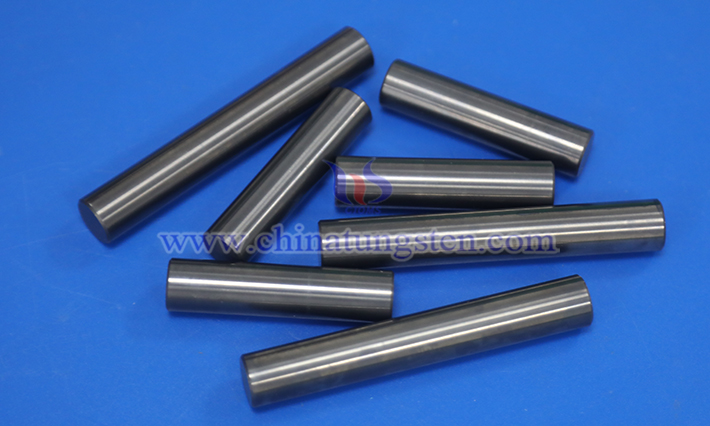
CTIA GROUP’S tungsten carbide rods picture
1. Effect of tungsten carbide content on the performance of tungsten carbide rods
Tungsten carbide (WC) powder is the primary hard phase in tungsten carbide rods, and its content affects the material’s hardness and wear resistance. The WC content (mass fraction) in tungsten carbide rods ranges from 85.0% to 94.5%. In general, the higher the WC content, the larger the proportion of hard phase, which increases hardness and wear resistance. However, if WC content is too high, the proportion of the binder phase decreases, potentially reducing the material’s toughness.
2. Effect of tungsten carbide grain size on the performance of tungsten carbide rods
The grain size of WC is a key parameter affecting the performance of tungsten carbide rods. Tungsten carbide with an average WC grain size not exceeding 200 nanometers is classified as nanocrystalline tungsten carbide. Studies show that as the WC grain size increases, the coercivity of the rods gradually decreases.
Performance differences between grain sizes are significant: the finer the grains, the higher the hardness. For example, a nanocrystalline tungsten carbide rod with an average WC grain size of 100–200 nm and 6% cobalt has a Vickers hardness (HV3) of 2200–2300 and a flexural strength of no less than 4500 MPa; when the WC average grain size is ≤100 nm, HV3 is no less than 2300 and flexural strength is no less than 5000 MPa.
For material selection in applications:
Ultra-fine grains (average <0.5–0.8 μm), low cobalt (6–10%) are suitable for finishing and high-surface-quality applications.
Submicron grains (0.8–1.3 μm), medium cobalt (8–12%) are suitable for general cutting and medium-load applications.
Medium to coarse grains (1.3–6 μm+), high cobalt (12–20%) are suitable for roughing, heavy-duty cutting, and high-impact conditions.
3. Effect of cobalt content on the performance of tungsten carbide rods
Cobalt, as the binder phase in CTIA GROUP’S tungsten carbide rods, mainly enhances toughness and impact resistance. Cobalt content is negatively correlated with hardness: the higher the cobalt content, the lower the hardness.
Based on industry product data, different cobalt contents correspond to the following performance:
High-hardness grades with 5–7% cobalt are suitable for precision tools such as PCB micro-drills and reamers, with density 14.4–14.8 g/cm3, hardness HRA 93.3–94.0, and flexural strength 3500–3800 MPa.
Medium-hardness grades with 9–10% cobalt are suitable for high-speed machining and cutting difficult-to-machine materials, with density 14.15–14.55 g/cm3, hardness HRA 92.1–93.0, and flexural strength not less than 3800–4000 MPa.
[caption id="attachment_50776" align="aligncenter" width="710"]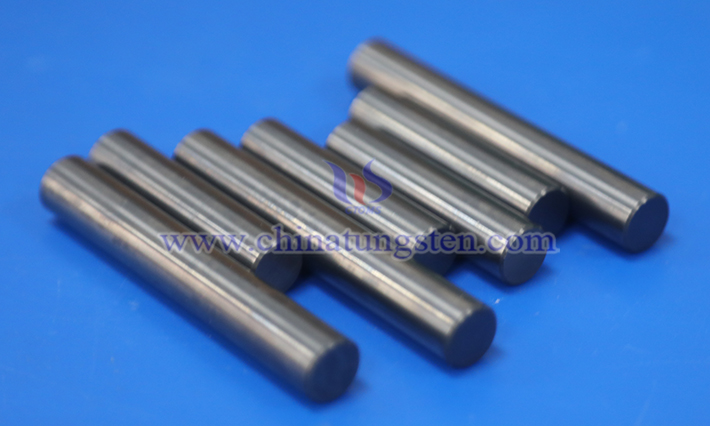 CTIA GROUP’S tungsten carbide rods picture[/caption]
4. Effect of carbide additives on the performance of tungsten carbide rods
Adding carbides such as titanium carbide, tantalum carbide, or niobium carbide to WC-Co can further improve hardness, wear resistance, and high-temperature performance. Titanium carbide refines grains, increases high-temperature hardness, and improves oxidation resistance, suitable for high-speed steel cutting. Tantalum/niobium carbide improves thermal shock resistance and fatigue resistance, suitable for stainless steel and difficult-to-machine materials. Tungsten carbide rods with added carbides generally have higher hardness than unmodified WC-Co rods.
5. Effect of sintering process on the performance of tungsten carbide rods
(1) Sintering methods
Sintering is a key step in tungsten carbide rod production, affecting densification and uniformity. The main sintering methods are vacuum sintering combined with hot isostatic pressing (HIP) and low-pressure sintering.
Vacuum sintering removes oxygen and moisture, providing a clean inert environment to protect the chemical stability of the carbide. It also effectively removes binders (e.g., wax), preventing carbon residues or porosity. Under vacuum, liquid cobalt better wets and encapsulates WC particles, filling voids to achieve a nearly theoretical-density, uniform, and dense structure.
HIP treatment at 80–150 MPa and 1320–1400°C significantly increases density, reduces porosity to 1/20–1/100 of pre-HIP levels, and improves flexural strength and service life. Vacuum sintering combined with HIP has become the standard for high-quality rods.
Low-pressure sintering effectively eliminates micro-porosity, balances cobalt layer thickness, prevents cobalt pooling, and avoids polycrystalline phenomena seen in high-pressure processes, while being more cost-effective.
(2) Sintering atmosphere
The sintering atmosphere affects the magnetic properties of tungsten carbide rods. Vacuum or argon atmospheres yield high coercivity and stable magnetic performance. Hydrogen atmosphere sintering, while reducing oxidation, cannot fully remove carbon in the green body (risk of carburization) and certain impurities, and carries explosion risk. The purity and uniformity of high-performance tungsten carbide sintered in hydrogen is usually inferior to vacuum sintering.