Whether CTIA GROUP’S tungsten carbide rods will “rust” depends on how “rust” is defined and the environmental conditions of the rods. In the traditional sense, “rust” specifically refers to the electrochemical reaction of iron and its alloys with oxygen in a humid environment, forming hydrated iron oxides (iron rust). Tungsten carbide rods are primarily composed of tungsten carbide powder and a metallic binder (typically cobalt, nickel, etc.), rather than iron-based materials. Therefore, under normal usage conditions, tungsten carbide rods do not undergo the conventional “iron rust” phenomenon.
CTIA GROUP and its parent company, CHINATUNGSTEN ONLINE, have been dedicated to the tungsten-molybdenum products industry for nearly 30 years. They specialize in providing flexible, customized global services for tungsten-molybdenum products, designing, manufacturing, and precisely processing various standard specifications, grades, and dimensional precision according to customer requirements, suitable for a wide range of applications. For more information on tungsten carbide, please visit the website: http://www.tungsten-carbide.com.cn/index.html. If you require tungsten carbide, please contact CTIA GROUP: sales@chinatungsten.com, 0592-5129595.
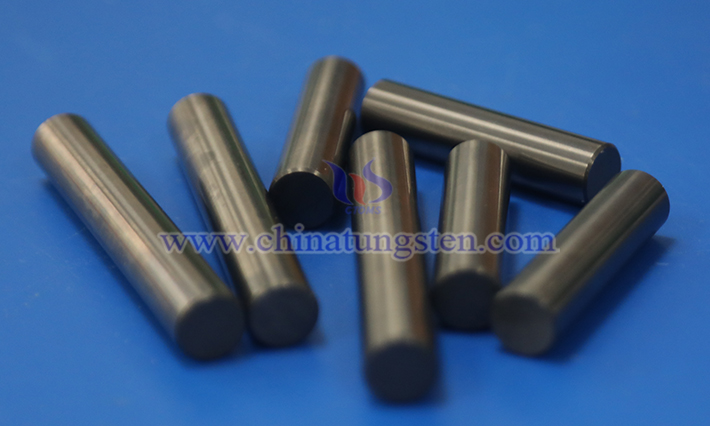
CTIA GROUP’S tungsten carbide rods picture
However, this does not mean that tungsten carbide rods will maintain an unchanged surface under all conditions. When exposed to certain corrosive media (such as acidic solutions or chloride salt spray environments), the metallic binder may undergo electrochemical dissolution, resulting in surface corrosion marks or pitting.
I. Effect of Binder Type on Corrosion Resistance of Tungsten Carbide Rods
The corrosion resistance of CTIA GROUP’S tungsten carbide rods mainly depends on the chemical properties of their metallic binder. Different binder materials exhibit different behavior in corrosive media.
Tungsten carbide rods with cobalt (Co) as the binder (e.g., YG series) show some corrosion sensitivity in acidic environments. In weakly alkaline or neutral media (such as 10% sodium hydroxide solution), cobalt-based tungsten carbide exhibits a relatively low corrosion rate.
Tungsten carbide rods with nickel (Ni) as the binder demonstrate better corrosion resistance. Nickel-based binders tend to form a stable passivating oxide layer in corrosive media, which helps inhibit further dissolution of the binder. After immersion in freely exposed sodium chloride solution for 24 hours, the open-circuit potential of WC-Ni tungsten carbide is higher than that of WC-Co, indicating a lower corrosion tendency for nickel-based materials.
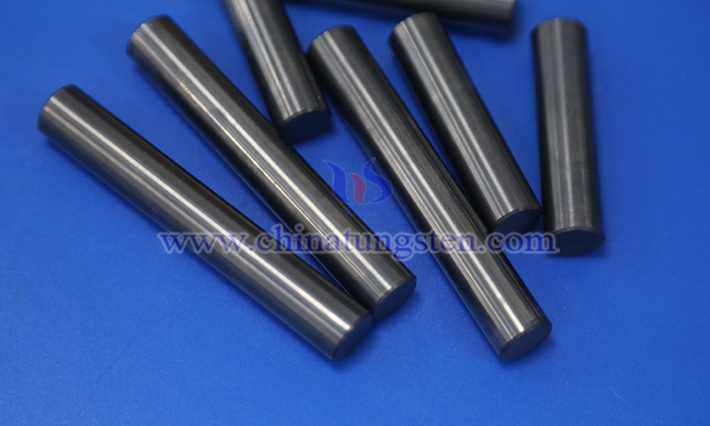
CTIA GROUP’S tungsten carbide rods picture
II. Technical Measures to Improve Corrosion Resistance of Tungsten Carbide Rods
For applications requiring enhanced corrosion resistance, the following technical measures can improve the corrosion performance of tungsten carbide rods:
Material composition adjustment: Adding Cr?C? can react with oxygen during sintering to form a Cr?O? passivation layer, which resists Cl? penetration and can reduce the pitting rate by approximately 40%. Controlling the WC grain size to 0.5 μm increases grain boundary density, reducing cobalt exposure area and lowering weight loss by around 20%. Using a nickel-based binder significantly enhances corrosion resistance, suitable for marine environments or chemical equipment.
Surface coating protection: Physical vapor deposition (PVD) coatings (such as TiN, CrN, AlTiN) with thicknesses of 2–10 μm can form a barrier layer to prevent contact between corrosive media and the substrate. Chemical vapor deposition (CVD) coatings (such as TiC, TiCN, Al?O?) with thicknesses of 5–15 μm are suitable for corrosion protection under high-temperature conditions.
Storage and maintenance: It is recommended to store tungsten carbide rods in a dry, ventilated environment and avoid direct contact with water, acids, alkalis, or other corrosive substances.