Tungsten carbide rods for wear-resistant parts are manufactured through powder metallurgy and, after precision processing, are used in components under severe working conditions. They emphasize wear resistance and impact toughness and are widely applied in industries such as mining and petroleum.
CTIA GROUP and its parent company, CHINATUNGSTEN ONLINE, have been dedicated to the tungsten-molybdenum products industry for nearly 30 years. They specialize in providing flexible, customized global services for tungsten-molybdenum products, designing, manufacturing, and precisely processing various standard specifications, grades, and dimensional precision according to customer requirements, suitable for a wide range of applications. For more information on tungsten carbide, please visit the website: http://www.tungsten-carbide.com.cn/index.html. If you require tungsten carbide, please contact CTIA GROUP: sales@chinatungsten.com, 0592-5129595.
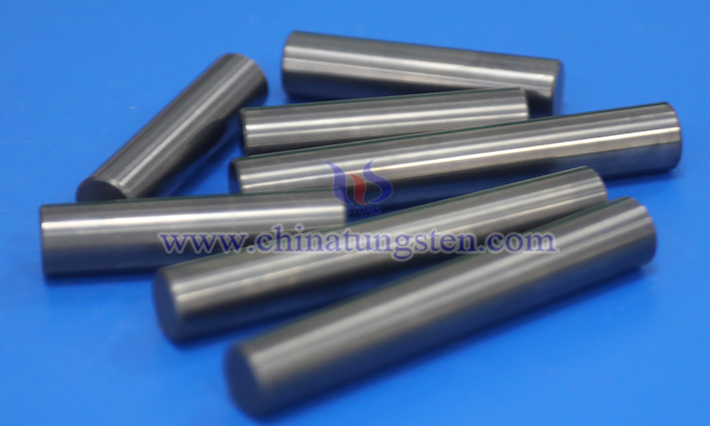
CTIA GROUP’S tungsten carbide rods picture
I. Classification of Tungsten Carbide Rods for Wear-Resistant Parts
According to the classification system of the national standard GB/T 18376.3-2015, tungsten carbide rods for wear-resistant parts are divided into four main categories based on application scenarios, designated by the codes LS, LT, LQ, and LV.
The LS category is suitable for drawing dies for metal wires, rods, and tubes, as well as products such as sealing rings. Depending on processing specifications, the LS category is further divided into four grades: LS10 is suitable for drawing dies and sealing rings for wires and rods with diameters below 6 mm; LS20 is suitable for wires and rods below 20 mm in diameter and tubes below 10 mm in diameter; LS30 is suitable for wires and rods below 50 mm in diameter and tubes below 35 mm in diameter; LS40 is suitable for drawing dies subjected to higher stress and compression.
The LT category is suitable for stamping dies for standard fasteners. LT10 is for small fasteners below M9; LT20 is for medium-to-small fasteners below M12; LT30 is for medium-to-large fasteners below M20 and for steel ball stamping dies.
The LQ category is suitable for top hammers, pressing cylinders, and other products used in synthetic diamond manufacturing. This category is divided into LQ10, LQ20, and LQ30 according to different synthetic pressure levels.
The LV category is suitable for roll rings used in high-speed wire rolling. LV10 is for high-level finishing rolling units of high-speed wire; LV20 is for higher-level finishing rolling units; LV30 is for standard-level finishing rolling units; LV40 is for pre-finishing rolling units.
II. Grades of Tungsten Carbide Rods for Wear-Resistant Parts
The YG6 grade has a hardness range of HV30 1500 to 1600, a transverse rupture strength of 1500 to 1700 MPa, and a compressive strength of 4000 to 5000 MPa. It is recommended for applications such as wire drawing dies and nozzles. The YG8 grade has a hardness range of HV30 1400 to 1500, a transverse rupture strength of 1700 to 1900 MPa, and a compressive strength of 4500 to 5500 MPa. It is recommended for applications such as nozzles and bearings. The YG20 grade has a hardness range of HV30 1200 to 1300, a transverse rupture strength of 2200 to 2500 MPa, and a compressive strength of 5000 to 6000 MPa. It is recommended for applications such as cold heading dies. The YG25 grade has a hardness range of HV30 1100 to 1200, a transverse rupture strength of 2500 to 2800 MPa, and a compressive strength of 5500 to 6500 MPa. It is recommended for applications such as stamping dies.
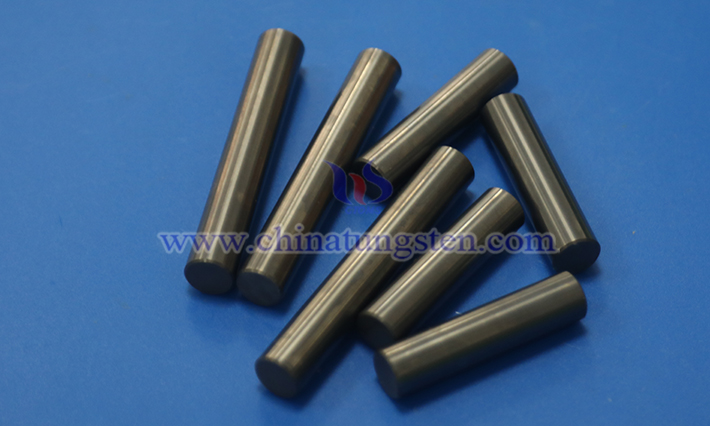
CTIA GROUP’S tungsten carbide rods picture
III. Tungsten Carbide Rods for Sealing Rings and Valve Components
Sealing rings and valve components are an important application area of tungsten carbide rods in wear-resistant parts. These components are commonly used in chemical pumps, compressors, fluid control systems, and other equipment, requiring wear resistance, corrosion resistance, and sealing performance simultaneously.
For sealing rings, tungsten carbide rods are processed into mechanical sealing rings with hardness reaching above HRA 90, helping to form a stable sealing interface between rotating shafts and stationary components. For valve components, tungsten carbide rods are used to manufacture valve cores, valve seats, and internal valve parts. For example, the WN-10 grade tungsten carbide valve core reportedly improves wear resistance by approximately 30% in chemical valve applications.
Bearing balls and wear-resistant bushings also fall within this application range. Tungsten carbide bearing balls typically use HRA 92-grade material, with wear resistance reportedly improved by about 30%. Wear-resistant bushings for high-speed rotating devices are processed from HRA 91-grade tungsten carbide rods, with wear resistance reportedly improved by about 20%.
IV. Tungsten Carbide Rods for Nozzles
Nozzles are one of the most widely used products of CTIA GROUP’S tungsten carbide rods in wear-resistant parts. Tungsten carbide nozzles are widely used in sandblasting equipment, spraying equipment, high-pressure water jet cutting equipment, and laser solder ball welding nozzles for 3C electronic products.
In sandblasting and spraying applications, tungsten carbide nozzles can withstand repeated abrasion from high-speed abrasives such as quartz sand, corundum, and steel shots. Compared with steel nozzles, the wear life of tungsten carbide nozzles is generally 5 to 10 times longer.
V. Tungsten Carbide Rods for Wire Drawing Die Cores
Wire drawing dies are another important application of tungsten carbide rods outside the mold field and are a typical product of the LS category. Using tungsten carbide rods as blanks, precision machining of internal holes and external surfaces produces wire drawing die cores, which are used in drawing steel wire, stainless steel wire, copper wire, aluminum wire, and other metal wires.
In actual production, different tungsten carbide grades are suitable for different wire sizes and stress conditions. Grade YG6 is suitable for drawing steel or non-ferrous metal wires with diameters below 6.0 mm under low-stress conditions. Grade YG8 is suitable for drawing rebar, non-ferrous metal wires, alloy rods, and alloy tubes, and can also be used for manufacturing mechanical wear-resistant parts. Grade YG15 (cobalt content approximately 15%) is suitable for drawing rebar and steel tubes under higher compression rates.