CTIA GROUP’S tungsten carbide rods, used as blanks for mold components (such as punches, mandrels, and mold cores), are applied in the manufacturing of cold-working molds that withstand high impact pressure, compressive stress, and repeated friction. Compared with tungsten carbide rods for cutting tools, mold-grade tungsten carbide rods generally use medium-to-coarse grain grades with higher cobalt content (such as 8% to 15%) to balance the material's hardness and impact toughness requirements.
CTIA GROUP and its parent company, CHINATUNGSTEN ONLINE, have been dedicated to the tungsten-molybdenum products industry for nearly 30 years. They specialize in providing flexible, customized global services for tungsten-molybdenum products, designing, manufacturing, and precisely processing various standard specifications, grades, and dimensional precision according to customer requirements, suitable for a wide range of applications. For more information on tungsten carbide, please visit the website: http://www.tungsten-carbide.com.cn/index.html. If you require tungsten carbide, please contact CTIA GROUP: sales@chinatungsten.com, 0592-5129595.
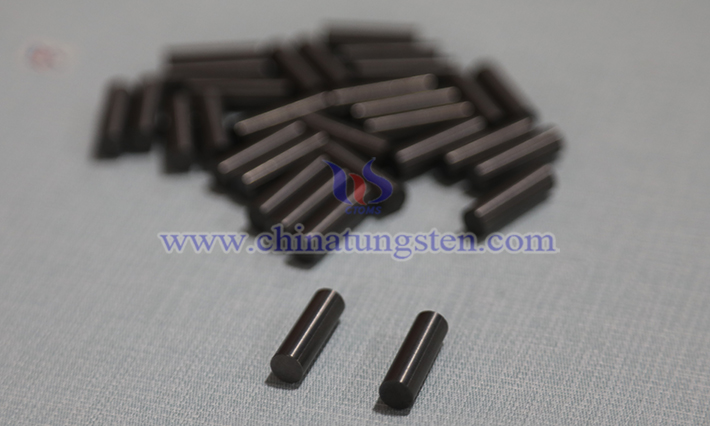
CTIA GROUP’S tungsten carbide rods picture
I. Tungsten Carbide Rods for Cold Heading Dies
Cold heading is one of the main application directions of tungsten carbide rods in the mold field. Using tungsten carbide rods as blanks, precision grinding and polishing can produce components such as cold heading punches, mandrels, reducing dies, single- or multi-stage reducing dies, and countersink punches. These molds are used in the cold heading production of fasteners such as screws, nuts, and rivets, as well as battery terminals and automotive components.
Common grades for cold heading include YG8, YG11C, and YG15. These grades have cobalt contents of approximately 8% to 15% and adopt medium-to-coarse grain structures, helping to meet the high toughness and impact resistance requirements under cold heading conditions. This application is widely distributed in mass production scenarios in the automotive, electronics, and hardware standard parts industries.
II. Tungsten Carbide Rods for Stamping Dies
Stamping is another important application field of tungsten carbide rods. Mold components manufactured from tungsten carbide rods include punches, punch rods, piercing rods, and progressive die punches. These components are used for precision stamping and progressive die operations in motors, electronic connectors, lead frames, household appliances, and 3C products (computers, communications, consumer electronics).
During operation, stamping die components are subjected to high-frequency impact and shear forces. The high transverse rupture strength and wear resistance of tungsten carbide rods help ensure punching accuracy and reduce burr formation. They are suitable for continuous stamping of stainless steel, copper strips, and aluminum alloy sheets.
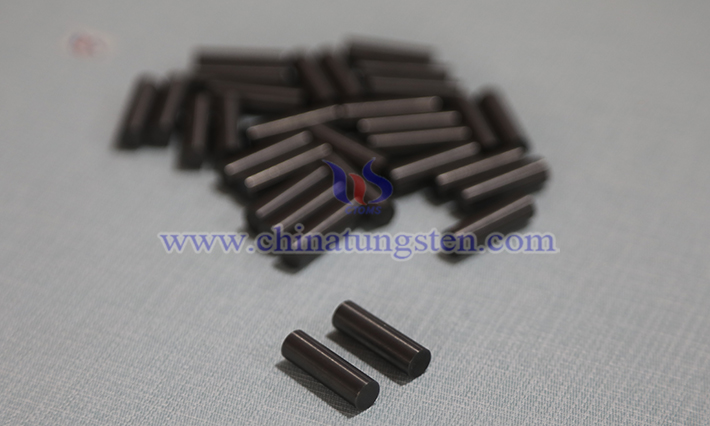
CTIA GROUP’S tungsten carbide rods picture
III. Tungsten Carbide Rods for Wire Drawing Dies
Wire drawing dies are one of the largest consumption categories of CTIA GROUP tungsten carbide molds. Tungsten carbide rods, used as standard blanks for die cores, are suitable for metal wire drawing. Using tungsten carbide rods as raw material, cutting, precision internal hole machining, and external shaping are performed to manufacture die cores, which are then used in drawing operations for steel wire, stainless steel wire, copper wire, aluminum wire, and other metal wires. These rods are suitable for rough and intermediate drawing of medium-to-coarse wire sizes and offer good customization flexibility and economic efficiency in rod form.
In actual production, different tungsten carbide grades are suitable for different wire sizes and stress conditions. Grade YG6X (density 14.95 g/cm3) is suitable for drawing steel or non-ferrous wires with diameters below 6.0 mm under low-stress conditions. Grade YG6 (density 14.90 g/cm3, hardness 89.5–91.5 HRA, transverse rupture strength approximately 1750 MPa) is suitable for drawing steel, non-ferrous metals, and alloy rods with diameters below 20 mm under higher stress conditions, and also for drawing tubes with diameters below 10 mm. Grade YG8 is suitable for drawing rebar, non-ferrous metal wires, alloy rods, and alloy tubes, and can also be used for manufacturing mechanical wear-resistant parts.
IV. Selection Principles for Tungsten Carbide Rods for Molds
When selecting tungsten carbide rods for molds, factors such as the type of workpiece material, mold type, service conditions (stress magnitude, impact frequency, compression rate), and equipment conditions must be comprehensively considered. Generally, for cold heading dies subjected to high impact loads, grades with higher cobalt content (such as 8% to 15%), coarser grain size (such as 1.5 μm to 3.0 μm), and moderate hardness (HRA 87–89) should be selected to meet impact toughness requirements. For wire drawing dies and wear-resistant parts, grades with lower cobalt content (such as 6% to 8%) and higher hardness (HRA 89–92) should be selected to meet wear resistance requirements.
Processing conditions also affect the performance of mold-grade tungsten carbide rods. Under high compression rates (such as in steel and steel tube drawing), grades with higher cobalt content (such as 15%) should be selected to reduce the risk of mold cracking. In high-speed stamping or progressive die operations, the high transverse rupture strength of tungsten carbide rods is one of the key indicators to ensure stamping precision and mold service life.