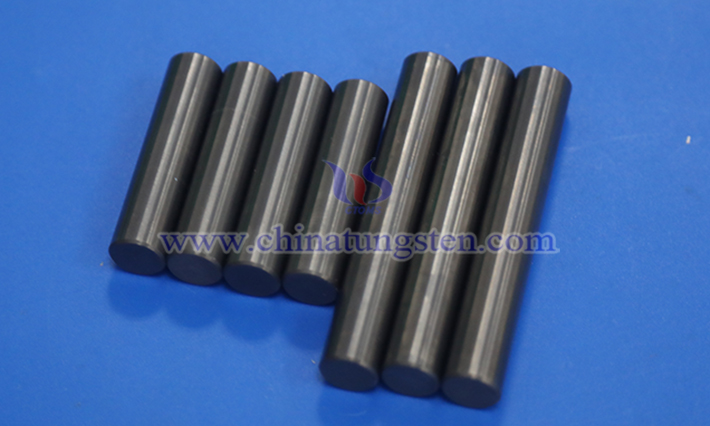
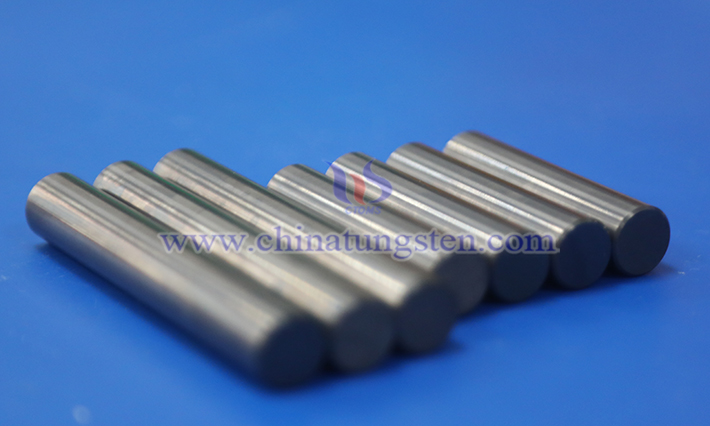
The production process of tungsten carbide rods designed and produced by CTIA GROUP is mainly based on powder metallurgy technology, with the process flow covering multiple stages including mix preparation, forming, debinding (dewaxing), sintering, and subsequent processing.
CTIA GROUP and its parent company, CHINATUNGSTEN ONLINE, have been dedicated to the tungsten-molybdenum products industry for nearly 30 years. They specialize in providing flexible, customized global services for tungsten-molybdenum products, designing, manufacturing, and precisely processing various standard specifications, grades, and dimensional precision according to customer requirements, suitable for a wide range of applications. For more information on tungsten carbide, please visit the website: http://www.tungsten-carbide.com.cn/index.html. If you require tungsten carbide, please contact CTIA GROUP: sales@chinatungsten.com, 0592-5129595.
I. Mix Preparation in the Powder Metallurgy Process of Tungsten Carbide Rods
The initial process of tungsten carbide rod production is mix preparation. This process involves weighing and proportioning tungsten carbide (WC) powder, cobalt (Co) powder, and grain inhibitors (such as vanadium carbide VC, chromium carbide Cr?C?, etc.) according to the designed formula, followed by wet ball milling with the addition of a liquid medium. The ball milling process causes the various component powders to reach a uniformly distributed state while breaking the WC particles down to the target particle size range. The milled mixture is then dried and sieved to obtain a mixed powder with good flowability, preparing the raw material for the subsequent forming process.
II. Forming Process in the Powder Metallurgy Process of Tungsten Carbide Rods
Forming is the process of transforming the mixed powder into a green compact with a certain shape and strength. Depending on product specifications and production batch sizes, tungsten carbide rods mainly utilize extrusion forming, cold isostatic pressing forming, injection molding, and die pressing.
Extrusion forming is currently a widely used forming method in the production of tungsten carbide rods, particularly suitable for solid rods with diameters from approximately Φ3mm to Φ50mm and rods with cooling holes. This process involves mixing the powder with a binder (such as paraffin wax or multi-component polymer systems) to create a plastic feedstock, which is then extruded through a specially shaped extrusion die to form a rod-shaped green compact with a uniform cross-section. The advantage of extrusion forming lies in the unrestricted length of the product, the ability to form complex cooling hole structures such as straight holes and spiral holes, and relatively high production efficiency. The extruded green compacts require cutting to obtain semi-finished products of the desired length.
Cold isostatic pressing is a forming method where powder is placed in an elastic mold and pressure is applied uniformly from all directions using a high-pressure liquid (typically pressure around 200MPa). This process can be subdivided into different forms such as the wet-bag method and the dry-bag method. The dry-bag method is suitable for batch production of rods up to 400mm in length and can produce products with cooling channels, but the positional accuracy of the channels is relatively limited. Rods formed by cold isostatic pressing have good density uniformity, but the surface of the green compact is relatively rough, often requiring subsequent machining.
Injection molding is a forming technology suitable for complex-shaped, small-sized products. In this process, the mixed powder is uniformly mixed with a multi-component binder (such as a paraffin wax-low molecular weight coupling agent-high molecular weight polymer system) to prepare the feedstock, which is then injection molded on an injection molding machine to produce near-net shape green compacts. After injection molding, the green compacts undergo sequential solvent debinding and thermal debinding to remove binder components. This method is suitable for manufacturing special-shaped products such as stepped rods with a large length-to-diameter ratio, with diameter dimensional deviation controllable within ±0.03mm.
Die pressing uses vertical or horizontal pressing methods, filling powder into a mold cavity and then applying pressure using upper and lower punches. The principle of this process is the same as conventional powder metallurgy pressing, but due to the relatively large length-to-diameter ratio of rods, die pressing is limited in product length by the press stroke, and density unevenness is prone to occur at the parting line.
III. Debinding (Dewaxing) Process in the Powder Metallurgy Process of Tungsten Carbide Rods
The purpose of the debinding process in the powder metallurgy process of tungsten carbide rods is to remove the binder or forming agent added during the forming process. For systems using paraffin wax as the forming agent, the paraffin wax is volatilized or decomposed by heating before sintering. According to relevant sintering process data, under positive pressure hydrogen conditions, the furnace temperature is raised to 600°C through a staged heating process lasting 490 minutes to complete the dewaxing treatment. The control of process parameters in the debinding stage has a certain impact on the internal quality of the sintered product; insufficient debinding may lead to abnormal carbon content or internal defects.
IV. Sintering Process in the Powder Metallurgy Process of Tungsten Carbide Rods
Sintering is a key process in the production of tungsten carbide rods, where high-temperature heating causes diffusion and densification between powder particles to form an alloy material with the expected mechanical properties.
The sintering of tungsten carbide rods is a liquid-phase sintering process. According to industry technical data, the sintering temperature range for conventional tungsten carbide rods is between 1360°C and 1480°C, where grades with lower cobalt content (e.g., Co ≤ 6%) require higher sintering temperatures, and grades with higher cobalt content (e.g., Co ≥ 15%) can use lower temperatures.
Depending on equipment configuration and process route differences, various process types can be used for sintering tungsten carbide rods. Vacuum sintering is a relatively traditional method, where heating and holding are completed under vacuum conditions. Low-pressure sintering involves introducing argon gas for a holding treatment after reaching the sintering temperature, which helps reduce internal porosity in the material. Another sintering process involves holding at 1410°C, after which high-pressure argon gas of 60 bar (approximately 6MPa) is introduced. This process has been reported to help improve the bending pass rate of small-diameter extruded rods. Hot isostatic pressing, as a post-treatment method, is typically performed under conditions of 1350°C to 1420°C and pressure of approximately 60MPa, which can further eliminate internal residual pores.
V. Subsequent Processing Steps for Tungsten Carbide Rods After Sintering
Depending on the intended use of the product, sintered tungsten carbide rods may require a series of subsequent processing steps.
For precision-grade products, sintered blanks require centerless grinding to achieve specified dimensional accuracy and surface quality. According to the revision description of the national standard for "Tungsten Carbide Round Rod Blanks," the outer diameter tolerance of precision ground round rods can reach h6 or h5 grade.
Depending on customer requirements, sintered long rods can be cut to obtain products of specified lengths. Cutting requires control of the perpendicularity between the end face and the axis to meet clamping requirements during subsequent tool manufacturing.
Some tungsten carbide rod products may undergo surface coating treatment, such as applying TiAlN, AlTiN, or other physical vapor deposition (PVD) coatings, to enhance their wear resistance and oxidation resistance during cutting operations. Coating treatment is typically performed after the rods have been precision ground to their final dimensions.