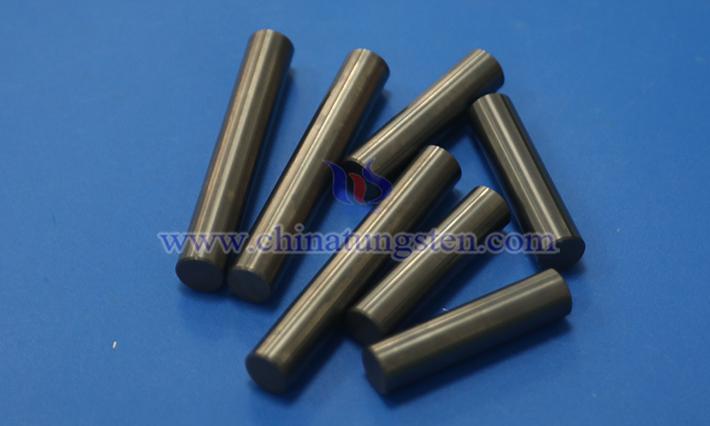
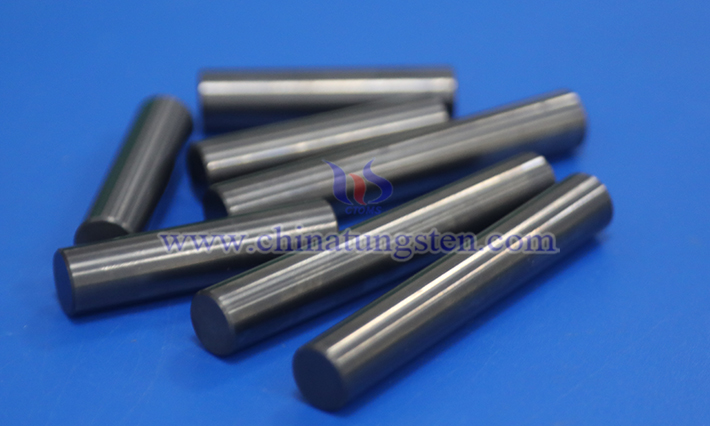
Tungsten carbide rods designed and produced by CTIA GROUP, as a powder metallurgy composite material, derive their performance characteristics from the synergistic effect of the tungsten carbide (WC) hard phase and the metallic cobalt (Co) binder phase.
CTIA GROUP and its parent company, CHINATUNGSTEN ONLINE, have been dedicated to the tungsten-molybdenum products industry for nearly 30 years. They specialize in providing flexible, customized global services for tungsten-molybdenum products, designing, manufacturing, and precisely processing various standard specifications, grades, and dimensional precision according to customer requirements, suitable for a wide range of applications. For more information on tungsten carbide, please visit the website: http://www.tungsten-carbide.com.cn/index.html. If you require tungsten carbide, please contact CTIA GROUP: sales@chinatungsten.com, 0592-5129595.
I. High Hardness and Wear Resistance of Tungsten Carbide Rods
CTIA GROUP’S tungsten carbide rods possess high hardness characteristics, which is one of their main performance advantages distinguishing them from traditional tool steels. According to relevant technical data, the hardness of tungsten carbide rods is typically between HRA89 and HRA94, significantly higher than the hardness level of high-speed steel (approximately HRC60 to 65). Specifically, hardness values vary by grade: taking grade YG6X as an example, its hardness is approximately HRA91.5; the hardness of grade YG10X is approximately HRA91; while the hardness requirement for nanocrystalline tungsten carbide rods is HV3 not less than 2000, and for products with a grain size not greater than 100nm, the hardness can reach HV3 not less than 2100.
In terms of wear performance, the wear resistance of tungsten carbide rods is substantially improved compared to high-speed steel. The wear resistance of tungsten carbide is typically more than 5 to 10 times higher than that of high-speed steel. This characteristic makes it suitable for working conditions that bear relatively high friction loads, such as the cutting edge of cutting tools and the working surface of molds. Spiral-hole rods designed with cooling holes can maintain a sharper edge for a longer time during drilling operations, which is beneficial for ensuring dimensional accuracy and surface quality of hole processing.
II. Strength and Toughness of Tungsten Carbide Rods
The bending strength (transverse rupture strength, TRS) of tungsten carbide rods is related to the cobalt content and WC grain size. The bending strength of tungsten carbide rods is generally in the range of 1800N/mm2 to 4000N/mm2. For example, the SK15 grade (with higher cobalt content) has a bending strength of 2400 to 2600N/mm2, suitable for mold applications bearing relatively large impact loads; while the YL10.2 grade has a bending strength of 4000N/mm2, balancing relatively high hardness with good toughness.
For nanocrystalline tungsten carbide rods, the transverse rupture strength requirement is not less than 4500N/mm2; when the grain size is not greater than 100nm, this value increases to not less than 5000N/mm2. Adjusting the cobalt content is the main means of achieving a balance between hardness and toughness: when the cobalt content is lower (e.g., 3% to 6%), the material exhibits higher hardness and wear resistance, but brittleness increases correspondingly; when the cobalt content is higher (e.g., 15% to 20%), material toughness increases and impact resistance improves. This adjustment characteristic enables tungsten carbide rods to adapt to various working conditions ranging from precision cutting to heavy-duty stamping.
III. High Elastic Modulus and Rigidity of Tungsten Carbide Rods
Tungsten carbide rods have a high elastic modulus (E modulus), with the elastic modulus approximately 550GPa to 700GPa, which is about 2 to 3 times that of steel (approximately 200GPa). This parameter indicates that tungsten carbide rods produce relatively small elastic deformation when subjected to external forces, i.e., they have high rigidity.
Taking typical grades as examples, the elastic modulus of YG6X is approximately 525GPa, YG6 is approximately 530GPa, and YG10 is approximately 490GPa. The high elastic modulus enables tungsten carbide rods to maintain axial stability under certain cutting loads and reduce bending deformation when manufacturing tools with a relatively large length-to-diameter ratio (such as deep-hole drills and micro-diameter end mills). This characteristic plays a role in ensuring the straightness of drilling and hole diameter accuracy. At the same time, a relatively low coefficient of thermal expansion helps tungsten carbide rods maintain dimensional stability under temperature variation conditions, making them suitable for precision machining scenarios sensitive to thermal deformation.
IV. Red Hardness and High-Temperature Performance of Tungsten Carbide Rods
Red hardness refers to the ability of a material to maintain hardness under high-temperature conditions, which is another performance characteristic distinguishing tungsten carbide rods from high-speed steel. The hardness of high-speed steel begins to decrease significantly at 500°C to 600°C, while tungsten carbide can still maintain a relatively high hardness level in the temperature range of 800°C to 1000°C.
This characteristic enables cutting tools made from tungsten carbide rods as the substrate to adapt to relatively high cutting speeds. Under high-speed cutting conditions, the cutting zone temperature can reach above 800°C, and tungsten carbide tools can still maintain the geometric shape and cutting ability of the cutting edge, making them suitable for dry cutting or minimum quantity lubrication cutting conditions. For difficult-to-machine materials such as nickel-based superalloys and titanium alloys, the red hardness advantage of tungsten carbide tools is relatively obvious. It should be noted that there are differences in red hardness among different grades, and grades with added cubic carbides such as titanium carbide (TiC) and tantalum carbide (TaC) exhibit more stable performance under high-temperature conditions.
V. Corrosion Resistance and Oxidation Resistance of Tungsten Carbide Rods
Tungsten carbide rods exhibit good corrosion resistance. Tungsten carbide has relatively high chemical inertness and resists most acids, alkalis, and corrosive media at room temperature. The corrosion resistance of the binder phase cobalt is relatively weak, but by adjusting the binder phase composition (such as using a nickel-based or iron-nickel-based binder), the corrosion resistance of the material can be further improved, making it suitable for applications in chemical equipment, food machinery, medical devices, and other fields.
In terms of performance in oxidizing environments, tungsten carbide is relatively stable at room temperature; when exposed for long periods in air at high temperatures (approximately above 600°C), oxidation may occur on the surface. By applying physical vapor deposition (PVD) or chemical vapor deposition (CVD) coatings (such as TiAlN, AlTiN coatings) on the surface of tungsten carbide tools, their oxidation resistance and high-temperature chemical stability can be effectively improved, extending the service life of the tools under high-speed cutting conditions.