I. What is Tungsten Carbide Rod?
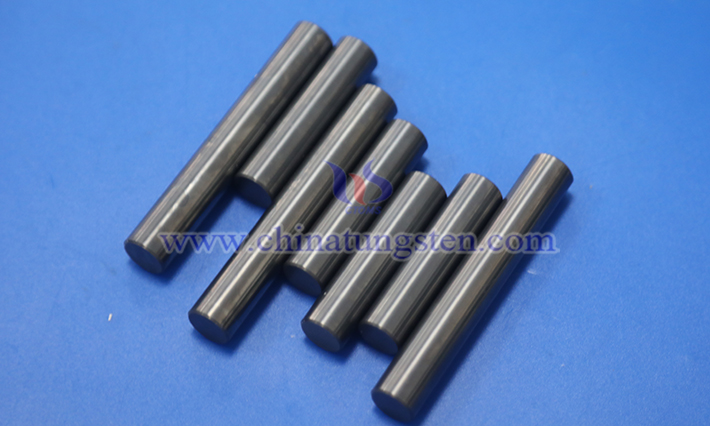
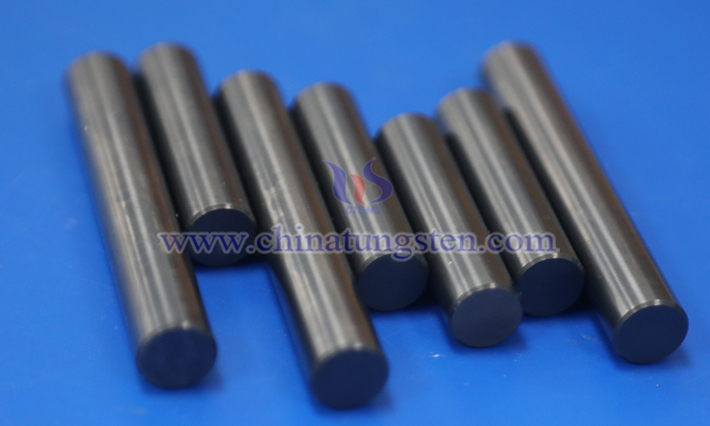
CTIA GROUP’S tungsten carbide rod is a cylindrical rod-shaped composite material made of tungsten carbide (WC) as the hard phase and metallic cobalt (Co) as the binder phase through a powder metallurgy process. It has high hardness and good bending strength, and is one of the basic materials for manufacturing cutting tools, wear-resistant parts, molds, and other products.
CTIA GROUP and its parent company, CHINATUNGSTEN ONLINE, have been dedicated to the tungsten-molybdenum products industry for nearly 30 years. They specialize in providing flexible, customized global services for tungsten-molybdenum products, designing, manufacturing, and precisely processing various standard specifications, grades, and dimensional precision according to customer requirements, suitable for a wide range of applications. For more information on tungsten carbide, please visit the website: http://www.tungsten-carbide.com.cn/index.html. If you require tungsten carbide, please contact CTIA GROUP: sales@chinatungsten.com, 0592-5129595.
II. Material Composition of Tungsten Carbide Rod
The mechanical properties of tungsten carbide rods are related to the proportion of chemical composition. In terms of composition, the hard phase is mainly tungsten carbide (WC). In typical products, the mass fraction of WC is usually in the range of 85.0% to 94.5%. To improve the red hardness or resistance to crater wear under high-temperature conditions, some formulations add cubic carbides such as titanium carbide or tantalum carbide.
The binder phase of tungsten carbide rods mainly uses metallic cobalt, which wets and wraps the WC particles through a liquid-phase sintering process, providing the necessary toughness for the material. The common cobalt content (mass fraction) ranges from 3% to 20%. Lower Co content corresponds to higher material hardness, while higher Co content helps to improve material toughness.
III. Classification of Tungsten Carbide Rods
Based on internal structure, tungsten carbide rods can be divided into solid rods and rods with holes. Solid rods have no holes inside, a dense overall structure, and are a basic form with a wide range of applications, typically used to manufacture solid end mills and drills. Rods with holes include straight-hole and spiral-hole types. Straight-hole rods usually have one or two cooling holes parallel to the axis inside; spiral-hole rods have cooling holes with a spiral twist angle of 30° or 40°.
Classified by external dimensional accuracy, tungsten carbide rods can be divided into sintered blank rods and precision ground rods. The outer diameter of precision ground rods is processed by centerless grinding. According to industry standard YS/T1608-2023, the outer diameter tolerance can reach h6 or h5 grade.
IV. Production Process of Tungsten Carbide Rods
The production of tungsten carbide rods follows the basic powder metallurgy process route. The core steps include mix preparation, forming, sintering, and subsequent processing. In the mix preparation stage, high-purity tungsten carbide powder, cobalt powder, and grain inhibitors are proportioned according to the set formula, and a wet ball mill is used with a medium to obtain a uniformly mixed slurry. The forming process mainly uses the extrusion method, where the mixture is extruded through a specially shaped die to form solid or hole-containing rod-shaped green compacts. Compared to the cold isostatic pressing process, extrusion demonstrates higher production efficiency and dimensional consistency in batch production. Subsequently, the green compacts are sintered in a low-pressure sintering furnace or vacuum sintering furnace, with the sintering temperature generally controlled in the range of 1400 degrees Celsius to 1500 degrees Celsius. At this temperature, the cobalt phase melts to form a liquid phase, and the alloy is densified through the liquid-phase sintering mechanism. For precision-ground products, the sintered blanks also need to undergo precision machining processes such as centerless grinding to achieve the specified dimensional tolerances and straightness requirements.
V. Physical and Mechanical Properties of Tungsten Carbide Rods
In terms of hardness and wear resistance, the room temperature hardness of tungsten carbide rods is usually in the range of HRA86.5 to 93.5. The Vickers hardness (HV3) of nanocrystalline rods can reach above 2100. In terms of bending strength, tungsten carbide rods exhibit high bending strength values. The bending strength of conventional products can reach 3000N/mm2 to 4500N/mm2, and the transverse rupture strength of some nanocrystalline rods can reach 5000N/mm2. The elastic modulus of tungsten carbide rods is approximately 550GPa to 700GPa, which is about 2 to 3 times that of steel, reflecting high rigidity. In terms of dimensional stability, precision ground rods have high roundness, with roundness deviation generally not exceeding 0.005 millimeters.
VI. Main Application Areas of Tungsten Carbide Rods
In the field of cutting tool manufacturing, using tungsten carbide rods as the substrate, various standard and non-standard tools can be made through processes such as grinding and fluting. These include solid tungsten carbide end mills used for milling mold cavities and automotive parts; drills used for hole processing, where micro-drills with a diameter of less than 0.25 millimeters are used for printed circuit board drilling; and reamers and rotary burs used for hole finishing and weld trimming. In the field of molds and wear-resistant parts, utilizing their high compressive strength and wear resistance, tungsten carbide rods are used to make wire drawing die cores (for drawing copper wire, steel wire, etc.), cold heading and cold stamping dies (for mass production of screws and fasteners), as well as wear-resistant shafts and seal rings (as anti-wear structural parts in pumps, bearings, etc.). In the precision electronics and medical device industries, tungsten carbide rods are used to manufacture micro-end mills for machining smartphone mid-frames, surgical instruments, dental burs, and other precision instruments.