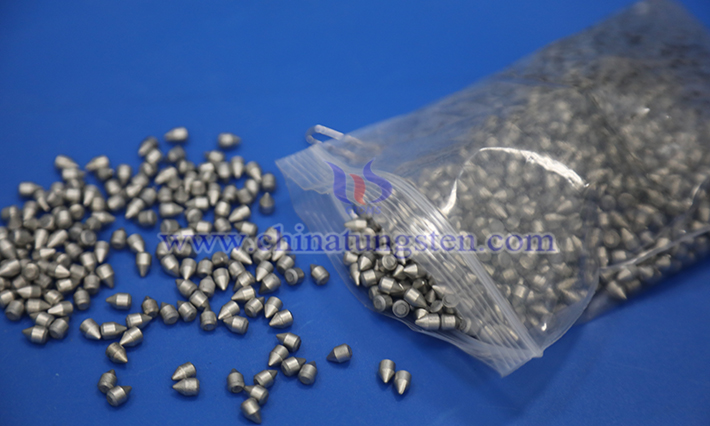
CTIA GROUP produces and designs tungsten carbide safety hammer heads as tools whose main material is tungsten carbide. Their classification system revolves around material composition, structural morphology, and application characteristics. This classification helps to clearly understand the adaptability of different types in performance matching and usage scenarios.
CTIA GROUP and its parent company, CHINATUNGSTEN ONLINE, have been dedicated to the tungsten-molybdenum products industry for nearly 30 years. They specialize in providing flexible, customized global services for tungsten-molybdenum products, designing, manufacturing, and precisely processing various standard specifications, grades, and dimensional precision according to customer requirements, suitable for a wide range of applications. For more information on tungsten carbide, please visit the website: http://www.tungsten-carbide.com.cn/index.html. If you require tungsten carbide, please contact CTIA GROUP: sales@chinatungsten.com, 0592-5129595.
I. Tungsten carbide safety hammer heads classified by material composition
In terms of material composition, tungsten carbide safety hammer heads are usually composed of a hard phase, a bonding phase, and a small amount of additives. Among them, the hard phase mainly undertakes the task of wear resistance, while the bonding phase is responsible for providing toughness.
Tungsten carbide powder (WC powder) is the most common hard phase component in tungsten carbide safety hammer heads, with a content generally above 70%. Cobalt is the main bonding phase, with a content of about 6% to 11%. Typical grades include YG6, YG8, and YG8C. YG6 has a cobalt content of about 6%, a hardness of 91 to 92 HRA, and a bending strength of about 1500 to 1700 MPa, suitable for precision machining and occasions with high hardness requirements. YG8C adopts a coarse crystal structure, with a cobalt content of about 8%, a hardness of about 89 to 90 HRA, and a bending strength of about 2000 to 2200 MPa, focusing more on impact toughness, and is commonly used in scenes that bear frequent hammer blows.
In addition to tungsten carbide-based, there are also tungsten titanium cobalt-based and tungsten titanium tantalum (niobium)-based tungsten carbide safety hammer heads. Tungsten titanium cobalt-based, on the basis of cobalt, adding titanium carbide can improve the processing performance on steel and anti-moon groove ability. Tungsten titanium tantalum-based, by adding tantalum carbide or niobium carbide, improves the hardness and anti-oxidation, suitable for certain high temperature or special corrosion environment.
II. Tungsten carbide safety hammer heads classified by structural morphology
The structural morphology is the key factor affecting the applicability of tungsten carbide safety hammer heads. Currently, it is mainly divided into two categories: monolithic and composite. The two forms have obvious differences in material distribution and assembly methods.
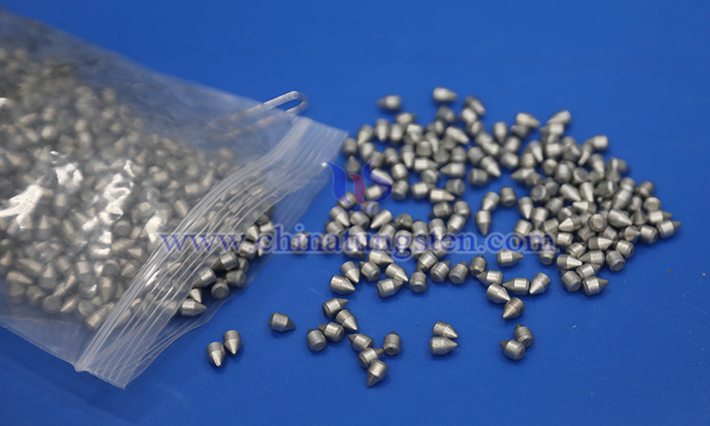
Monolithic tungsten carbide safety hammer heads use powder metallurgy process to form one piece, without additional inlays or splicing. The tip conical working end and the assembly section have uniform material, and the tip cone angle is usually between 60° and 90°, with a radius of arc 0.5 to 1.5 mm. This design makes the hardness and wear resistance distributed consistently, suitable for miniaturization and lightweight products. Material grades are mostly YG6 or YG8. The production process is simplified, and the cost is relatively controllable, but the overall toughness is limited by the single material structure, and local failure may occur under extreme impact.
Composite tungsten carbide safety hammer heads adopt the combined structure of "substrate + tungsten carbide working end". The substrate uses alloy steel with better toughness, and the working end (tip) is combined with the substrate by tungsten carbide blocks or rods. The bonding method is mainly brazing, and the size, position and tungsten carbide grade of the working end can be adjusted according to the needs. This form combines the toughness of the substrate and the high hardness and wear resistance of the working end, and is widely used.
III. Tungsten carbide safety hammer heads classified by application environment
Different application scenarios have different performance requirements for tungsten carbide safety hammer heads. Classified by environment, it mainly includes outdoor emergency type and industrial processing type. Outdoor emergency type is usually aimed at fragile materials such as glass and tiles, requiring sharp tips and easy to break, typical grades are YG10X and other high-cobalt fine-crystal structures. Industrial processing type focuses on wear resistance and impact resistance, mostly using YG8C and other coarse-crystal impact grades, suitable for high-frequency hammer blow environments such as breaking and forming.