CTIA GROUP's magnetic tungsten alloy rings are high-density ring materials with tungsten as the matrix and containing ferromagnetic binder phases. The most common representative is the tungsten-nickel-iron (WNiFe) alloy ring, as the added iron element is a typical magnetic material. Magnetic tungsten alloy rings retain the advantages of tungsten alloys, such as high density, high strength, and good radiation shielding capabilities, while providing controllable magnetic response, thus having unique applications in aerospace, defense, and precision industries.
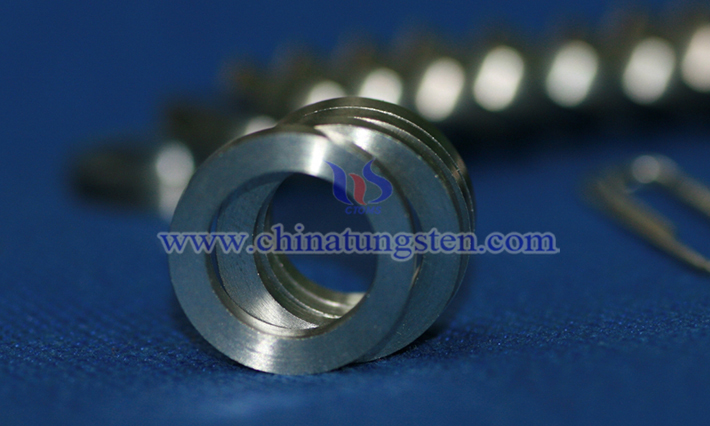
1. The Source of Magnetism in Tungsten Alloy Rings
Pure tungsten metal itself is paramagnetic and possesses almost no macroscopic magnetism suitable for engineering applications. The magnetism of magnetic tungsten alloy rings originates entirely from the added binder phase. Specifically, when nickel and iron are used as the binder metal (i.e., WNiFe alloy), iron (Fe), as a typical ferromagnetic element, imparts a weak ferromagnetic quality to the alloy. By adjusting the proportion of iron in the binder phase, the permeability can be precisely controlled, typically ranging from 2 to 8. This composition-dependent weak magnetism is not the strong magnetism of a permanent magnet, but rather a type of magnetic property characterized by magnetization under an applied magnetic field and low remanence after the magnetic field is removed.
2. Performance Characteristics of Magnetized Tungsten Alloy Rings
The most outstanding performance of CTIA GROUP's magnetized tungsten alloy rings is their high density, typically ranging from 16.5 g/cm3 to 19.3 g/cm3, far exceeding that of ordinary steel. This characteristic allows them to provide a large mass within a very small volume. Simultaneously, this material possesses excellent mechanical properties, with tensile strength reaching 800 to 1200 MPa, and excellent plasticity and impact toughness, enabling it to withstand high centrifugal forces and dynamic loads. In addition, it possesses a low coefficient of thermal expansion, good thermal and electrical conductivity, and excellent X-ray and gamma-ray shielding capabilities. Compared to non-magnetic tungsten alloy rings, the magnetic variety additionally offers the functional characteristic of weak ferromagnetism, enabling it to respond to magnetic fields or work in conjunction with electromagnetic systems.
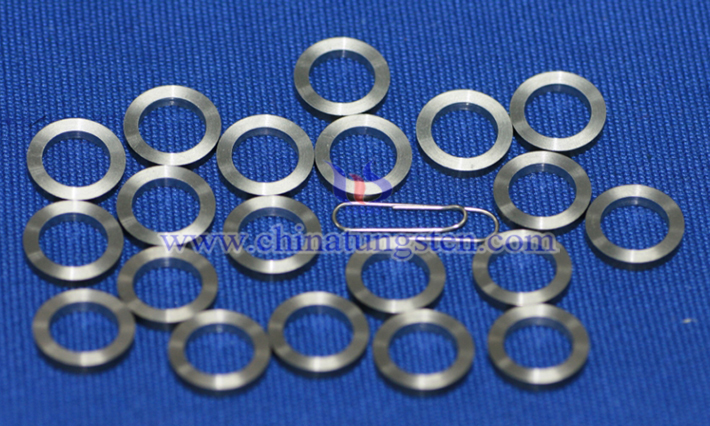
3. Main Applications of Magnetic Tungsten Alloy Rings
CTIA GROUP's magnetic tungsten alloy rings are commonly used in the aerospace field as gyroscope rotor rings and counterweight rings in inertial navigation systems. High density generates large rotational inertia to improve attitude stability, while the weak magnetism can be used for magnetic levitation supports or position detection. In the defense industry, it is manufactured into missile pre-fragmentation rings and warhead counterweight rings, relying on high density to ensure kinetic energy of destruction, and its magnetism can be adapted to specific fuses or control systems. In industrial equipment, engine crankshaft balancing rings, vibration motor eccentric wheels, and flywheel energy storage rings are also typical applications. These scenarios require precise dynamic balancing within a small space, and the material's weak magnetism can be combined with electromagnetic drives or Hall effect sensing elements to simplify structural design.
CTIA GROUP and its parent company, Chinatungsten Online, leverage 30 years of professional flexible customization experience to customize high-performance tungsten alloy products according to customer needs, covering a wide range of applications including radiation shielding, industrial sealing, precision instruments, aerospace, medical devices, defense, oil drilling, automotive manufacturing, electronic packaging, high-temperature furnaces, and nuclear protection. CTIA GROUP's tungsten alloy product website is www.tungsten-alloy.com, email is sales@chinatungsten.com, and phone is +86 592 5129595.