Metal Injection Molding (MIM)is a highly efficient near-net-shape forming technology for producing high-density tungsten alloy rings. This process combines the advantages of plastic injection molding with the high densification characteristics of powder metallurgy, enabling the precise manufacture of high-density, uniformly structured, and high-performance tungsten alloy rings (commonly tungsten-nickel-iron alloys WNiFe and WNiCu, with tungsten content typically ranging from 85% to 98% and densities reaching 17.0 to 18.8 g/cm3).
MIM offers significant advantages in fabricating complex-shaped, high-density tungsten alloy rings: it achieves near-net-shape forming, significantly reducing subsequent machining; the product exhibits high density, uniform structure, and stable performance; it is suitable for efficient small- to medium-batch production; and the alloy composition can be flexibly adjusted to precisely match the performance requirements of different applications.
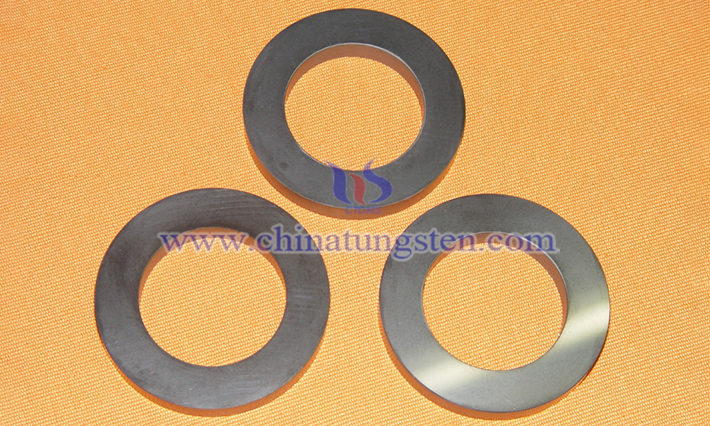
Main Processes of Tungsten Alloy Ring Fabrication by Injection Molding (MIM)
1. Powder Preparation and Feed Mixing
High-purity micron-sized tungsten powder is mixed uniformly with other alloying element powders (such as nickel (Ni), iron (Fe), or copper (Cu)) in precise proportions, with strict control over particle size distribution, purity, and oxygen content. Subsequently, the mixed metal powder is thoroughly kneaded with a multi-component organic binder (wax-based or modified oil wax system) to prepare a feedstock with good flowability and plasticity. The binder volume percentage is generally controlled at 30%–50% to ensure smooth operation of the subsequent injection process. This step lays the material foundation for the entire process and directly affects the green body quality and final density.
2. Injection Molding
The prepared feedstock is heated to a molten state and injected into a precisely designed annular mold cavity under high pressure using an injection molding machine. Typical process parameters include: injection temperature 100–195℃, injection pressure 600–1800 bar, injection speed 30–140 mm/s, and injection cycle approximately 25 seconds. This process precisely replicates the geometry of the mold, resulting in green bodies with high dimensional consistency and excellent surface quality. Mold design must fully consider draft angles and subsequent shrinkage compensation to ensure the integrity of the ring-shaped product.
3. Debinding (Binder Removal)
The green body needs to undergo debinding to remove organic binders and prevent defects during sintering. A two-step method is typically used: first, solvent extraction removes most of the binder (removal rate can reach over 70%), followed by thermal debinding. Under a controlled atmosphere (such as ammonia decomposition gas), the body is slowly heated to 600-1000℃ according to a set temperature curve to completely remove residual binders. The optimized debinding process allows the green body to maintain high strength and minimal deformation, making it particularly suitable for preserving the integrity of ring-shaped structures.
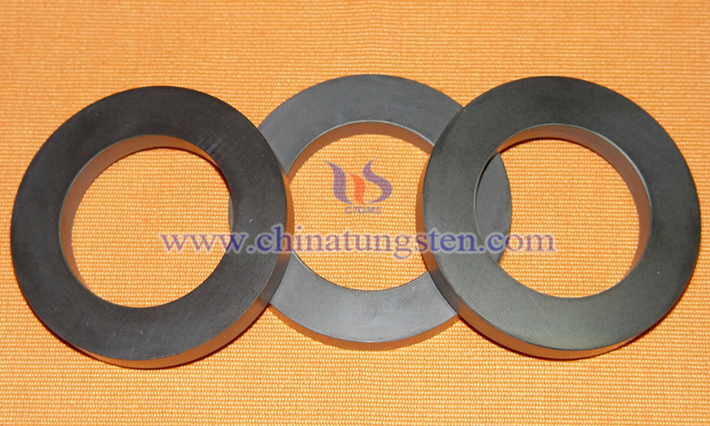
4. Sintering
The debinded green body is placed in a vacuum or protective atmosphere high-temperature furnace for sintering, typically at temperatures above 1200℃ (depending on the alloy composition). Under high temperature, tungsten particles undergo densification diffusion, achieving a sintered body with near-theoretical density and good mechanical properties. As needed, hot isostatic pressing (HIP) or subsequent heat treatment can be further implemented to improve overall performance. The linear shrinkage rate of the ring during sintering is generally 15%~20%, a factor that has been precisely compensated for in the initial mold design.
5. Post-processing
The sintered tungsten alloy ring undergoes necessary machining, surface polishing, or functional coating treatments according to the final application requirements to achieve the specified dimensional accuracy and surface quality. This step further enhances the product's appearance and functional characteristics, while ensuring compliance with the high density, high strength, and shielding performance requirements of aerospace, medical protection, and industrial counterweight applications.
CTIA GROUP and its parent company, Chinatungsten Online, leverage 30 years of professional flexible customization experience to customize high-performance tungsten alloy products according to customer needs, covering a wide range of applications including radiation shielding, industrial sealing, precision instruments, aerospace, medical devices, defense, oil drilling, automotive manufacturing, electronic packaging, high-temperature furnaces, and nuclear protection. CTIA GROUP's tungsten alloy product website is www.tungsten-alloy.com, email is sales@chinatungsten.com, and phone is +86 592 5129595.